Introduction to Mount Huber
Mount Huber rises dramatically in Yoho National Park, offering hikers and scramblers a rewarding ascent through subalpine forests and open ridges. Its position in the Ottertail Range provides expansive vistas of surrounding peaks and valleys that define the Canadian Rockies. The mountain attracts visitors seeking a mix of moderate trail walking and steeper rock sections without requiring technical climbing gear.
Getting There
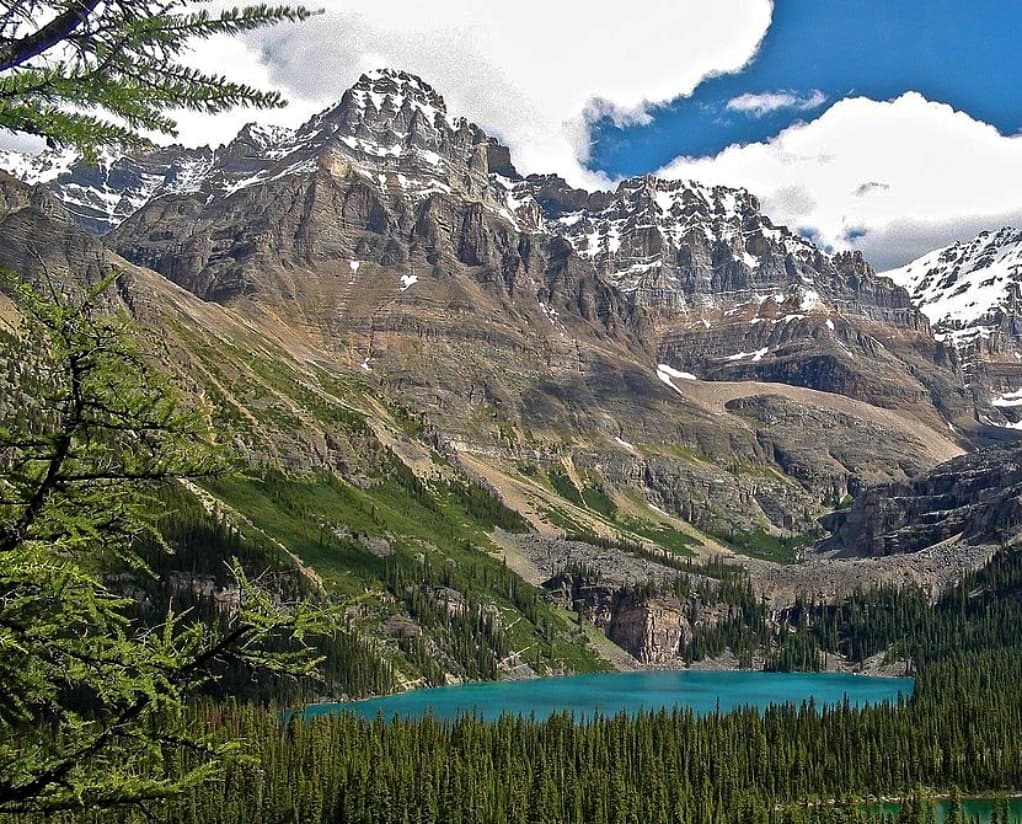
Access begins from the Lake O’Hara trailhead near Field, British Columbia. Most visitors use the park shuttle bus to reach the area, though strong hikers can walk the access road. From the Lake O’Hara lodge zone, the route to Mount Huber follows well-marked paths that climb steadily past alpine lakes and into the basin below the summit. The approach rewards careful navigation through boulder fields and occasional snow patches even in summer.
Best Time to Visit
July through early September offers the most reliable conditions, when snow has largely receded from trails and wildflowers carpet the meadows. Earlier visits risk lingering cornices, while later dates may bring early autumn storms. Clear days provide the best photography of distant glaciers and the distinctive limestone spires of the region.
What to See and Do
The ascent features several highlights: the colorful waters of Lake O’Hara, high meadows filled with heather and dwarf willow, and the final scramble to the summit cairn. From the top, visitors enjoy 360-degree views encompassing Mount Victoria, the Wapta Icefield, and the broad valleys leading toward the Continental Divide. Many combine the hike with a circuit around Lake O’Hara or a side trip to nearby Lake McArthur for a full day of alpine exploration. Wildlife such as hoary marmots and mountain goats is commonly spotted along the route.
Nearby Attractions
Within Yoho National Park, Emerald Lake and the Takakkaw Falls viewpoint lie a short drive away. Across the provincial border in Banff National Park, the famous Lake Louise and Moraine Lake areas offer additional day-trip options. The entire region forms part of the UNESCO Canadian Rocky Mountain Parks, allowing travelers to link multiple iconic sites in a single journey.