Why Lake O’Hara Stands Apart
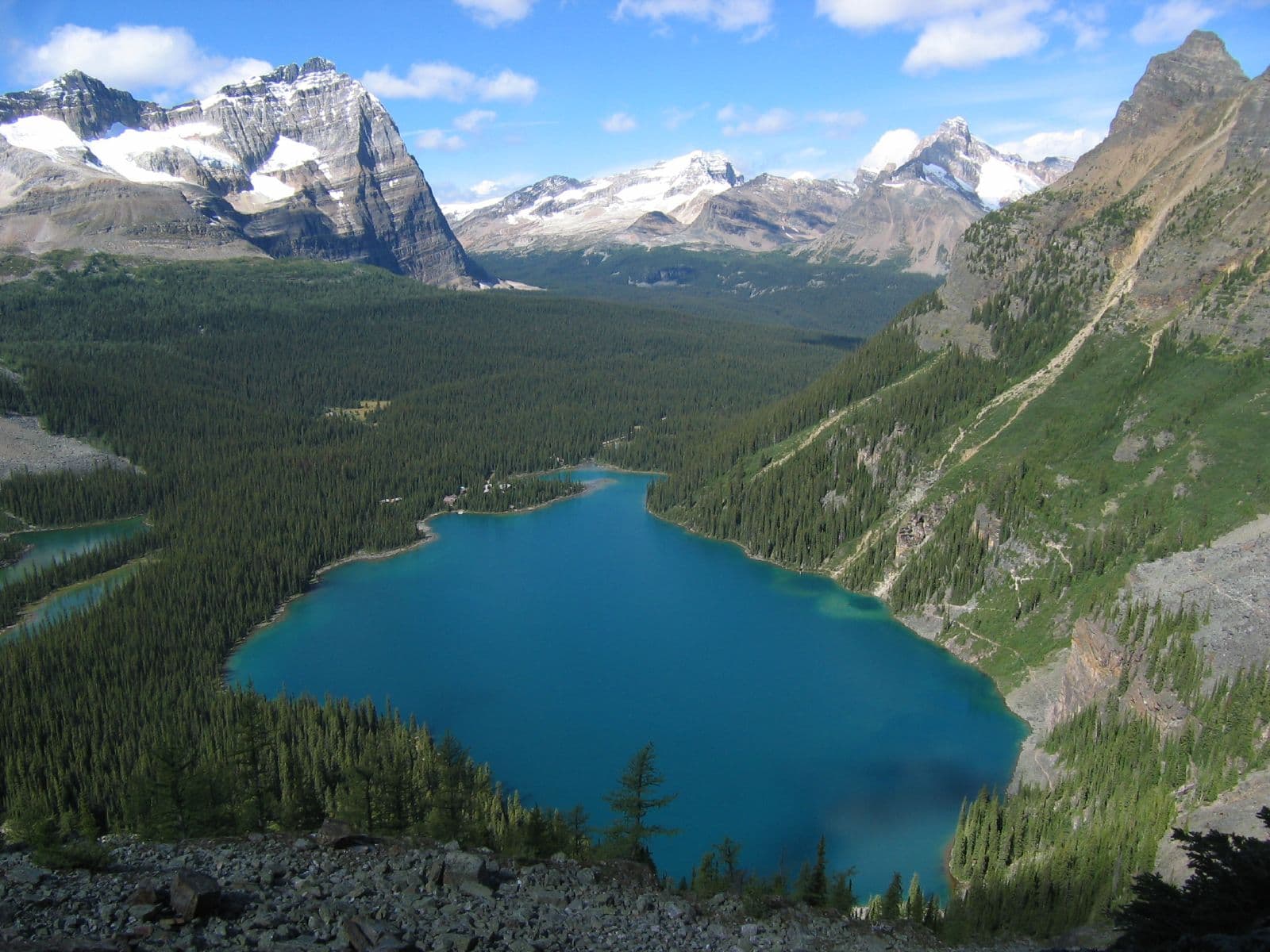
Lake O’Hara sits at roughly 2,000 metres in Yoho National Park, ringed by eleven peaks that rise more than 1,000 metres above the water. Its intense turquoise colour comes from glacial rock flour suspended in the lake. Because Parks Canada limits daily access, the basin remains far quieter than nearby Lake Louise or Moraine Lake while delivering comparable scenery.
Reaching the Lake
Private vehicles are not permitted on the 11-kilometre access road. Most visitors ride the park shuttle from the parking area near the Trans-Canada Highway. Those seeking more challenge can hike the road on foot or combine the Cataract Brook trail with the lake circuit. Once inside the basin, a well-signed network of trails radiates from the lodge and campground.
Best Time to Visit
The prime window runs from early July through late September when snow has melted from the high passes. July brings peak wildflowers on the alpine meadows; September offers fewer bugs and the first touches of autumn colour on larch slopes. Early-season hikers should carry traction devices, as lingering snow can persist into July on north-facing slopes.
Signature Hikes
- The 11-kilometre Lake O’Hara Alpine Circuit combines the Wiwaxy Gap, Huber Ledges, and All Souls’ Prospect routes for continuous high-alpine views.
- Opabin Plateau offers an easier half-day loop across flower-filled meadows with reflective ponds and a short side trip to Mary Lake.
- Lake McArthur is reached via a steady climb past Schaffer Lake; the deep, often ice-dotted cirque lake sits directly beneath Mount Biddle.
Where to Stay Inside the Basin
Options range from the historic Lake O’Hara Lodge to a Parks Canada campground and several alpine huts maintained by the Alpine Club of Canada. All overnight stays require advance booking through official channels. Day visitors must still reserve a shuttle seat or obtain a hiking pass.
Nearby Places Worth Adding
After a day at O’Hara, many travellers continue to Emerald Lake for its shoreline trail or stop at Takakkaw Falls, Canada’s second-highest waterfall. The drive between these sites stays within Yoho National Park and reveals changing views of the Kicking Horse River valley.