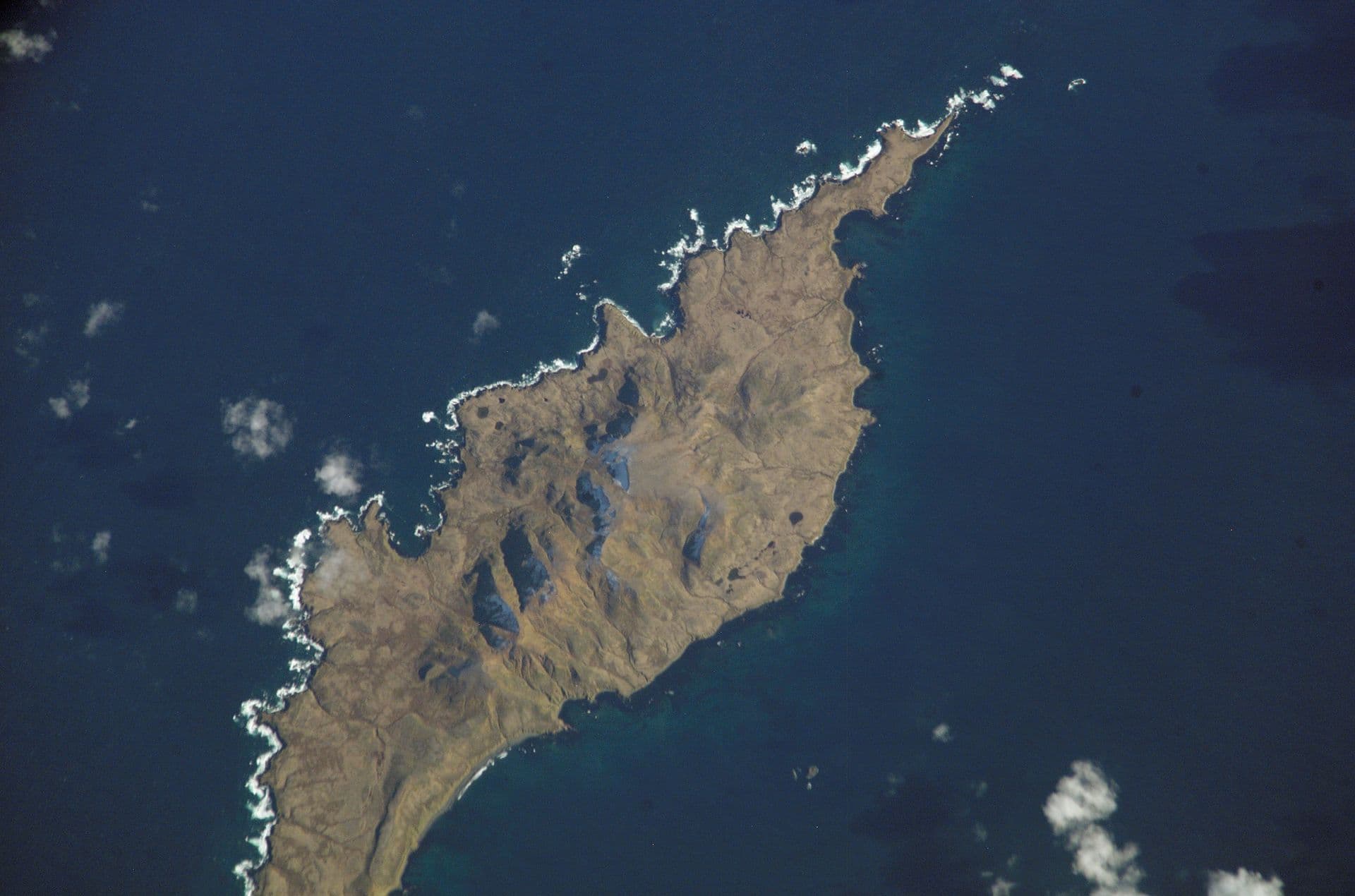
Why Hawadax Island Stands Out
Hawadax Island lies in the western Aleutian chain, a narrow, windswept strip of volcanic terrain surrounded by the Bering Sea and North Pacific. Formerly known as Rat Island, it gained ecological fame after a successful rat-eradication project restored nesting habitat for seabirds that had been absent for decades. Today the island offers visitors an unusually intact example of Aleutian tundra and marine life, with steep cliffs, rocky beaches, and offshore kelp beds that support sea otters, harbor seals, and dense colonies of auklets and puffins.
What to See and Do
Most visitors arrive to observe wildlife from the water or along the limited shoreline. Kayaking or small-boat tours circle the island’s perimeter, where Steller sea lions haul out on offshore rocks and migratory whales pass close to shore in summer. On land, short hikes across the tundra reveal nesting sites for glaucous-winged gulls and black-legged kittiwakes; the absence of mammalian predators makes the birdlife unusually approachable. Photographers prize the dramatic light that shifts quickly across the volcanic ridges and the contrast between emerald slopes and deep blue ocean.
Getting There
Access requires careful planning. Commercial flights reach Adak on the central Aleutians; from there, charter boats or floatplanes cover the remaining distance to Hawadax. Weather windows are narrow, and operators often combine visits with neighboring islands such as Kiska or Amchitka. No docks or maintained trails exist, so landings depend on calm surf and experienced skippers.
Best Time to Visit
June through early September offers the longest daylight, mildest temperatures, and peak seabird activity. Outside this window, frequent storms and shorter days make travel hazardous and wildlife viewing limited. Even in summer, visitors should expect sudden wind shifts and temperatures that rarely climb above 10 °C (50 °F).
Nearby Destinations
Many itineraries link Hawadax with the historic World War II sites on Kiska or the geothermal features near Adak. The entire region falls within the Alaska Maritime National Wildlife Refuge, so regulations emphasize minimal impact and advance permits for any extended stay.