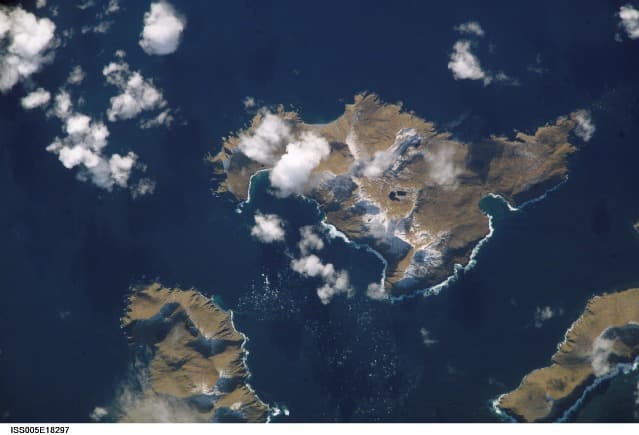
Why Aziak Island Stands Out
Situated in the Andreanof Islands group, Aziak Island rises from the North Pacific with steep cliffs, tundra slopes, and rocky shores shaped by frequent volcanic and seismic activity. Its position within the Alaska Maritime National Wildlife Refuge makes it a stronghold for nesting seabirds such as puffins, murres, and kittiwakes, while offshore waters host sea otters, harbor seals, and occasional whale sightings. The complete absence of roads, lodges, or permanent residents preserves an authentic sense of isolation rarely found elsewhere in Alaska.
Getting There
Commercial flights reach Adak or Atka from Anchorage via several weekly connections. From either hub, visitors must arrange private boat or floatplane charters for the final leg to Aziak; landings occur on exposed beaches when weather permits. Because no scheduled service exists, advance coordination with local operators in Adak is essential, and travelers should allow flexible buffer days for weather delays common throughout the chain.
What to See and Do
Wildlife viewing from the water or along coastal ridges forms the primary draw. Kayakers and hikers can explore sheltered coves and climb to interior lakes for panoramic views of neighboring islands. Beachcombing often yields Japanese fishing floats and volcanic pumice, while careful observation reveals Aleutian cultural remnants such as old hunting camps. Fishing for halibut or rockfish is possible from boats, subject to current state regulations. Photography of dramatic cliffs and marine life rewards those who time visits with long summer daylight.
Best Time to Visit
July through early September offers the mildest temperatures, longest daylight, and peak seabird activity. Winter months bring extreme winds, snow, and near-constant darkness, rendering travel impractical. Even in summer, expect rapid weather shifts and pack layers, waterproof shells, and sturdy boots rated for wet tundra.
Nearby Destinations
Charter boats can extend trips to neighboring islands such as Atka for hot-spring soaks or Adak for World War II historic sites and caribou herds. The entire region forms part of the Aleutian Islands National Wildlife Refuge, offering a continuous corridor of protected habitat for extended wilderness itineraries.