Why Visit Amchitka
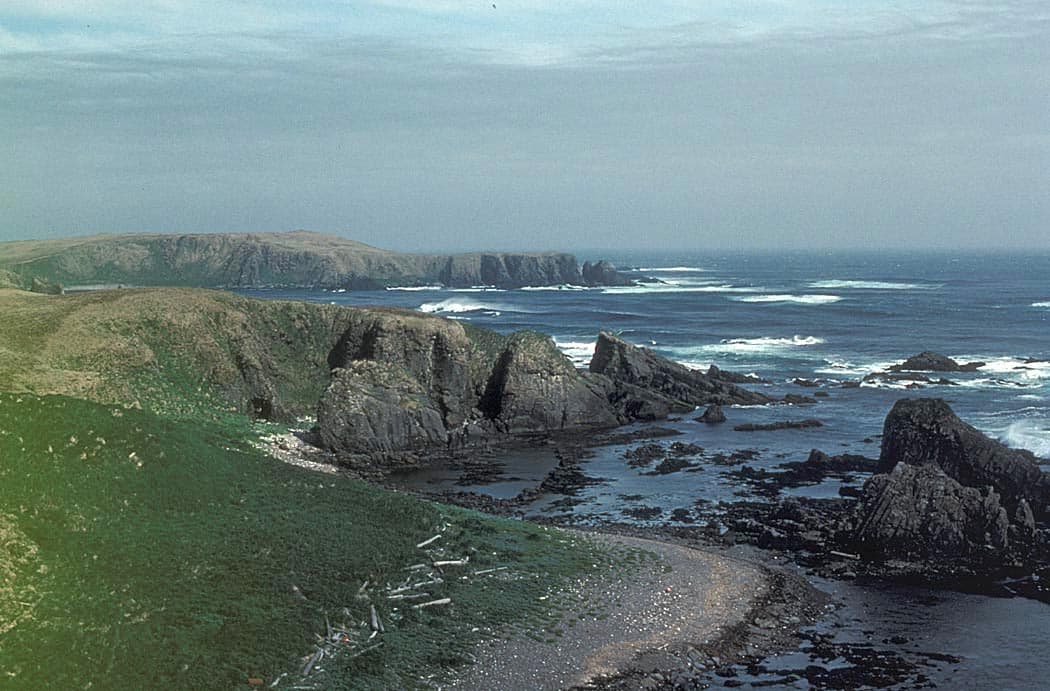
Amchitka sits at the western edge of the Rat Islands group in the Aleutian chain, offering one of North America’s most isolated stretches of coastal tundra and rocky shoreline. Its position between the Bering Sea and North Pacific creates constant wind, fog, and dramatic light that attract serious naturalists and history enthusiasts rather than casual travelers.
Natural Environment
The island’s volcanic origins left steep cliffs, narrow beaches, and interior lakes that support dense colonies of seabirds. Look for tufted puffins, black-legged kittiwakes, and glaucous-winged gulls nesting on the sea stacks. Marine mammals include harbor seals hauled out on reefs and occasional sea otters foraging in kelp beds. The surrounding waters remain part of the Alaska Maritime National Wildlife Refuge, protecting an important migratory corridor.
Terrestrial Features
Interior wetlands host nesting shorebirds and the occasional caribou that swim from nearby islands. Low-lying vegetation consists of crowberry, Labrador tea, and wind-pruned grasses that turn bronze in autumn.
Historical Context
During the Cold War the U.S. conducted three underground nuclear tests on Amchitka between 1965 and 1971. The sites are now monitored for environmental impact, and visible surface disturbance is minimal. Interpretive signs and restricted zones remind visitors of the island’s strategic past while the landscape itself has largely recovered.
Getting There
Access begins with a flight to Adak, the nearest civilian airfield with scheduled service from Anchorage. From Adak, charter boats or small aircraft provide the final leg; landings require advance permission from the U.S. Fish and Wildlife Service. No public docks or maintained trails exist, so visitors must be self-sufficient with camping gear and satellite communication.
Best Time to Visit
June through early September offers the longest daylight and mildest temperatures, though storms can arrive any day. Winter travel is impractical due to ice, darkness, and lack of rescue options.
Nearby Destinations
Adak Island to the east provides World War II ruins and an Aleutian WWII National Historic Area. Further west, Kiska Island offers additional wilderness hiking and another abandoned military site, reachable only by boat or floatplane on multi-day itineraries.