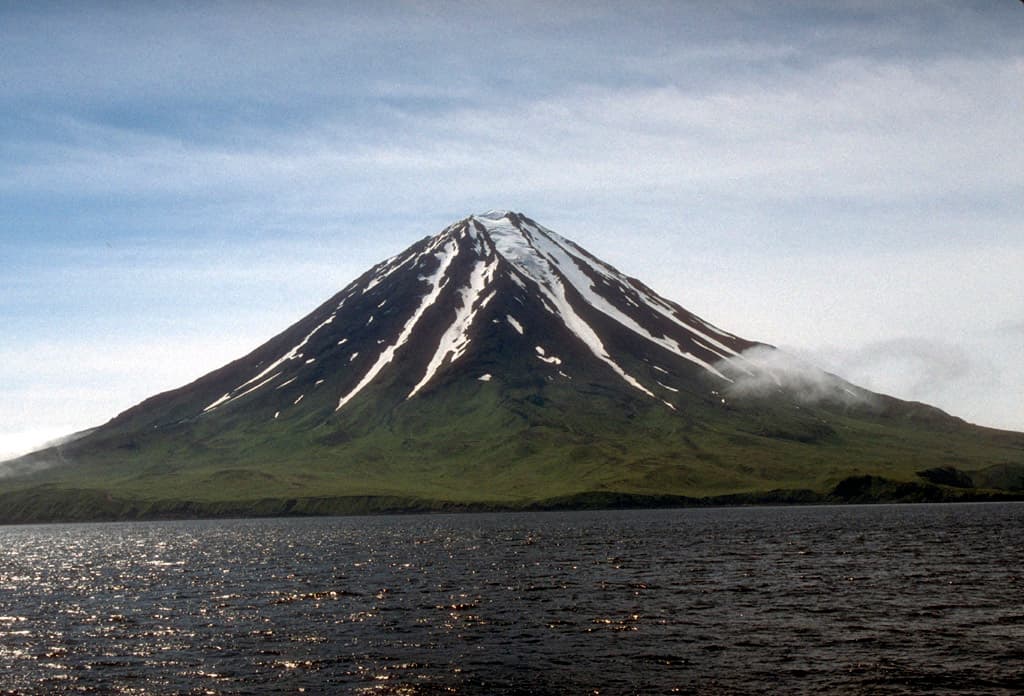
Why Carlisle Island Stands Out
Carlisle Island rises sharply from the Bering Sea as part of the Islands of Four Mountains in Alaska’s Aleutian archipelago. Its steep volcanic slopes, covered in tundra and seabird colonies, offer visitors a rare glimpse of untouched wilderness far from any roads or settlements.
Wildlife and Natural Features
The island supports large breeding colonies of seabirds including thick-billed murres, least auklets, and horned puffins that nest on sheer cliffs. Marine mammals such as Steller sea lions and northern fur seals haul out along rocky shores, while sea otters frequent nearshore waters. The rugged terrain includes lava flows and cinder cones shaped by the island’s volcanic origins within the active Aleutian arc.
Best Time to Visit
Summer months from June through August provide the most favorable conditions, with longer daylight hours, milder temperatures, and peak seabird activity. Winter brings harsh storms and limited daylight, making travel impractical for most visitors.
How to Reach Carlisle Island
Access requires careful planning due to its extreme isolation. Most travelers arrange charter boats or small aircraft from Unalaska or Dutch Harbor, roughly 200 miles to the east. Some expedition cruises through the Aleutians include brief landings. There are no docks, trails, or facilities on the island, so visitors must be fully self-sufficient with appropriate gear for landing through surf and hiking across uneven ground.
Nearby Attractions
Chuginadak Island lies just to the south, featuring the active Mount Cleveland volcano that occasionally produces ash plumes. Herbert Island and other members of the Four Mountains group offer similar remote landscapes and can be combined in multi-day boat trips. The entire region falls within the Alaska Maritime National Wildlife Refuge, protecting vast seabird populations across hundreds of islands.
Planning Your Trip
Weather changes rapidly in the Aleutians, with frequent fog, wind, and rain even in summer. Visitors should carry layers, waterproof clothing, binoculars for wildlife viewing, and navigation tools. Permits may be required for refuge lands, and all travel should be coordinated with experienced local operators familiar with Aleutian conditions.