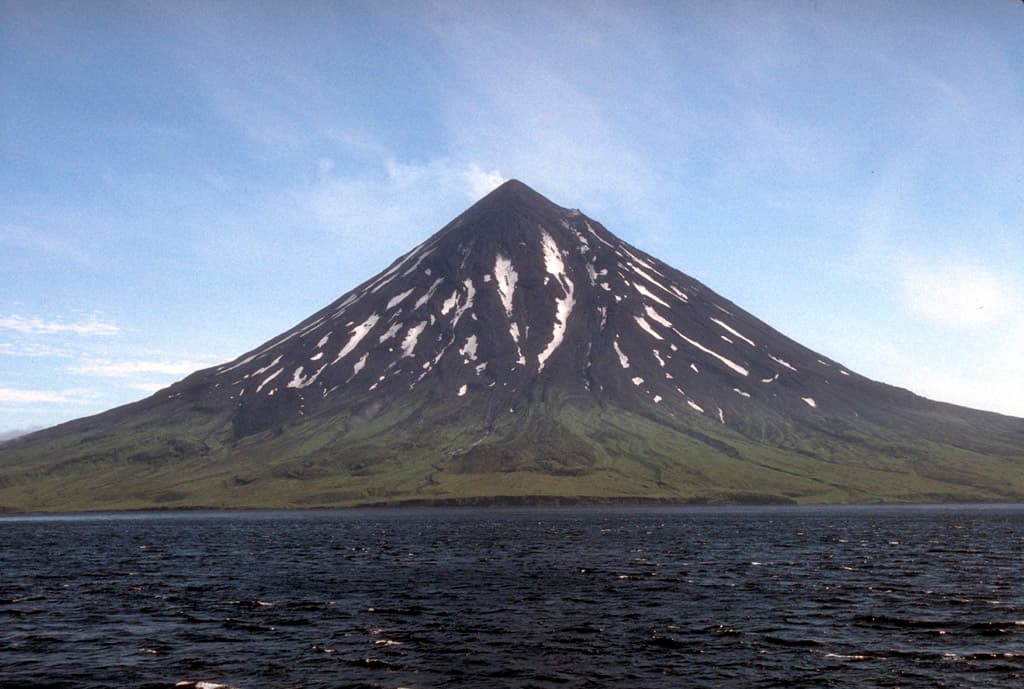
Why Visit Mount Cleveland
Mount Cleveland rises sharply from the Bering Sea as one of the Aleutian Islands’ most frequently active volcanoes. Its symmetrical cone and frequent steam plumes create a stark, powerful landscape that draws volcanologists and intrepid travelers seeking untouched wilderness. The mountain sits within the Alaska Maritime National Wildlife Refuge, where visitors encounter seabird colonies, sea otters, and harbor seals against a backdrop of constant geological activity.
What to See and Do
Hiking around the lower slopes reveals lava flows and ash fields from recent eruptions. Experienced climbers may attempt the steep ascent, though the route demands crampons and ice axes due to persistent snow and ice. Boat-based circumnavigation offers close views of fumaroles and nesting birds without setting foot on unstable terrain. Wildlife viewing from a safe distance highlights the refuge’s rich marine ecosystem, including Steller sea lions and migratory whales.
Practical Activities
- Photograph steam vents and caldera features from approved vantage points.
- Observe seabird rookeries on surrounding cliffs during breeding season.
- Document volcanic geology with a trained guide who understands current hazards.
Getting There
Access begins with flights to Dutch Harbor or Atka, followed by charter boat or floatplane transfer to Chuginadak Island. No roads or trails exist on the island, so all travel occurs by foot or small vessel. Permits from the U.S. Fish and Wildlife Service are required for landing.
Best Time to Visit
Summer months from June through August provide the longest daylight and mildest temperatures, though fog, high winds, and sudden storms remain common. Winter visits are impractical due to extreme cold and sea ice.
Nearby Attractions
Other Aleutian volcanoes such as Mount Carlisle and Mount Herbert lie within short boat range. The chain’s rich World War II history includes abandoned military sites on nearby islands, while the entire region offers prime sea-kayaking and fishing opportunities.