Why Buldir Volcano Stands Apart
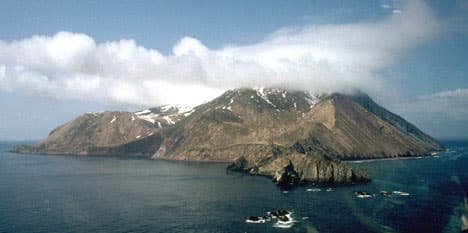
Buldir Volcano rises as a solitary stratovolcano on Buldir Island, the westernmost volcanic peak in the Aleutian chain. Its steep slopes and lack of human settlement preserve one of the most intact seabird ecosystems in North America, hosting massive colonies of auklets, puffins, and fulmars that nest on sheer cliffs and grassy slopes.
Reaching This Isolated Island
Access begins with flights to Adak or Dutch Harbor, followed by charter boat or small-plane transport across the open Bering Sea. No roads, docks, or facilities exist on the island, so visitors must arrive fully self-sufficient with camping gear, food, and emergency communication equipment.
Best Time to Visit
Summer months bring the mildest weather and peak seabird activity, when breeding colonies fill the cliffs with activity. Winter storms and persistent fog make landings rare outside this window, while shoulder seasons offer quieter conditions for experienced backpackers.
What to See and Do
Prime activities center on observing dense seabird colonies from coastal vantage points and hiking ridgelines for panoramic views of the volcano’s crater and surrounding ocean. Photographers and naturalists also document rare plants and marine mammals visible from shore.
Nearby Destinations
From Buldir, charters can continue to neighboring islands such as Kiska and Attu, where World War II historical sites and additional bird habitat provide contrast to Buldir’s purely wild character.