
Keep reading
Nearby & related
Aleutians West Census Area
Hammerhead Island: Remote Wilderness in Alaska’s Aleutian Chain
Experience the raw, windswept isolation and abundant marine wildlife of this uninhabited Aleutian island.
16 August 2026
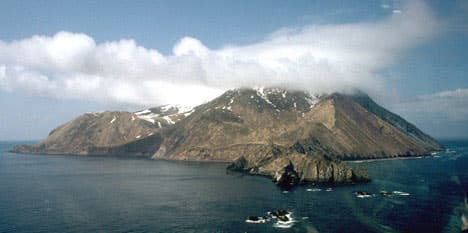
Discover Alaska’s most isolated island refuge, home to massive seabird colonies and untouched volcanic landscapes.
Buldir Island lies at the western edge of the Rat Islands group in Alaska’s Aleutian chain, roughly 200 miles west of Adak. Its steep volcanic slopes rise directly from the North Pacific, creating sheer cliffs that support one of the largest seabird colonies in the northern hemisphere. The island’s isolation has kept it free of introduced predators for decades, allowing native species to thrive in numbers rarely seen elsewhere.
Visitors come primarily for wildlife observation. Northern fulmars, least auklets, crested auklets, and tufted puffins nest in dense concentrations along the cliffs and talus slopes. Harbor seals haul out on rocky beaches while Steller sea lions patrol offshore waters. The island’s interior tundra supports nesting geese and occasional arctic foxes. Hiking is limited to established routes that avoid fragile burrows; most exploration occurs from small boats circumnavigating the shoreline.
Stay at least 100 yards from marine mammals and never approach nesting cliffs from above. Binoculars and spotting scopes are essential because landings are rare and brief.
Commercial access does not exist. Travelers must join permitted scientific or conservation expeditions departing from Adak or Dutch Harbor. These trips typically involve multi-day voyages aboard small research vessels. Fixed-wing flights to Buldir are occasionally arranged by the U.S. Fish and Wildlife Service but require prior authorization and are weather-dependent.
Late May through early August offers the longest daylight and peak seabird activity. Storms are frequent year-round, but summer seas are marginally calmer. Winter visits are nearly impossible due to ice and extreme winds.
Keep reading
Experience the raw, windswept isolation and abundant marine wildlife of this uninhabited Aleutian island.
No. Access is restricted to permitted researchers and conservation groups. Independent travelers cannot land without authorization from the Alaska Maritime National Wildlife Refuge.
Its complete lack of introduced mammals and extreme isolation have preserved one of the densest seabird colonies in the North Pacific.
Expeditions usually last 10 to 20 days round-trip from Adak, including travel time and weather delays.
There are no permanent structures, trails, or services. All supplies and shelter must be brought by the expedition.
Millions of auklets, puffins, fulmars, and murres nest on the cliffs; harbor seals and sea lions are common along the shore.
Discover the untouched landscapes, seabird colonies, and wartime relics of this isolated island in Alaska’s Aleutian…
This isolated island in the central Aleutians delivers raw volcanic landscapes, seabird colonies, and true frontier…