Why Visit the Maneki-Neko Museum
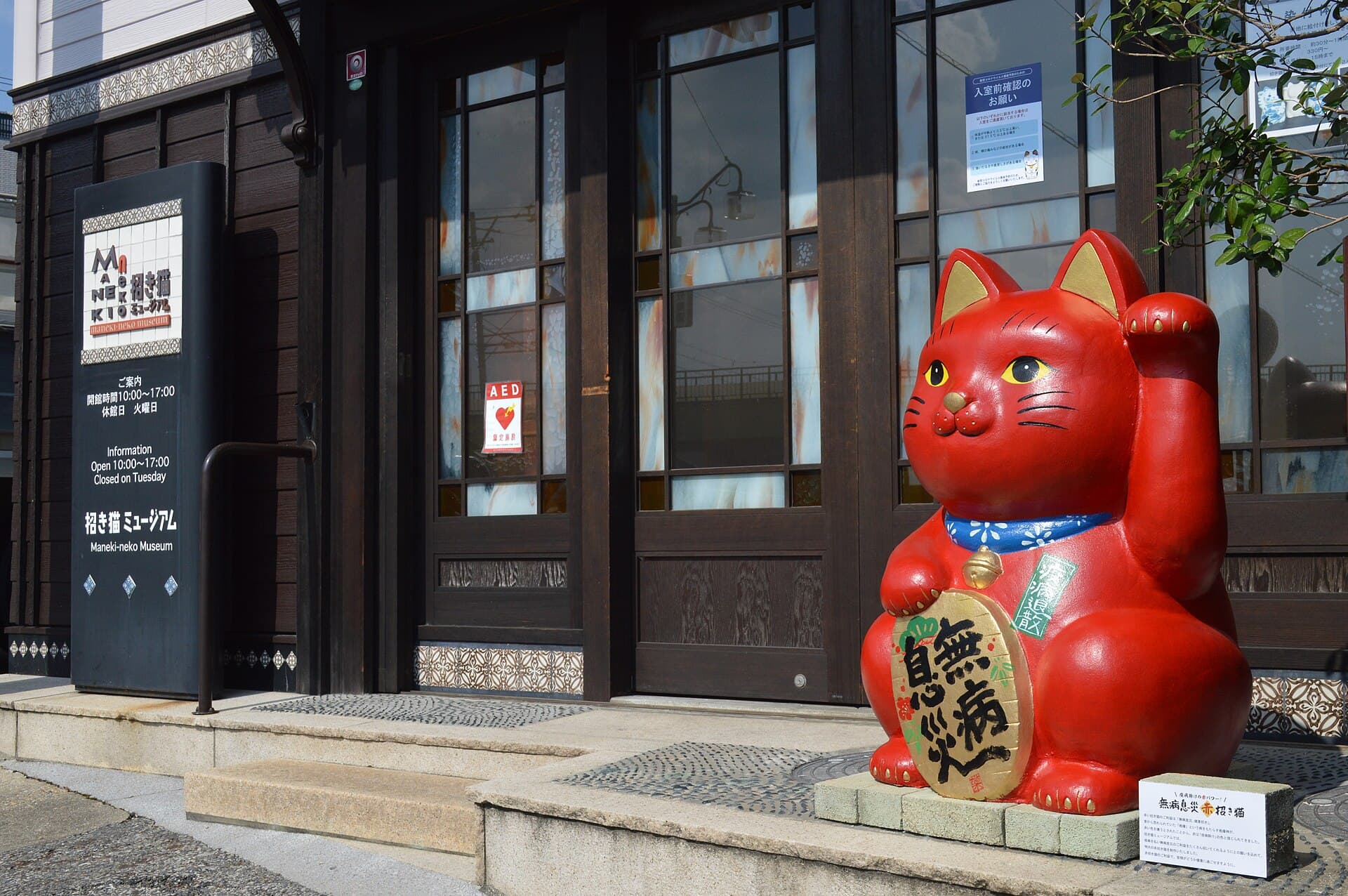
Seto, long celebrated as one of Japan’s Six Ancient Kilns, produced the clay that shaped everyday life for centuries. The Maneki-Neko Museum turns that same material into an exuberant tribute to the beckoning cat, a symbol of good fortune found on shop counters and home altars across the country. Rather than a conventional art gallery, the museum gathers figurines from every era and region, showing how a simple raised paw evolved into a national icon.
Collections and Displays
Inside, visitors encounter cats in every size and finish: early unglazed earthenware pieces from the Edo period, vividly painted Showa-era examples, and contemporary sculptures that reinterpret the form in porcelain or mixed media. One gallery traces the legend’s roots to the 17th-century Gōtoku-ji temple tale, while another highlights regional variations, including the round-faced cats of Seto itself. Rotating exhibits often pair figurines with vintage advertisements and festival banners, illustrating how the motif moved from folk belief into commercial culture.
Interactive Elements
A small workshop area lets guests paint their own miniature maneki-neko using traditional Seto underglaze techniques. The process reveals why the local clay takes color so well and why the museum sits in this particular valley rather than Tokyo or Kyoto.
Getting There
Seto lies roughly 30 minutes by train from central Nagoya. From Seto Station, local buses and a short walk through the old pottery district bring visitors to the museum’s quiet residential street. The surrounding lanes still contain working kilns and showrooms, so many travelers combine the museum with a pottery-making session or a visit to the nearby Seto-Gura Museum of ceramic history.
Best Time to Visit
Spring and autumn offer the mildest weather for wandering the historic district. Summer brings humid heat but also evening festivals where maneki-neko lanterns line the streets. Winter is quieter, allowing more time to study the finer details of the collections without crowds.
Nearby Attractions
Within walking distance are several active pottery studios open to visitors. A short bus ride reaches the expansive Aichi Prefectural Ceramic Museum, which places Seto ware in the broader context of Japanese ceramics. Nagoya’s castle and bustling morning markets lie less than an hour away for those extending the trip.