Keep reading
Nearby & related
Sagavanirktok River: Rafting Alaska’s Remote Arctic Frontier
Experience the wild, roadless beauty of one of Alaska’s northernmost rivers on the North Slope.
17 August 2026
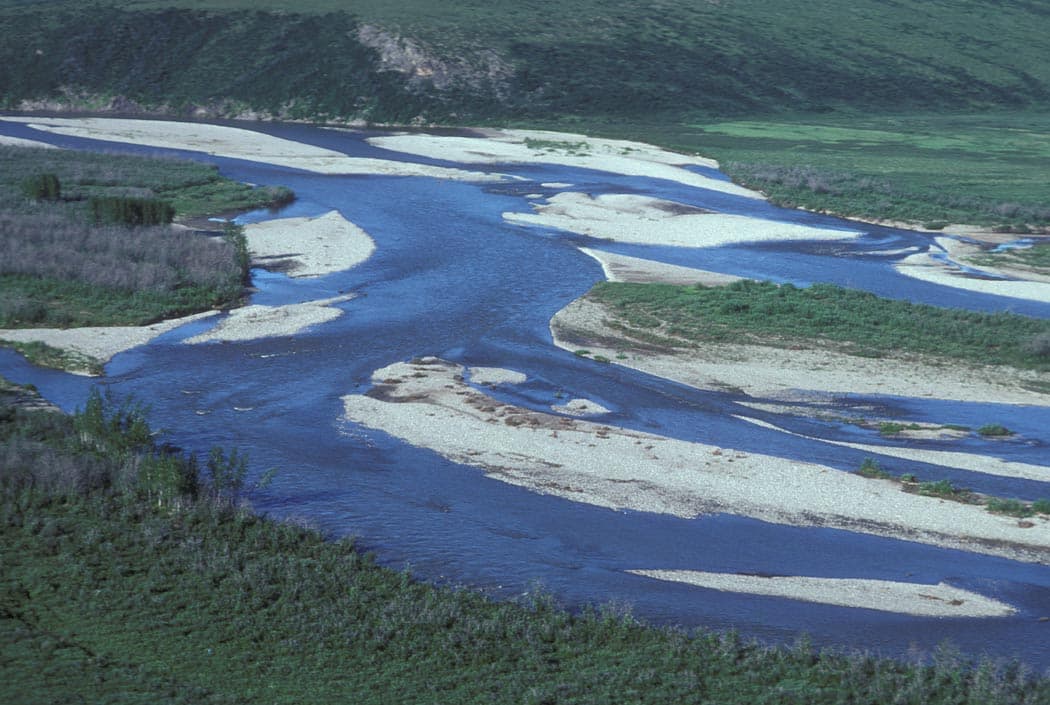
Float the wild Teedriinjik River through untouched northern Alaska for fishing, wildlife, and Arctic solitude.
The Teedriinjik River, also known locally by its Gwich’in name, flows through the vast Yukon Flats region of interior Alaska. Its braided channels, clear side streams, and surrounding boreal forest and tundra create a pristine corridor rarely visited by outsiders. The river supports healthy runs of salmon and grayling while serving as a travel route for moose, bears, and migratory birds in one of North America’s largest wetland complexes.
Multi-day raft or canoe trips are the primary way to experience the Teedriinjik. Anglers target northern pike in sloughs and Arctic grayling in clear tributaries. Wildlife viewing is excellent from the water, with chances to spot caribou, black bears, and nesting waterfowl. Photographers find dramatic light on the river’s gravel bars at midnight during summer. Short hikes from campsites lead to ridge views overlooking the flats.
Most visitors fly into Fort Yukon or Arctic Village, then arrange a bush-plane flight or boat shuttle to an upstream put-in. Float trips typically end near the confluence with the Yukon River, where travelers can catch a riverboat back to Fort Yukon for commercial flights. Independent travelers need strong navigation skills and wilderness self-sufficiency; guided trips simplify logistics and provide local knowledge.
Late June through early September offers ice-free water and 24-hour daylight. July brings peak fishing and wildflowers, while August offers cooler temperatures and fewer insects. Early-season trips require caution around lingering ice and high water; late-season floats benefit from lower flows but risk early frost.
The Teedriinjik lies adjacent to the Yukon Flats National Wildlife Refuge and provides a gateway toward the Brooks Range. Travelers often combine a river trip with visits to Arctic Village or the historic Gwich’in settlement of Fort Yukon to learn about Indigenous culture and land stewardship.
Keep reading
Experience the wild, roadless beauty of one of Alaska’s northernmost rivers on the North Slope.
No special river permit is required, but visitors should check current regulations for the Yukon Flats National Wildlife Refuge and obtain any necessary Alaska fishing licenses in advance.
Moose, black bears, and migratory waterfowl are frequent sights. Caribou may appear during migration periods, and salmon runs attract bears to the riverbanks.
Most float trips last five to eight days depending on put-in and take-out points and daily mileage, allowing time for fishing and side explorations.
The Teedriinjik features mostly Class I-II water with occasional sweepers and logjams. Novices should travel with experienced guides or join a supported trip.
Bring layered clothing for variable weather, a sturdy raft or canoe, dry bags, insect repellent, and enough food for the full duration plus extra days in case of weather delays.
Paddle, fish, and explore the untouched Buckland River deep in northwest Alaska’s Arctic landscape.
The Gulkana River delivers remote Alaska wilderness, world-class salmon runs, and scenic multi-day floats in the Copper…