Why Prasat Leak Neang Stands Out
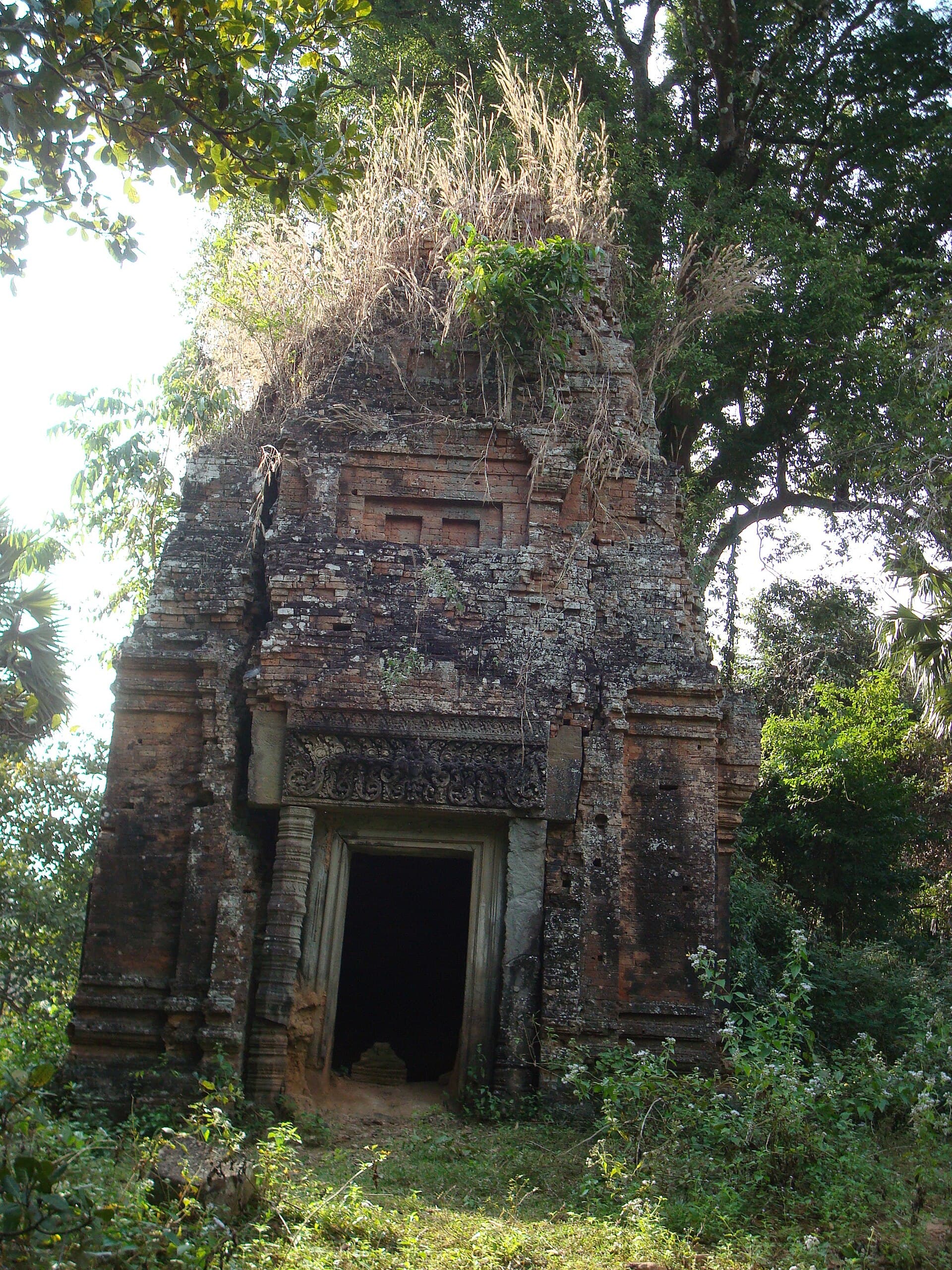
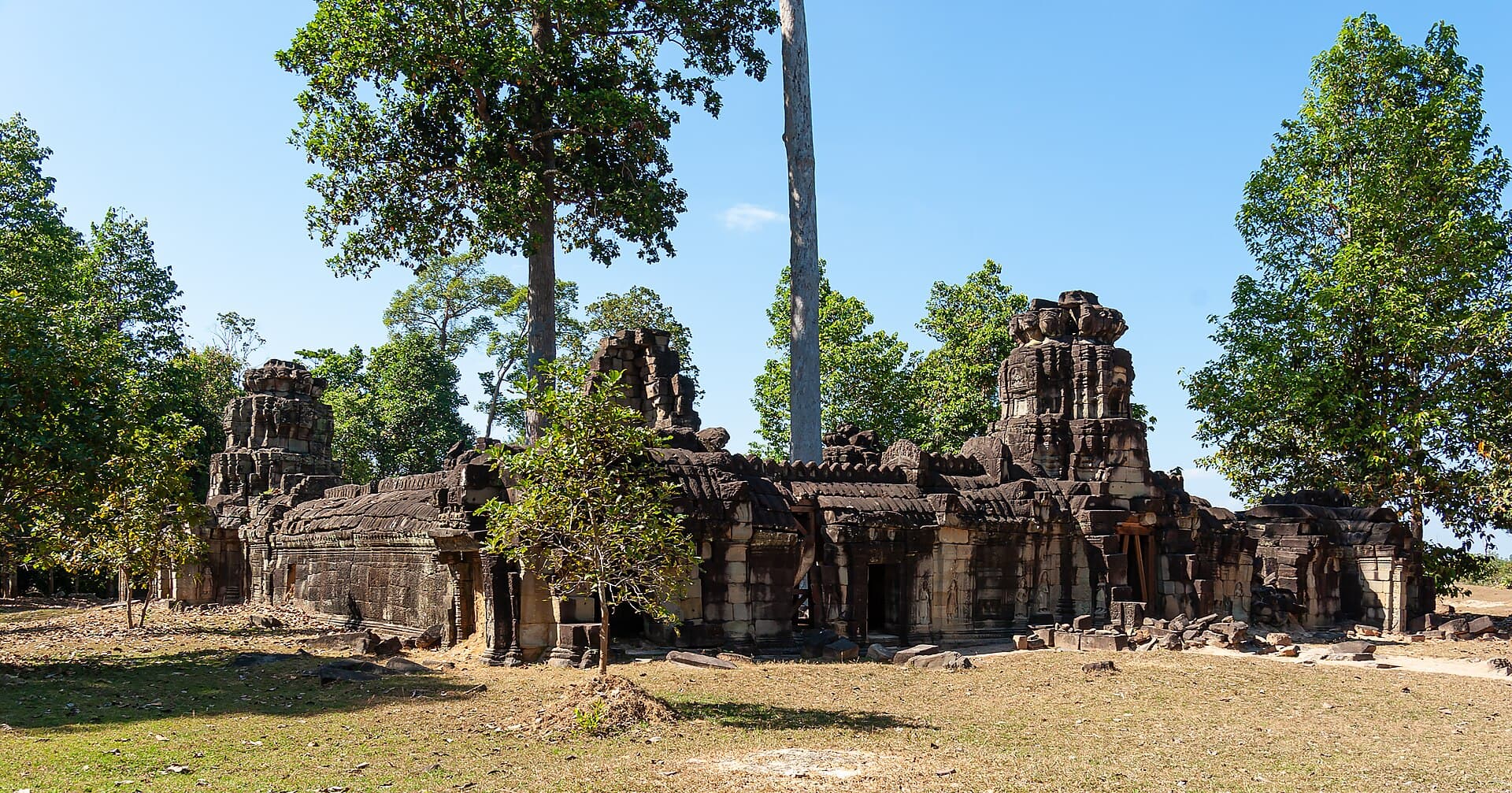
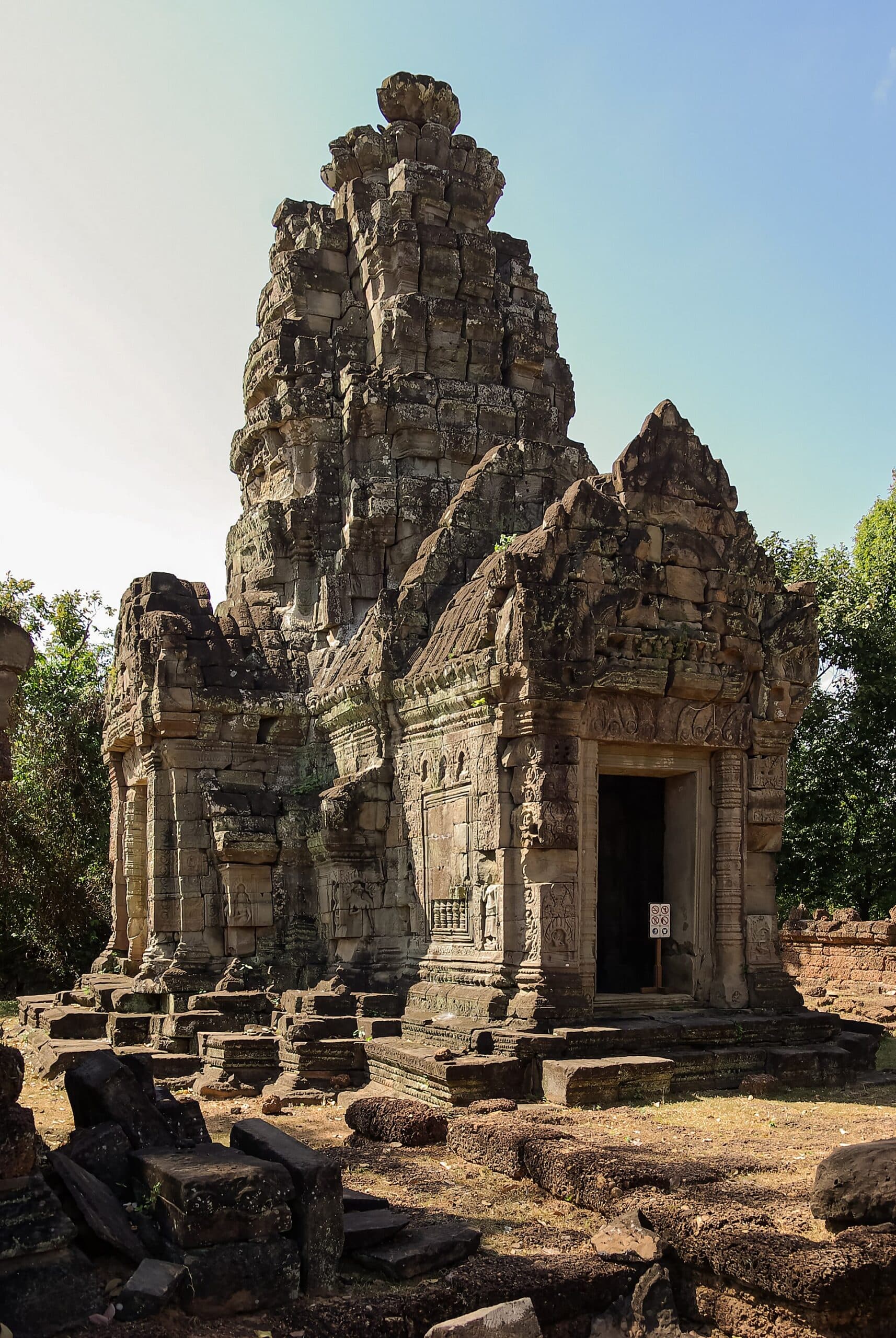
Prasat Leak Neang is a compact 10th-century temple built of brick during the reign of Rajendravarman II. Its three towers face east and once housed Vishnu images. The site sits just south of the East Baray reservoir, offering visitors a peaceful stop that contrasts with the scale of Angkor Wat or Bayon.
Architecture and Details Worth Noting
The central tower remains the best preserved, with visible false doors and decorative lintels carved in sandstone. Red brick surfaces show the typical Angkor-period construction technique of using laterite and brick bonded with a natural resin mortar. Few visitors linger here, so the surrounding trees and open grass create a calm setting for photography and quiet reflection.
Key Features to Examine
- Three aligned brick towers on a single platform
- Carved sandstone lintels above the doorways depicting floral and deity motifs
- Remains of a surrounding laterite wall and small moat
- Views across the grassy plain toward the distant East Baray dike
Getting There and Practical Planning
Prasat Leak Neang lies inside the Angkor Archaeological Park, roughly 15 kilometers north of Siem Reap town. Most travelers combine it with nearby temples such as Prasat Kravan or the East Mebon on a standard one-day circuit. Motorbike, bicycle, or tuk-tuk are the usual transport options; drivers know the minor access road that branches off the main temple loop. Arrive early in the morning or late afternoon to avoid midday heat and to enjoy the site in solitude.
Best Time to Visit and What to Bring
The dry season from November to April offers the most comfortable conditions. Carry water, wear a hat, and apply sunscreen, as there is little shade once you leave the tree line. Comfortable walking shoes help on the uneven brick and laterite surfaces. A temple pass is required; the standard one-day, three-day, or seven-day tickets all cover this site.
Nearby Sites Worth Combining
After Prasat Leak Neang, continue to Prasat Kravan for its unique brick bas-reliefs of Vishnu, then head north to the massive East Mebon or the intricate Banteay Kdei. These temples share the same eastern sector of the park, allowing efficient routing without long travel times between stops.