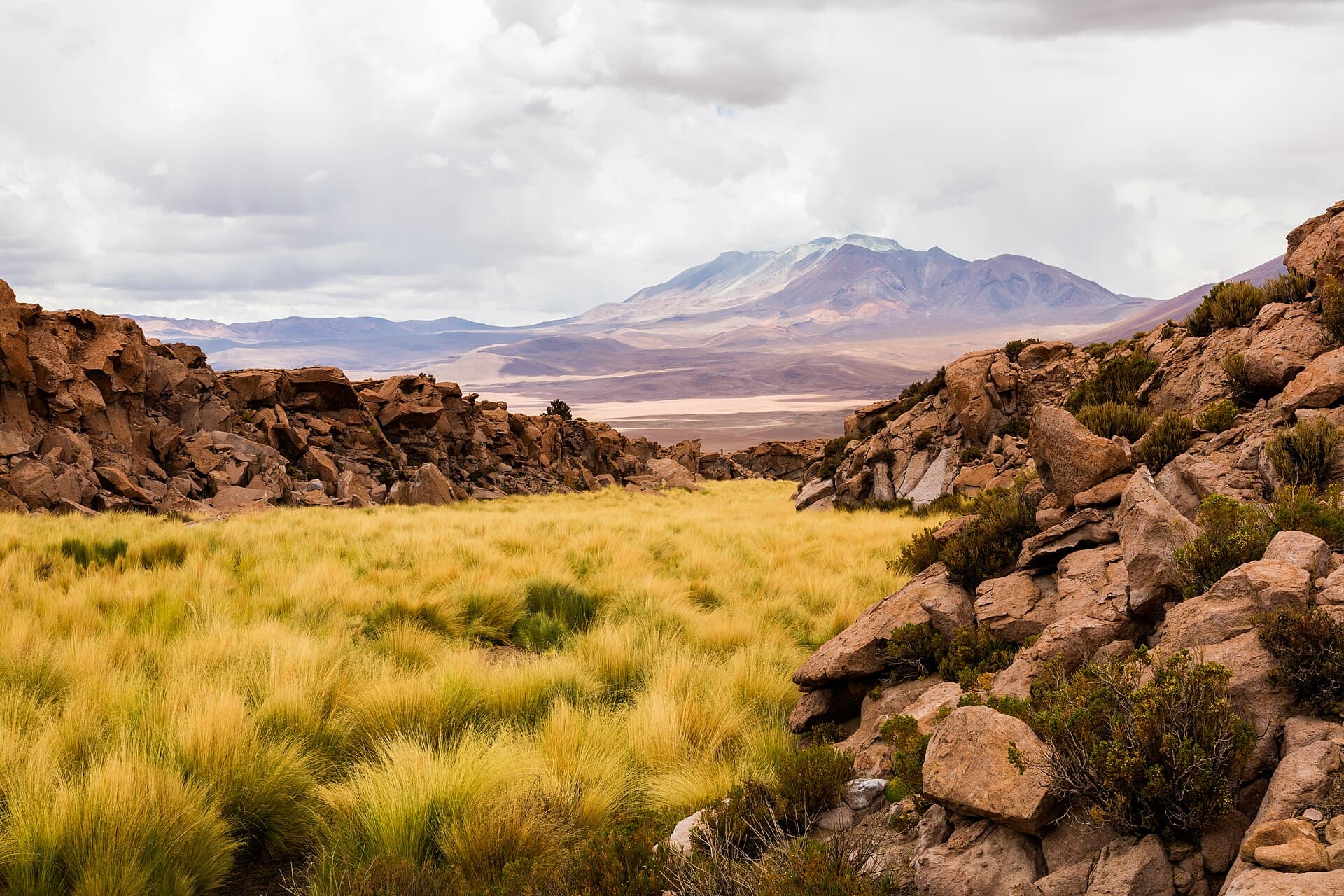
Why Paruma Stands Out
Paruma rises as a solitary stratovolcano in Bolivia’s Nor Lípez Province, part of the vast Andean volcanic chain that borders the Salar de Uyuni region. Its dark slopes and crater rim contrast sharply with the surrounding pale salt flats and rust-colored desert. Travelers who reach this remote summit experience the quiet scale of the southern altiplano, where few other peaks receive visitors.
Getting There
Most journeys begin in Uyuni or the smaller town of San Pablo de Lípez. From Uyuni, a combination of paved road and rough gravel tracks leads southeast toward the volcano; the final approach requires a 4×4 vehicle and local knowledge of unmarked turnoffs. Many visitors combine the trip with stops at the nearby Ollagüe volcano or the colorful Laguna Colorada. Allow a full day of driving from Uyuni, and plan an overnight in a basic community lodge or camp before the hike.
Best Time to Visit
The dry season from May to October brings stable weather and clearer skies, though nights remain below freezing. December through March sees occasional thunderstorms and muddy tracks that can strand vehicles. Sunrise and sunset provide the most dramatic light on the cone and surrounding salt pans.
What to See and Do
The main activity is the hike from the base camp at roughly 4,800 meters to the summit ridge. The route crosses loose volcanic scree and offers constant views of the Salar de Coipasa to the north and the Chilean border volcanoes to the west. Photographers prize the foreground of black lava flows against white salt. Birders may spot Andean flamingos at nearby seasonal lagoons, while geology enthusiasts examine fumaroles and sulfur deposits on the upper slopes. No technical climbing gear is required, but the altitude demands steady pacing.
Nearby Attractions
- Laguna Colorada – vivid red lake hosting thousands of flamingos
- Ollagüe volcano – accessible crater rim with cross-border views into Chile
- Salar de Uyuni – the world’s largest salt flat, reachable in a long day’s drive
- Traditional quinoa fields and llama herds around San Pablo de Lípez
Practical Considerations
Altitude sickness is the primary risk; spend at least two nights above 3,500 meters before attempting the summit. Carry extra fuel, spare tires, and sufficient water and food, as no services exist near the mountain. Local Aymara communities sometimes offer guiding or mule support; arranging this in advance supports the regional economy.