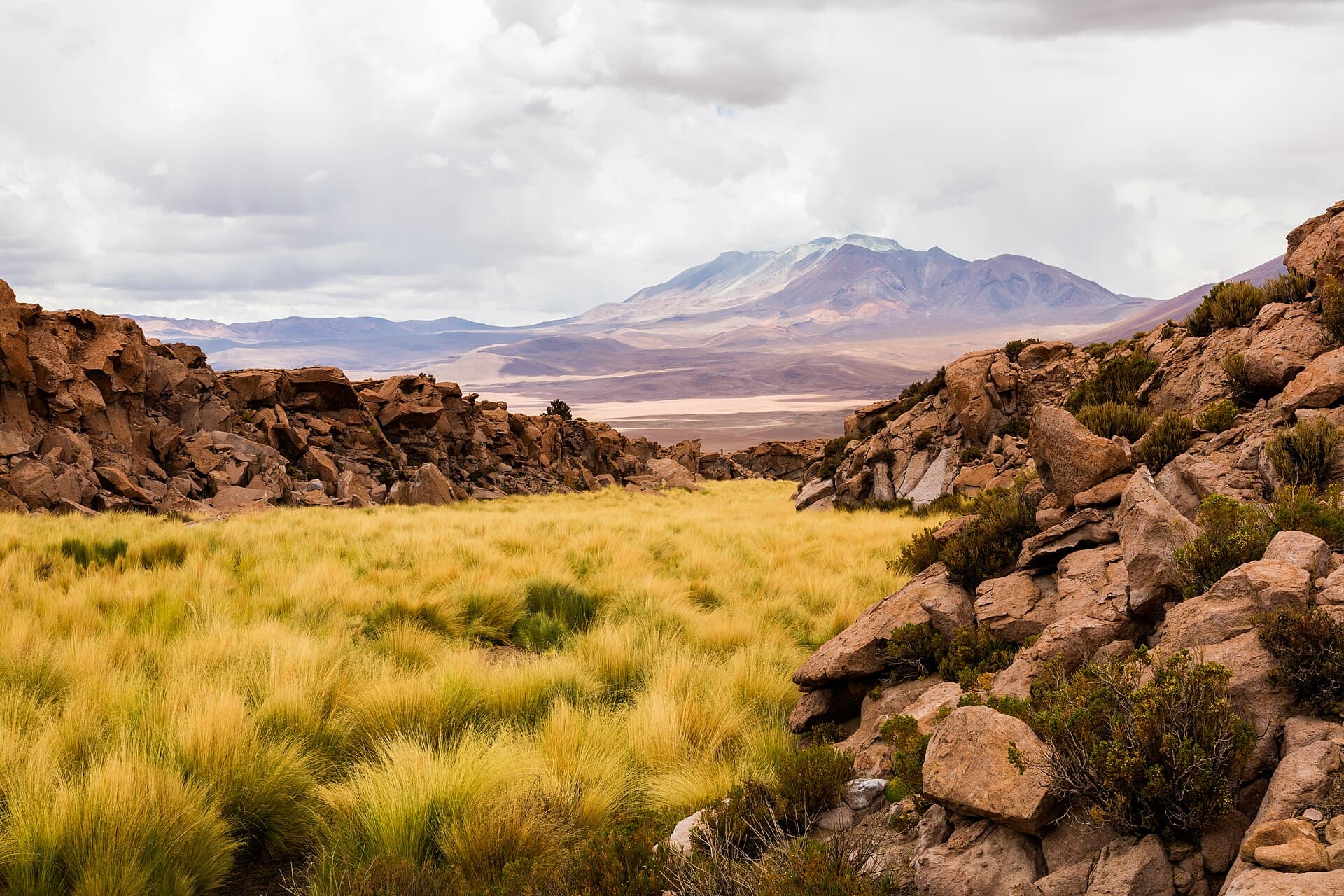
Why Pampa Luxsar Stands Out
Pampa Luxsar rises from the high desert of Nor Lípez Province as a solitary volcanic mountain surrounded by vast plains, salt crusts, and distant cordilleras. Its isolation delivers the kind of empty-horizon scenery that defines the Bolivian Altiplano, with clear air and minimal infrastructure making every viewpoint feel earned.
Getting There
Most visitors reach the mountain on multi-day 4×4 circuits that begin in Uyuni or Tupiza. The route crosses the Eduardo Avaroa Andean Fauna Reserve and passes through the colorful Laguna Colorada area before turning toward the mountain’s base. Independent travel is rare; the unpaved tracks require high-clearance vehicles and local knowledge of seasonal washouts.
What to See and Do
Short hikes from established campsites lead to higher ridges where the full sweep of the Lípez volcanoes becomes visible, including the silhouettes of Licancabur and other border peaks. Photographers favor the golden hours when the reddish volcanic rock contrasts with white salt flats and deep-blue sky. Birders may spot Andean flamingos at nearby shallow lagoons during the wetter months.
Geology and Landscape
The mountain’s dark lava flows and eroded craters illustrate the region’s long volcanic history. Walking across the pampa reveals scattered obsidian and pumice, evidence of past eruptions that shaped the present terrain.
Best Time to Visit
The dry season from May through October provides stable weather and passable roads. Skies remain clear for stargazing, and daytime temperatures are more manageable than the intense summer rains that can turn tracks into mud. Nighttime cold is constant year-round, so layered clothing is essential regardless of season.
Nearby Attractions
- Laguna Colorada and its flamingo colonies
- The Sol de Mañana geyser field
- The striking rock formations of the Siloli Desert
- Views toward the Chilean border volcanoes
These sites combine naturally with any visit to Pampa Luxsar on a standard reserve circuit.