Why Parliament House Matters
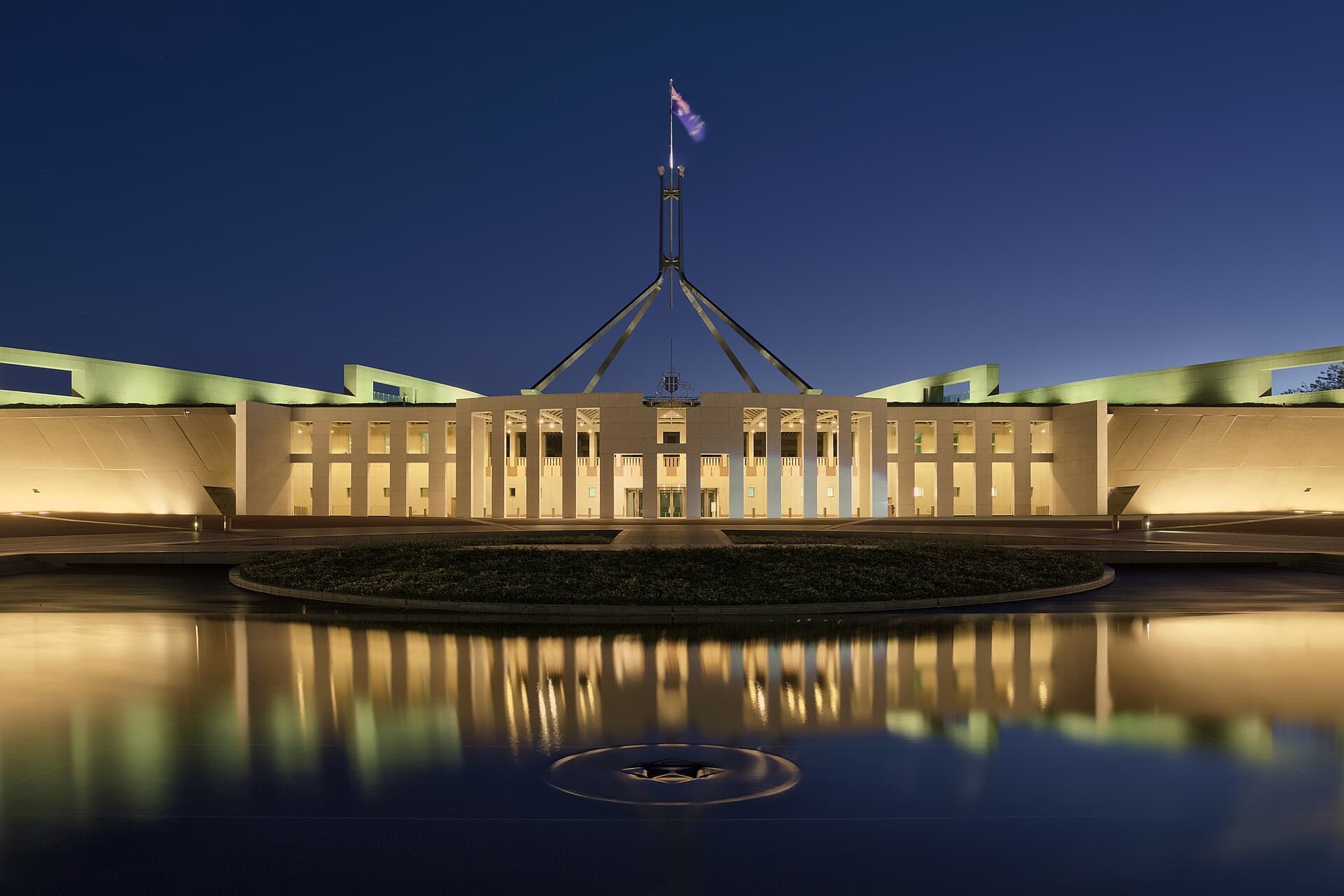
Parliament House stands as the symbolic and functional heart of Australian federal politics, its grass-covered roof and massive flagpole making it instantly recognizable on Canberra’s skyline. Opened in 1988, the building blends modernist design with Indigenous motifs and houses both the House of Representatives and the Senate, allowing visitors to witness democracy in action while exploring one of the country’s largest public art collections.
Architecture and Landscape
The structure was deliberately set into Capital Hill rather than rising above it, creating a low profile that respects the original Walter Burley Griffin plan for the city. Walk across the roof for sweeping views of Lake Burley Griffin and the surrounding Brindabella Ranges. The forecourt’s mosaic by Michael Nelson Jagamarra and the extensive use of Australian timbers and stone inside emphasize national identity and connection to Country.
Art and Interiors Worth Exploring
More than 3,000 artworks by Australian artists line corridors and chambers. Look for works by Sidney Nolan, Arthur Boyd, and contemporary Indigenous painters. The Great Hall’s vast tapestry by Arthur Boyd and the Senate and House chambers’ intricate detailing reward slow, attentive viewing. Temporary exhibitions in the public areas often focus on political cartooning and parliamentary history.
How to Get There
Parliament House sits at the southern end of Anzac Parade, a short drive or bus ride from Canberra’s city center. Many visitors combine the trip with a walk along the lake foreshore or a stop at nearby national institutions. Paid underground parking is available, and several ACTION bus routes terminate nearby.
Best Time to Visit
Canberra’s spring (September–November) and autumn (March–May) offer mild temperatures ideal for rooftop walks and outdoor photography. Summer can bring hot days, while winter mornings are crisp; both seasons still allow comfortable indoor exploration of the chambers and galleries.
Nearby Attractions
Combine your visit with the National Gallery of Australia, the Australian War Memorial at the opposite end of Anzac Parade, or a stroll around Lake Burley Griffin. The High Court of Australia and National Portrait Gallery sit within easy walking distance, creating a compact cultural precinct.