Skip to content
Plan & Tour
DestinationsItinerariesTravel BlogAboutContact
0Sign inPlan a trip
Plan & TourPlan & Tour

Travel guides, destination inspiration and curated itineraries for Canada, the USA and beyond, plus a free tool to plan your own day-by-day trip.

Get travel inspiration

Explore

  • All Destinations
  • Curated Itineraries
  • Travel Blog
  • Plan a Trip

Topics

  • Hiking & Nature
  • Food & Drink
  • City Breaks
  • Budget Travel

Company

  • About Us
  • Contact
  • Privacy Policy
  • Terms of Service

© 2026 Plan & Tour. Built for travellers.

Discover the world, one trip at a time.

Mount Sanford: Alaska’s Remote Volcanic Peak in Wrangell-St. Elias
  1. Home
  2. Destinations
  3. Alaska
  4. Mount Sanford: Alaska’s Remote Volcanic Peak in Wrangell-St. Elias
Mountain

Mount Sanford: Alaska’s Remote Volcanic Peak in Wrangell-St. Elias

Explore one of North America's tallest volcanoes amid the vast wilderness of Alaska's largest national park.

AlaskaUpdated 13 August 2026

Why Visit Mount Sanford

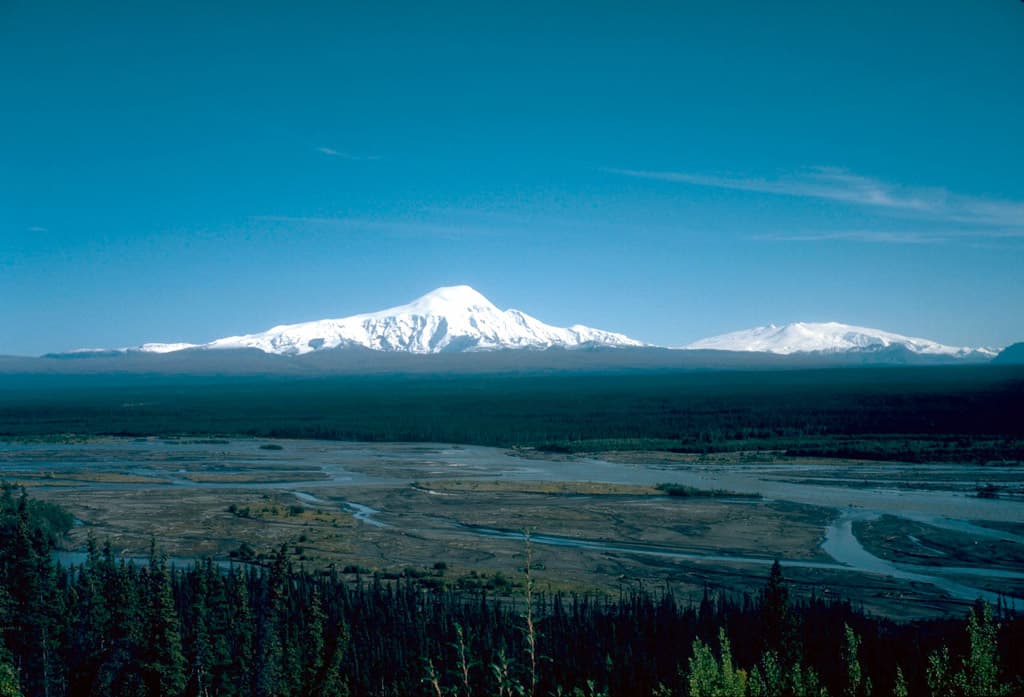
Mount Sanford rises dramatically in the Wrangell Mountains of eastern Alaska, forming a massive shield volcano that dominates the skyline of Wrangell-St. Elias National Park and Preserve. At over 16,000 feet, it offers visitors an unmatched sense of scale in one of the continent’s most remote and glaciated landscapes. The mountain’s broad, symmetrical cone, flanked by ice fields and surrounded by untouched taiga and tundra, attracts those seeking true wilderness rather than developed trails or facilities.

Getting There

Access begins with flights into Anchorage or Fairbanks, followed by a drive along the Richardson Highway to the Copper River basin near Glennallen or Copper Center. From there, travelers rely on small aircraft for bush-plane flights into the park’s interior, landing on gravel bars or glaciers near the mountain’s base. No roads reach the peak itself, preserving its isolation and requiring careful planning with local outfitters familiar with the terrain.

What to See and Do

Activities center on the surrounding park rather than summit attempts, which demand advanced mountaineering skills and months of preparation. Visitors enjoy flightseeing tours that circle the volcano for sweeping views of its crater and surrounding peaks. Hiking opportunities lie in lower elevations along river valleys, where caribou, Dall sheep, and grizzly bears roam. Kayaking or rafting on the Copper River provides another perspective of the mountain’s southern flanks. Wildlife viewing and photography thrive in this roadless expanse, with opportunities to witness calving glaciers and expansive wildflower meadows in season.

Best Time to Visit

June through early September offers the most favorable conditions, with long daylight hours, milder temperatures, and reduced avalanche risk on lower slopes. Winter visits are possible only for experienced backcountry travelers equipped for extreme cold and darkness. Shoulder months of May and September can provide fewer crowds but demand readiness for rapid weather shifts typical of high-latitude mountains.

Nearby Attractions

The immense Wrangell-St. Elias National Park and Preserve surrounds Mount Sanford, linking it to other notable features such as Mount Blackburn and the Chitina River valley. Travelers often combine a visit with exploration of Kennecott, a historic copper-mining town with preserved structures, or the dramatic landscapes of the Nabesna Road corridor for additional hiking and scenic drives.

Visitor tips

  • Hire a licensed local guide or outfitter for any travel beyond established roads, as the area has no maintained trails and navigation relies on GPS and topographic maps.
  • Pack layers for sudden temperature drops and carry bear spray along with food-storage containers to minimize wildlife encounters in this prime grizzly habitat.
  • File a detailed trip plan with park rangers and carry satellite communication devices, since cell service is nonexistent and weather can strand visitors for days.

Frequently asked questions

Is Mount Sanford suitable for beginner hikers?+

No, the mountain and its immediate surroundings are remote wilderness with no trails or services; only experienced mountaineers with proper permits and support should attempt higher elevations.

What permits are required to visit the area?+

A park entrance pass is needed for Wrangell-St. Elias, and backcountry permits may apply for overnight stays; check current regulations through the National Park Service before travel.

Can I drive close to Mount Sanford?+

No roads reach the mountain; visitors must fly in by bush plane after driving to the park's edge, making advance arrangements essential.

Are there any facilities near the mountain?+

There are none; the area is completely undeveloped, so travelers must be fully self-sufficient with all supplies, shelter, and safety equipment.

What wildlife might I encounter?+

Grizzly bears, caribou, Dall sheep, and wolves are common; proper food storage and awareness of bear country protocols are mandatory.

Share
Google Maps Apple Maps Directions

Image: Public domain · via Wikimedia Commons

Keep reading

Nearby & related

All stories
Mount Churchill: A Remote Volcanic Giant in Alaska’s Wrangell-St. Elias Wilderness
Copper River Census Area

Mount Churchill: A Remote Volcanic Giant in Alaska’s Wrangell-St. Elias Wilderness

Discover the isolated stratovolcano whose massive eruption shaped landscapes across North America.

13 August 2026
Mount Vsevidof: Hiking the Remote Aleutian Stratovolcano
Alaska

Mount Vsevidof: Hiking the Remote Aleutian Stratovolcano

Explore the perfectly conical slopes and wild isolation of Mount Vsevidof on Alaska’s Umnak Island.

13 August 2026
Tanaga Island: Remote Volcanic Wilderness in Alaska’s Aleutians
Aleutians West Census Area

Tanaga Island: Remote Volcanic Wilderness in Alaska’s Aleutians

Experience the raw, untouched beauty of this uninhabited Aleutian island known for its dramatic volcanoes and abundant…

13 August 2026