Why Visit Mount Okmok
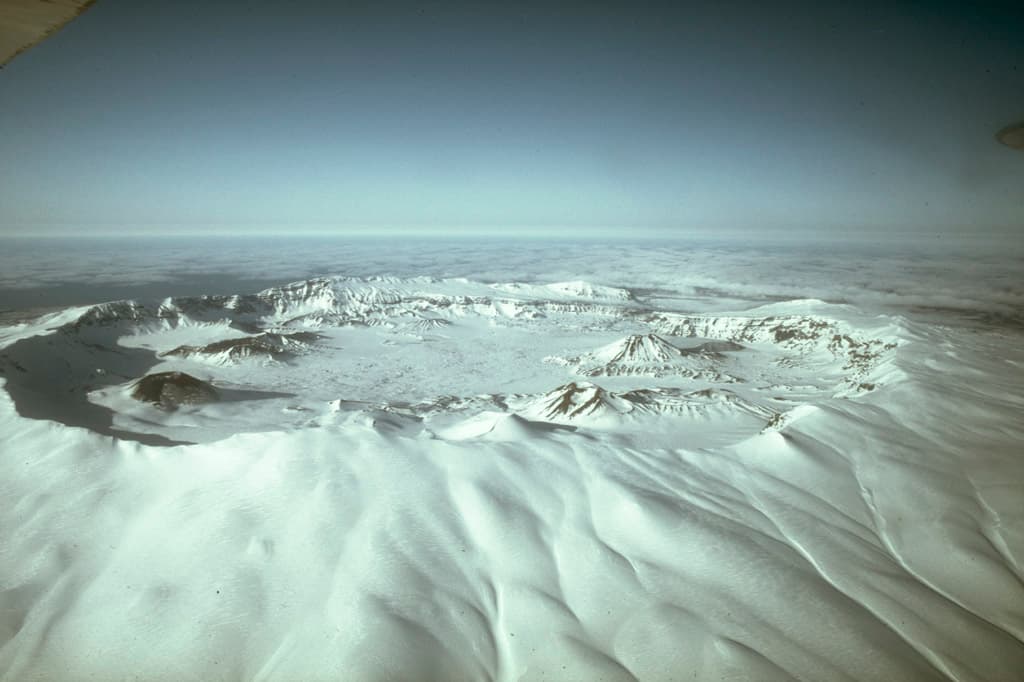
Mount Okmok rises on Umnak Island in the Aleutian chain, forming a broad shield volcano whose 6-mile-wide caldera dominates the landscape. The 2008 eruption left fresh ash layers and steaming vents that still shape the terrain, offering hikers direct views of recent volcanic processes rarely seen on more visited peaks. The surrounding tundra supports dense seabird colonies and occasional caribou, while the isolation preserves a sense of wilderness found in few other U.S. mountain destinations.
Getting There
Access begins with a flight to Dutch Harbor on Unalaska Island. From there, travelers arrange a boat charter or small-plane hop across the 70-mile strait to Umnik Bay on Umnak. No roads connect the island to mainland Alaska, so all movement occurs on foot or by ATV on established trails. The final approach to the caldera rim follows a gradual ascent across grassy slopes and old lava flows; expect a full day of travel from Dutch Harbor under good conditions.
Best Time to Visit
July and August bring the longest daylight and mildest temperatures, with fewer gale-force winds than the rest of the year. Snow lingers into June on the higher slopes, and September storms can close boat access for days. Winter visits are impractical for most travelers because of extreme weather and lack of daylight.
What to See and Do
The primary draw is a multi-day circuit inside the caldera. Hikers traverse cinder flats, cross small streams fed by melting snow, and climb to the inner crater rim for panoramic views of the Aleutian Range. Side trips reach the 2008 vent area where fumaroles still emit steam. Wildlife viewing includes tufted puffins nesting on coastal cliffs and harbor seals hauled out on beaches near the landing site. Anglers can target Dolly Varden trout in the caldera lakes with proper licenses. Photographers find dramatic contrasts between black ash and bright summer wildflowers.
Practical Considerations
Umnak has no services; visitors must carry all food, fuel, and shelter. A satellite communicator is essential because cell coverage is nonexistent. Trails are unmarked, so GPS or detailed topographic maps prevent disorientation in frequent fog. Respect the cultural significance of the island to the Unangax̂ people by staying on established routes and packing out all waste.