Why Mount Kaguyak Stands Out
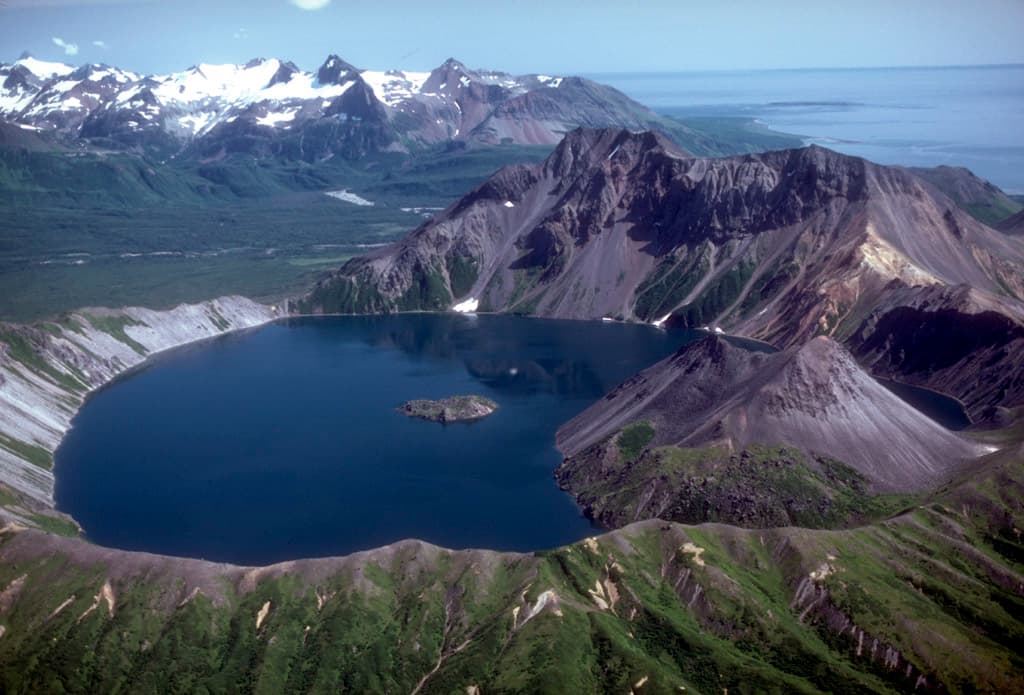
Mount Kaguyak rises as a classic stratovolcano on the Alaska Peninsula, its summit crater holding a striking turquoise lake formed by post-eruption collapse. The peak sits within the vast Katmai National Park and Preserve, offering visitors a rare chance to explore a landscape shaped by ancient volcanic forces amid pristine tundra and coastal rainforest transition zones.
Reaching the Mountain
Access begins with a flight to King Salmon, the gateway community. From there, travelers arrange floatplane charters or boat transfers across Naknek Lake to trailheads or coastal drop points near the mountain’s western flanks. No roads reach the area, so every visit involves small aircraft or watercraft, preserving the sense of true wilderness isolation.
Best Time to Visit
July through early September brings the most reliable weather windows, with longer daylight and snow-free lower slopes. Earlier in the season, lingering snow can complicate travel, while fall brings shorter days and increasing storm risk from the Gulf of Alaska.
Activities and Highlights
Strong hikers can ascend via loose volcanic ridges to the crater rim for panoramic views of the interior lake and distant peaks of the Aleutian Range. Photographers prize the contrast between the deep crater water and surrounding colorful mineral deposits. Wildlife viewing includes brown bears fishing coastal streams and caribou crossing open tundra. Sea kayakers sometimes combine a trip with paddling along nearby Shelikof Strait shorelines.
Nearby Destinations
- Valley of Ten Thousand Smokes for its steaming fumarole fields
- Brooks Camp and its famous bear-viewing platforms
- Novarupta dome, site of the 1912 eruption that reshaped the region
These sites lie within a half-day floatplane flight or multi-day backpack, allowing visitors to extend their exploration of the park’s volcanic history.