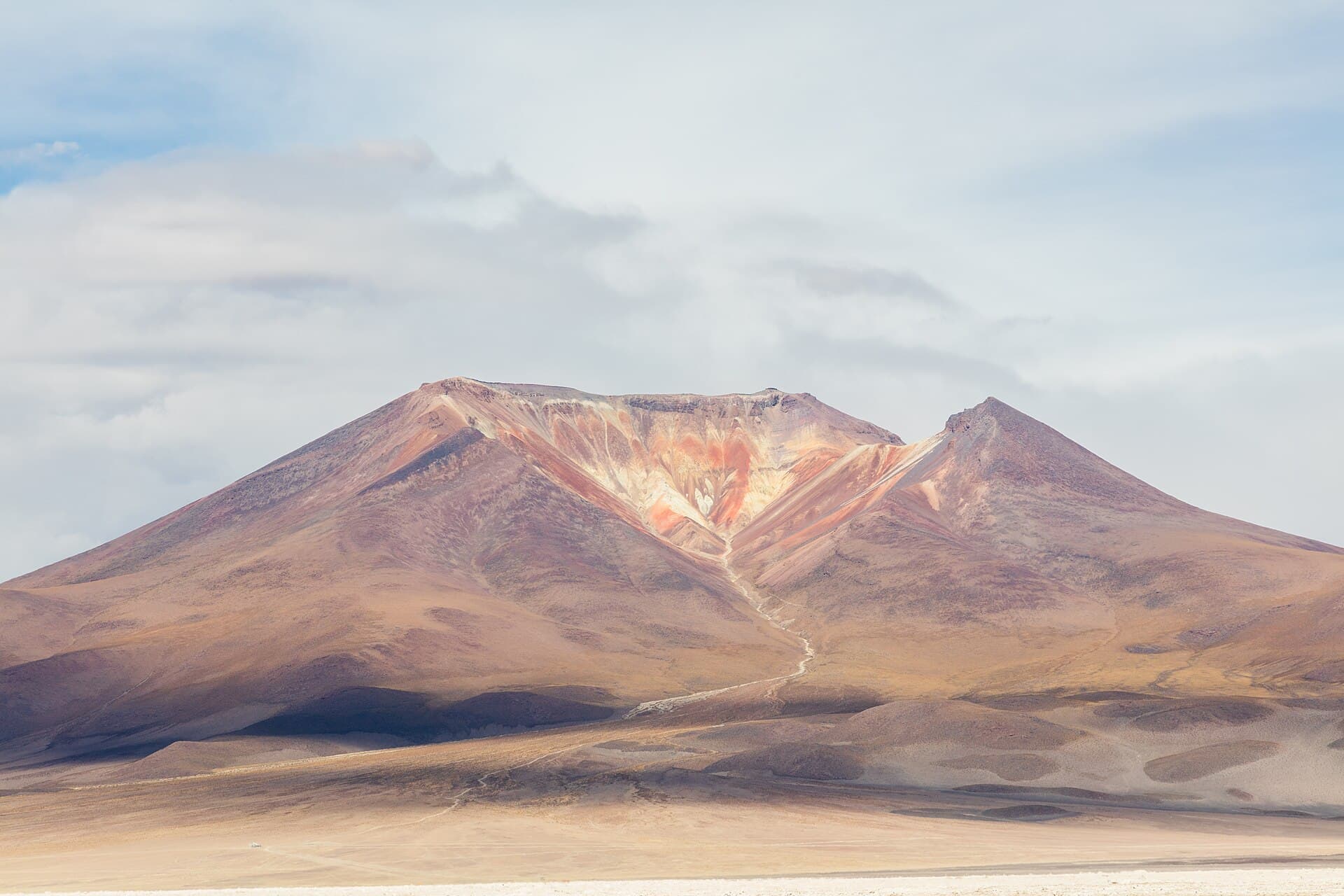
Why Laguna Charcota Stands Out
Situated at over 4,000 meters in the remote southern Altiplano, Laguna Charcota offers visitors a rare combination of intense turquoise water against dark volcanic rock and distant snow-capped peaks. The lake lies within the Eduardo Avaroa Andean Fauna National Reserve, where mineral-rich inflows create its vivid color and support seasonal populations of Andean flamingos. Unlike more accessible salt-flat attractions, Laguna Charcota rewards travelers who venture farther with solitude and raw high-desert beauty.
What to See and Do
Walk the shoreline for changing reflections of nearby volcanoes and capture photographs of the lake’s shifting hues under different light. Early morning and late afternoon provide the best conditions for spotting three species of flamingos feeding in the shallows. Short hikes along faint trails lead to viewpoints overlooking the surrounding pampa and occasional vicuña herds. Bring binoculars for distant wildlife observation and a thermos for hot drinks, as facilities are nonexistent.
How to Get There
Most visitors reach Laguna Charcota on multi-day 4×4 tours departing from Uyuni, combining the lake with Laguna Colorada and the Sol de Mañana geysers. Independent travelers with high-clearance vehicles can follow the unpaved route south from Uyuni via the reserve entrance at Quetena Chico; allow a full day and carry extra fuel, water, and spare tires. Crossing from Chile via the Hito Cajones border is possible but requires advance permits and local knowledge of road conditions.
Best Time to Visit
The dry season from May through October brings stable weather, clear skies, and reliable flamingo sightings. November to April can deliver dramatic thunderstorms and impassable roads, though the lake itself remains photogenic. Temperatures drop sharply after sunset year-round, so layered clothing is essential even in summer.
Nearby Attractions
Combine a Laguna Charcota visit with the red waters of Laguna Colorada, the bubbling mud pots of Sol de Mañana, and the striking rock formations of the Siloli Desert. Further north lies the vast Salar de Uyuni, the world’s largest salt flat, while the Chilean side offers access to the Atacama Desert’s geysers and hot springs.