
Keep reading
Nearby & related
Aleutians West Census Area
Hammerhead Island: Remote Wilderness in Alaska’s Aleutian Chain
Experience the raw, windswept isolation and abundant marine wildlife of this uninhabited Aleutian island.
16 August 2026
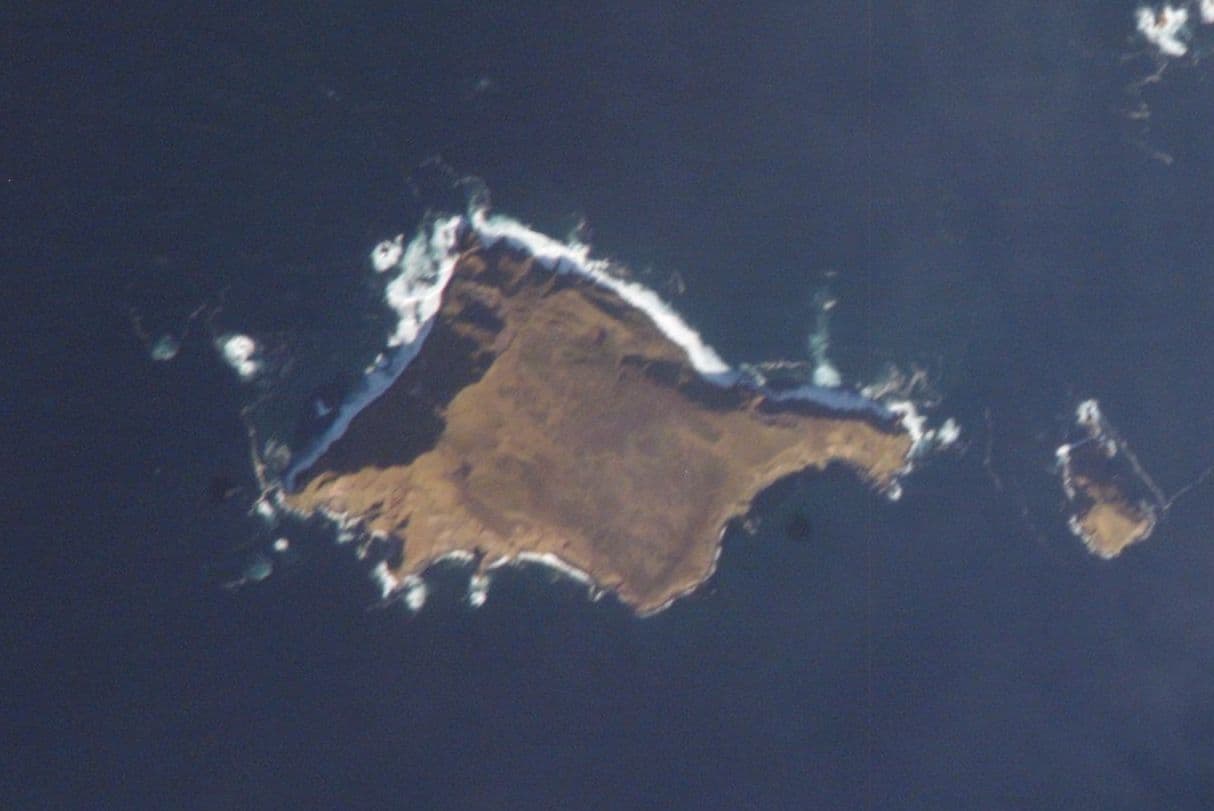
Discover the untouched volcanic landscapes and seabird colonies of this isolated island in the Alaska Maritime National Wildlife Refuge.
Khvostof Island sits in the far western Aleutians, a small, uninhabited volcanic landmass shaped by centuries of tectonic activity and harsh marine weather. Its rugged terrain of steep cliffs, grassy slopes, and rocky shores supports dense colonies of seabirds that thrive in the absence of human development or introduced predators.
Wildlife viewing centers on the island’s birdlife, including nesting auklets, puffins, and kittiwakes that crowd the cliffs during breeding season. Kayakers and small-boat travelers can circumnavigate the shoreline to observe marine mammals such as sea otters and harbor seals in the kelp beds. Hiking opportunities remain limited to short, careful traverses across stable ground because of loose volcanic soil and sudden fog.
Clear days reveal distant views of neighboring islands in the Rat and Delarof groups, offering perspective on the broader Aleutian arc. Photographers find dramatic compositions in the contrast between black lava rock and the bright green of summer vegetation.
Access requires arranging transport from larger Aleutian hubs such as Adak or Dutch Harbor. Most visitors arrive by chartered boat or floatplane, then transfer to inflatable craft for landing on the few sheltered beaches. Independent travel demands advanced navigation skills and full self-sufficiency for several days.
June through early September brings the longest daylight and calmest seas, allowing safer landings and extended wildlife observation. Winter visits are impractical due to persistent storms and ice.
Keep reading
Experience the raw, windswept isolation and abundant marine wildlife of this uninhabited Aleutian island.
No permanent residents live on the island; it remains entirely wild within a national wildlife refuge.
Primitive camping is possible for experienced visitors who follow Leave No Trace principles and carry all supplies.
Seabird colonies dominate the cliffs, while sea otters and seals are commonly observed in the nearshore waters.
Landings depend entirely on sea conditions; only sheltered coves allow safe access for small boats.
No maintained trails exist; any walking requires route-finding across uneven volcanic terrain.
Discover the untouched landscapes, seabird colonies, and wartime relics of this isolated island in Alaska’s Aleutian…
This isolated island in the central Aleutians delivers raw volcanic landscapes, seabird colonies, and true frontier…