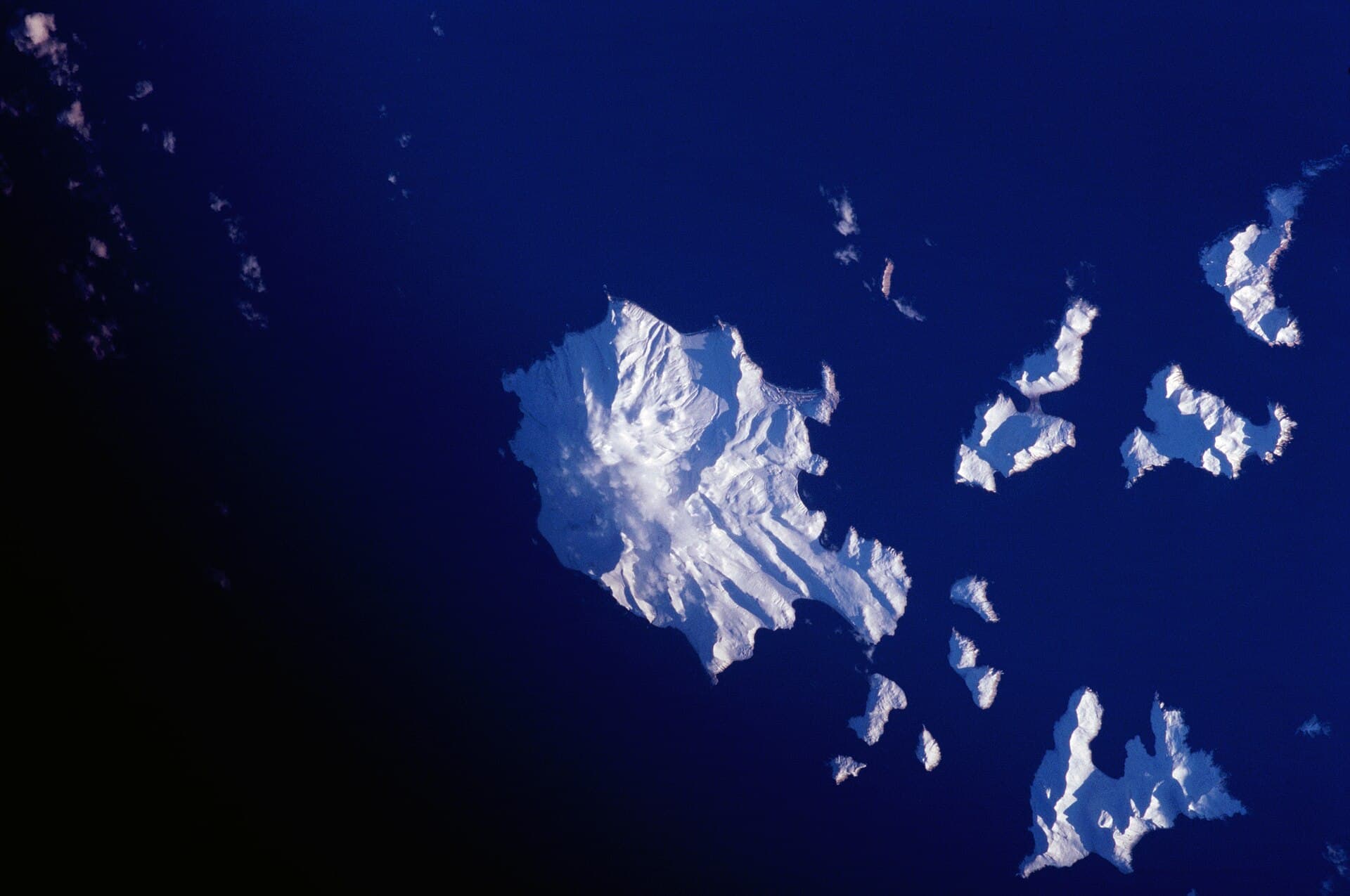
Why Visit Great Sitkin Island
Great Sitkin Island stands out in the Aleutian chain for its dramatic volcanic cone rising from the North Pacific, surrounded by steep cliffs, tundra slopes, and sheltered bays. As part of the Alaska Maritime National Wildlife Refuge, it offers visitors an authentic experience of Alaska’s most remote and geologically active terrain without crowds or infrastructure.
Getting There
Access begins with a flight to Adak, the nearest settlement with scheduled air service from Anchorage. From Adak, travelers arrange private boat charters or small-plane flights across the 30-mile strait. Weather windows are critical; fog and high winds frequently close routes for days. No roads or docks exist on the island itself, so landing requires Zodiac-style boats on rocky beaches or floatplanes on calm lagoons.
Best Time to Visit
June through early September brings the longest daylight, mildest temperatures, and peak seabird activity. Winter visits are rare and hazardous due to storms and darkness. Summer also aligns with calmer seas for boat crossings.
What to See and Do
Hiking across the island’s interior reveals fumaroles and lava fields around Great Sitkin Volcano. Coastal walks yield views of harbor seals, sea otters, and nesting colonies of puffins, kittiwakes, and murres on sheer cliffs. Anglers find opportunities for Dolly Varden and Pacific cod from shore. Photographers capture sweeping vistas of the volcano against the ocean horizon, especially at sunset when the light lingers for hours.
Wildlife and Safety
- Observe marine mammals from a respectful distance to avoid disturbance.
- Carry binoculars for distant bird colonies rather than approaching nests.
- Watch for sudden weather shifts that can strand visitors on the island.
Nearby Destinations
Combine a visit with Adak Island’s World War II history sites or boat trips toward Kiska for additional Aleutian exploration. These neighboring islands share the same wild character and are reachable by the same charter operators.