Keep reading
Nearby & related

Amiternum: Ancient Roman Theater and Ruins in Abruzzo
Wander the evocative remains of a Sabine-Roman city featuring one of Italy’s best-preserved ancient theaters just…

Explore the star-shaped Renaissance citadel that has guarded Abruzzo's capital since the 1500s.
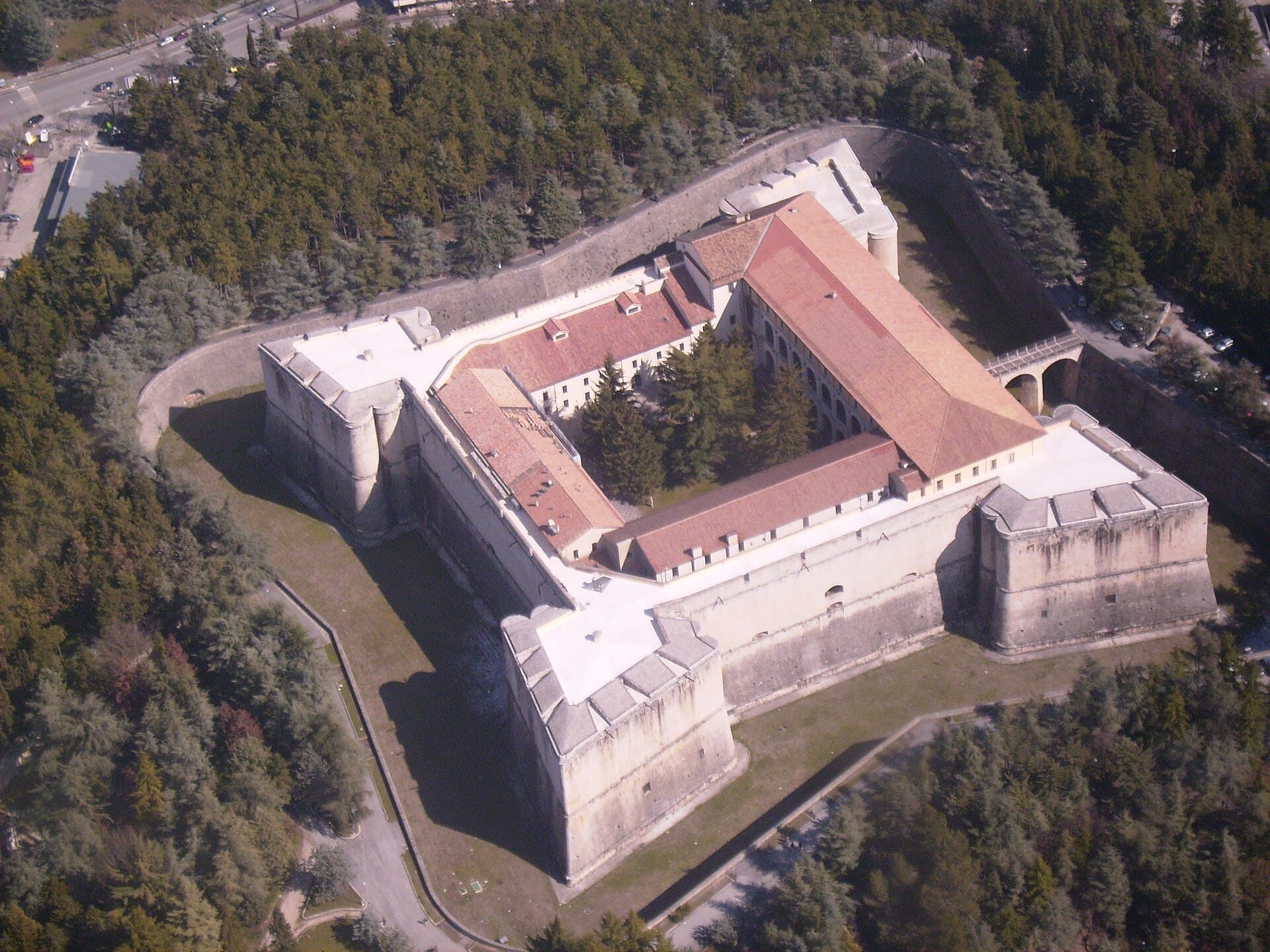
Built between 1528 and 1565 on orders of the Spanish viceroy, Forte Spagnolo was designed to dominate L’Aquila after local revolts against imperial rule. Its massive pentagonal plan with sharp bastions reflects the era’s shift to artillery-proof military architecture, and the structure remains one of the best-preserved examples in central Italy.
Visitors enter through the original gatehouse and walk the ramparts for sweeping views of L’Aquila’s red rooftops and the Gran Sasso massif. The courtyard houses the Museo Nazionale d’Abruzzo, whose collections include Roman artifacts from nearby Amiternum and medieval wooden sculptures. The casemates and powder magazines still convey the fortress’s defensive purpose.
The site sits on the western edge of L’Aquila’s historic center, a short uphill walk from Piazza del Duomo. Combine a visit with a stroll through the restored streets of the city, which suffered severe damage in the 2009 earthquake but has reopened most key monuments. The surrounding Parco del Castello offers shaded paths for a relaxed approach.
Spring and early autumn deliver mild temperatures ideal for walking the ramparts. Summer brings longer daylight but can be hot on the exposed stone; winter visits reward travelers with crisp mountain air and fewer crowds, though snow may affect access to the upper levels.
Keep reading

Wander the evocative remains of a Sabine-Roman city featuring one of Italy’s best-preserved ancient theaters just…
The fortress is about 1.5 kilometers uphill from the station; local buses run the route or you can walk through the historic center in roughly 20 minutes.
The ground-level courtyard and museum are accessible, but the ramparts involve stairs and uneven surfaces that may challenge wheelchair users.
Photography is permitted throughout the exterior and courtyard; restrictions may apply inside museum galleries, so check posted signs.
Occasional themed tours focusing on military history or the museum collections are organized by local cultural associations; inquire at the ticket desk on arrival.
Carry water and sun protection; the stone walls offer little shade on the upper walkways during midday heat.