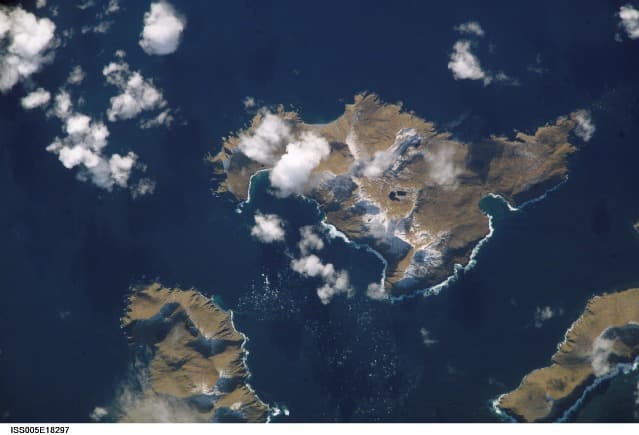
Why Chugul Island Stands Out
Chugul Island lies within the Andreanof Islands group of the Aleutian chain, part of the Alaska Maritime National Wildlife Refuge. Its steep cliffs, grassy slopes, and rocky shores support large colonies of seabirds including puffins, murres, and kittiwakes, while surrounding waters attract sea otters, harbor seals, and occasional whales. The island’s isolation preserves a sense of true wilderness rarely found in more accessible parts of Alaska.
Getting There
Access begins with commercial flights to Adak, the nearest hub with scheduled service. From Adak, travelers arrange boat charters or small-plane flights across the 40-mile stretch of open water. Weather windows are critical; captains and pilots monitor conditions closely because sudden fog and high winds are common. No public docks or trails exist on Chugul, so landings usually occur on sheltered beaches via skiff.
Best Time to Visit
June through early September offers the longest daylight and calmest seas. Peak seabird activity occurs in July when chicks are visible on cliff ledges. Winter visits are rare and require expedition-level preparation due to storms and limited daylight.
What to See and Do
Visitors focus on wildlife viewing from the water or brief shore excursions. Kayakers can paddle along the eastern side where kelp beds shelter otters. Birders carry spotting scopes to observe nesting colonies without disturbing the birds. Photographers find dramatic compositions of volcanic cones on nearby islands framed by rolling ocean. Hiking is limited to short walks on stable ground; the interior is steep and unmarked.
Nearby Islands and Attractions
Chugul sits near Atka and Adak, both offering additional birding and WWII historical sites. The larger Adak Island provides fuel, lodging, and the only reliable medical services in the region. Many boat trips combine Chugul with a stop at nearby Kasatochi or Great Sitkin for varied scenery.
Practical Considerations
Travelers must be self-sufficient. Bring all food, fuel, and shelter; no services exist on the island. Permits are not required for day visits, but overnight camping requires coordination with the U.S. Fish and Wildlife Service. Leave-no-trace principles are essential to protect fragile nesting habitat.