Skip to content
Plan & Tour
DestinationsItinerariesTravel BlogAboutContact
0Sign inPlan a trip
Plan & TourPlan & Tour

Travel guides, destination inspiration and curated itineraries for Canada, the USA and beyond, plus a free tool to plan your own day-by-day trip.

Get travel inspiration

Explore

  • All Destinations
  • Curated Itineraries
  • Travel Blog
  • Plan a Trip

Topics

  • Hiking & Nature
  • Food & Drink
  • City Breaks
  • Budget Travel

Company

  • About Us
  • Contact
  • Privacy Policy
  • Terms of Service

© 2026 Plan & Tour. Built for travellers.

Discover the world, one trip at a time.

Bat Chum: A Quiet 10th-Century Temple Sanctuary Near Angkor Wat
  1. Home
  2. Destinations
  3. Siem Reap
  4. Bat Chum: A Quiet 10th-Century Temple Sanctuary Near Angkor Wat
Archaeological site

Bat Chum: A Quiet 10th-Century Temple Sanctuary Near Angkor Wat

Discover the serene ruins and rare inscriptions of Bat Chum, a compact Hindu temple offering a peaceful contrast to Siem Reap’s larger Angkor sites.

Siem ReapUpdated 19 October 2026

Why Visit Bat Chum

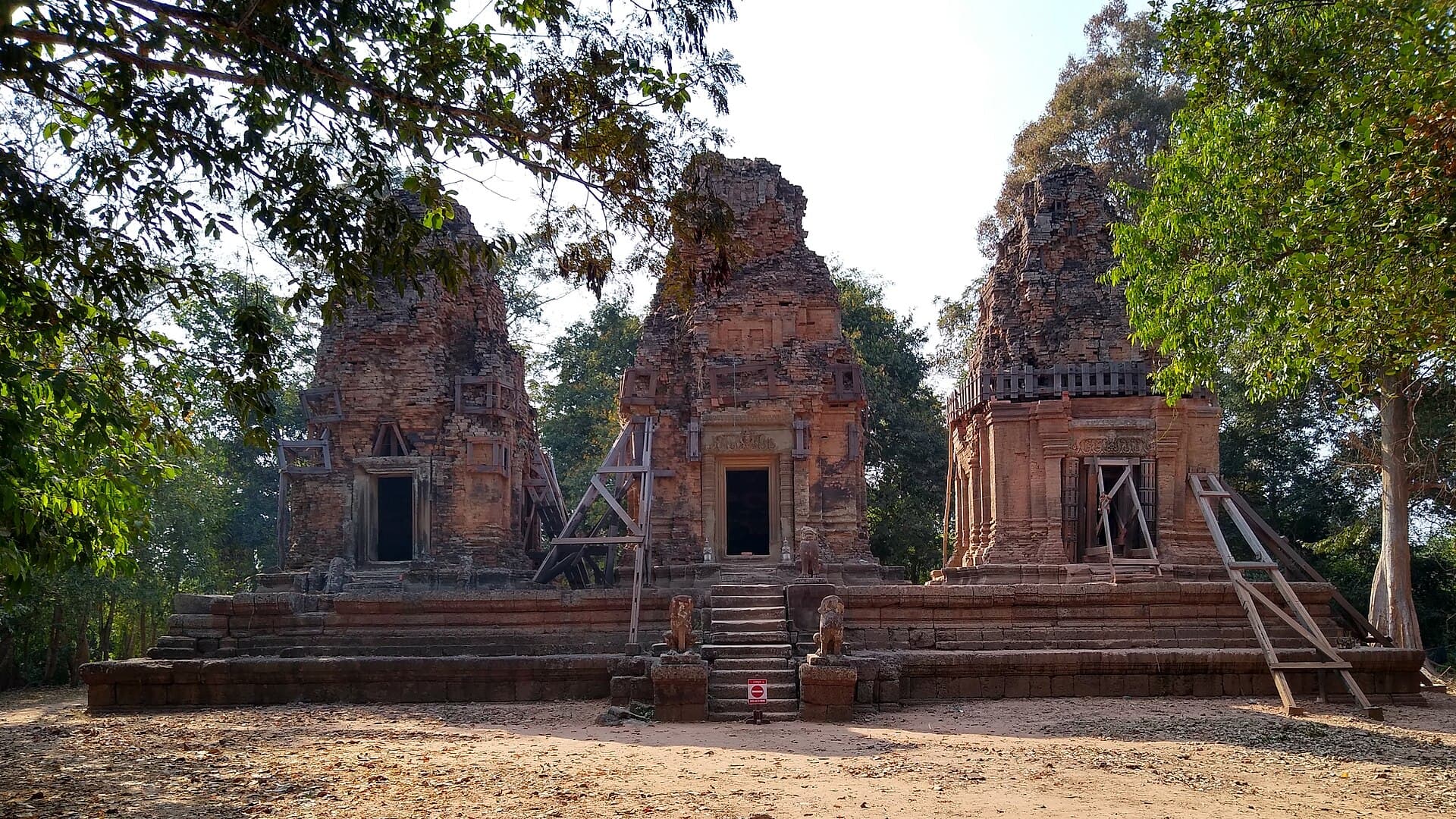
Bat Chum stands out among the Angkor temples for its intimate scale and historical inscriptions that reveal the name of its architect, a rare detail from the 10th century. Dedicated to Shiva, the site consists of three brick towers on a laterite platform surrounded by a moat, set within the quiet eastern reaches of the Angkor Archaeological Park. Visitors appreciate the absence of tour buses, allowing time to examine the carved lintels and sandstone elements up close.

History and Significance

Built around 952 by King Rajendravarman II, Bat Chum formed part of the royal building program that also produced East Mebon and Pre Rup. The temple’s most notable feature is a series of Sanskrit inscriptions on the door frames that credit the architect Kavindrarimathana and describe the installation of lingas. These texts provide direct insight into Khmer court life and religious practice during the Angkor period.

What to See and Do

Walk the short circuit around the three towers to view the remaining pediments depicting Hindu deities and floral motifs. The central tower retains the best-preserved carvings; look for the small niches that once held statues. Photographers find good light in the early morning when the brickwork glows against the surrounding forest. Allow 45 minutes to an hour for a relaxed visit, including time to read the inscriptions with the aid of a guidebook or local guide.

Getting There

Bat Chum lies roughly 12 kilometers northeast of Siem Reap town, inside the main Angkor ticket zone. Most visitors reach it by tuk-tuk or bicycle after visiting nearby East Mebon or Pre Rup. The temple is accessible year-round, though the access road can become muddy during heavy rains.

Best Time to Visit

The cool, dry months from November through February offer the most comfortable conditions for exploring on foot. Early morning arrivals avoid both heat and the occasional small group that stops here en route to Banteay Srei. The surrounding vegetation is lush after the rainy season but the paths remain passable.

Nearby Attractions

Combine a visit with East Mebon, a short drive west, or continue to the massive laterite walls of Banteay Samre. The eastern baray reservoir and its surrounding countryside provide scenic views on the return journey to Siem Reap.

Visitor tips

  • Wear sturdy shoes and bring plenty of water; the site has no facilities and the laterite paths can be uneven.
  • Purchase the standard Angkor pass in advance, as Bat Chum lies within the main ticketed area and cannot be visited separately.
  • Hire a knowledgeable guide for at least the first visit to translate the Sanskrit inscriptions and explain the templeu2019s layout.

Frequently asked questions

Is Bat Chum included with the standard Angkor ticket?+

Yes, the temple is covered by the one-day, three-day, or seven-day Angkor passes sold at the main entrance gates.

How long should I spend at Bat Chum?+

Most visitors spend 45 to 60 minutes exploring the three towers and reading the inscriptions.

Are there food or restrooms at the site?+

No facilities exist at Bat Chum; plan to eat and use restrooms at nearby temples such as Pre Rup or in Siem Reap.

Can I visit Bat Chum by bicycle from Siem Reap?+

Yes, the flat route is popular with cyclists, though carrying plenty of water and traveling in early morning is recommended.

What makes Bat Chum different from other Angkor temples?+

Its small size, brick construction, and the rare surviving inscriptions naming the architect set it apart from larger stone complexes like Angkor Wat.

Share
Google Maps Apple Maps Directions

Image: Mx. Granger · CC0 · via Wikimedia Commons

Keep reading

Nearby & related

All stories
Ta Nei: The Jungle-Claimed Temple Hidden in Angkor
Siem Reap

Ta Nei: The Jungle-Claimed Temple Hidden in Angkor

Venture off the main circuit to Ta Nei, where towering trees and quiet corridors reveal a late-12th-century Buddhist…

19 October 2026
Preah Palilay: A Quiet Buddhist Sanctuary Amid the Angkor Ruins
Siem Reap

Preah Palilay: A Quiet Buddhist Sanctuary Amid the Angkor Ruins

Discover the distinctive late-12th-century temple with its soaring tower and serene atmosphere inside Siem Reap’s Angkor…

19 October 2026
Prasat Kravan: The Hidden Brick Temple of Angkor
Siem Reap

Prasat Kravan: The Hidden Brick Temple of Angkor

A compact 10th-century sanctuary in Siem Reap featuring rare Vishnu carvings inside five brick towers.

19 October 2026