Why Prasat Kravan Stands Out
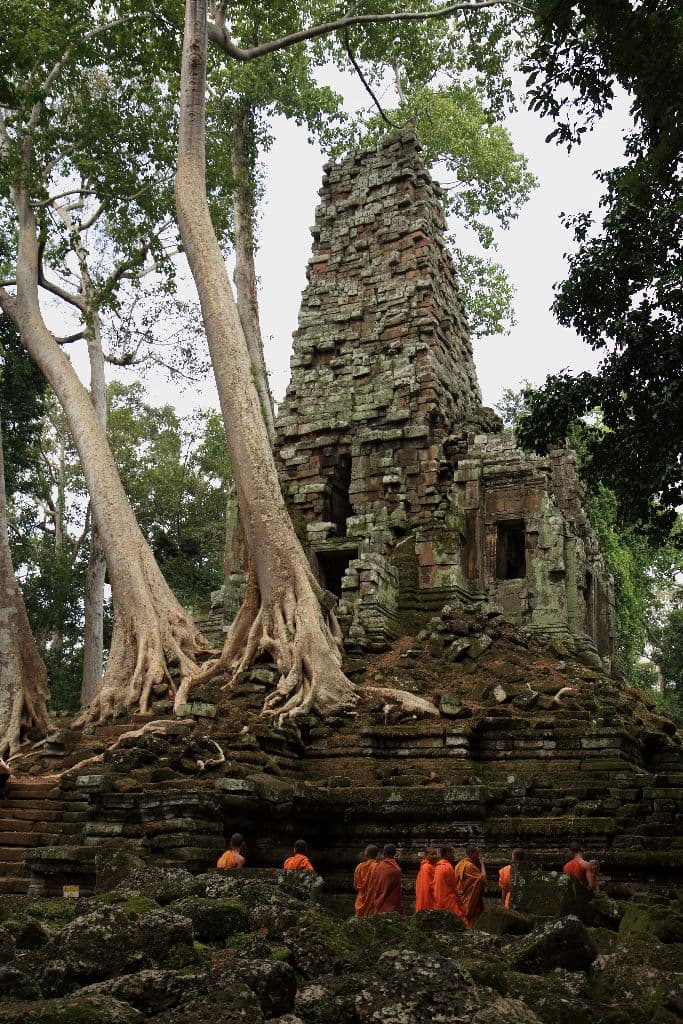
Unlike the sandstone giants that dominate Angkor, Prasat Kravan was built entirely of brick in 921 CE during the reign of Harshavarman I. Its five towers rise from a low platform and contain some of the finest surviving Hindu bas-reliefs in the complex, all carved directly into the brick. The central tower shows Vishnu in multiple avatars, while the northern and southern towers depict Lakshmi and other deities. Because the site receives far fewer visitors than nearby Ta Prohm or Angkor Wat, the experience feels intimate and quiet even at midday.
What to See Inside the Towers
Walk clockwise around the platform first to appreciate the clean brick masonry and laterite foundations. Enter the central sanctuary to view the large standing Vishnu flanked by attendants; the carving remains remarkably sharp because the brick was protected from weather for centuries. The two flanking towers contain smaller but equally detailed panels of Vishnu riding Garuda and reclining on the serpent Ananta. Photographers should note the play of light through the doorways in late afternoon, when warm light highlights the reliefs without harsh shadows.
Getting There from Siem Reap
Prasat Kravan lies inside the Angkor Archaeological Park, roughly 1.5 km east of Banteay Kdei and 2 km south of the main Angkor Wat entrance. Most visitors reach it by tuk-tuk or electric bicycle on the small temple circuit. The approach road is flat and shaded; cyclists can continue easily to the nearby Srah Srang reservoir for a rest stop. No special transport is required beyond the standard park pass.
Best Time to Visit
The dry season from November through February offers the most comfortable temperatures and clear skies for photography. Early morning visits, just after the park opens, avoid both heat and the occasional tour groups that stop briefly on the way to larger temples. The rainy season brings lush greenery but also muddy paths and fewer daylight hours; if visiting then, carry a light rain jacket and allow extra time between sites.
Nearby Sites Worth Combining
Prasat Kravan pairs naturally with the royal bathing pool of Srah Srang and the atmospheric ruins of Banteay Kdei. A logical half-day loop takes in Prasat Kravan, then continues to the massive laterite walls of Banteay Kdei before ending at Ta Prohm. Those with more time can add the small, quiet temple of Prasat Prei to the southeast for another brick-and-laterite contrast.