History and Significance
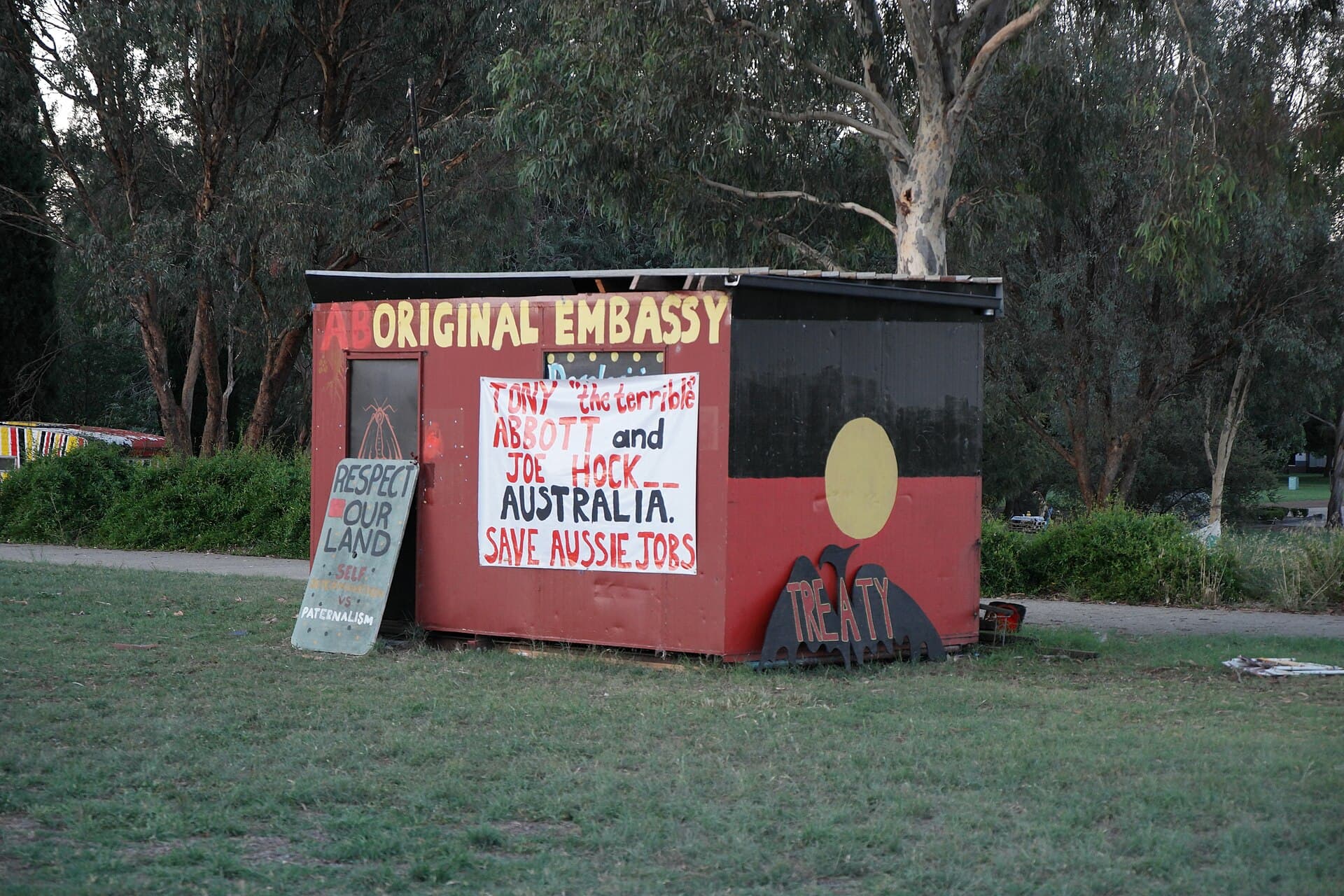
Established in 1972, the Aboriginal Tent Embassy remains Australia’s longest-running protest site. Four activists pitched a beach umbrella on the lawns opposite Old Parliament House to demand land rights, sparking national attention that has never fully subsided. The camp has evolved into a living archive of Indigenous activism, with hand-painted signs, the Aboriginal flag, and rotating tents marking decades of resistance against dispossession.
What to See and Do
Walk the modest grounds to read the large information boards that outline key campaigns and court cases. Many visitors pause at the central fire pit, where community members often gather for yarn and discussion. The site frequently hosts cultural performances, talks by Elders, and art installations created by Indigenous artists. Respectful photography is welcomed; always ask before photographing people.
Engaging Respectfully
Listen more than you speak. The embassy functions as both protest and home, so conversations with residents can provide deeper context than any plaque. Leave offerings such as tobacco or native plants only if invited; otherwise, simply observe quietly.
Getting There
The embassy sits on King George Terrace in Canberra’s Parliamentary Triangle. Buses from the city centre stop nearby at Old Parliament House, and the walk from the National Gallery or High Court takes less than ten minutes along well-signed paths. Limited parking is available on surrounding streets; cycling or using public transport is easiest during parliamentary sitting weeks when traffic increases.
Best Time to Visit
Canberra’s mild spring (September–November) and autumn (March–May) offer comfortable temperatures for lingering outdoors. The site remains open year-round, but winter mornings can be cold and windy. Major events such as NAIDOC Week in July or the annual anniversary in January bring larger crowds and additional programming.
Nearby Attractions
Combine a visit with the adjacent Old Parliament House, now home to the Museum of Australian Democracy, or the National Portrait Gallery a short stroll away. The High Court and National Gallery of Australia provide further context on Australia’s legal and cultural landscape. For a longer walk, continue to Reconciliation Place, which features Indigenous artworks and reflection spaces.