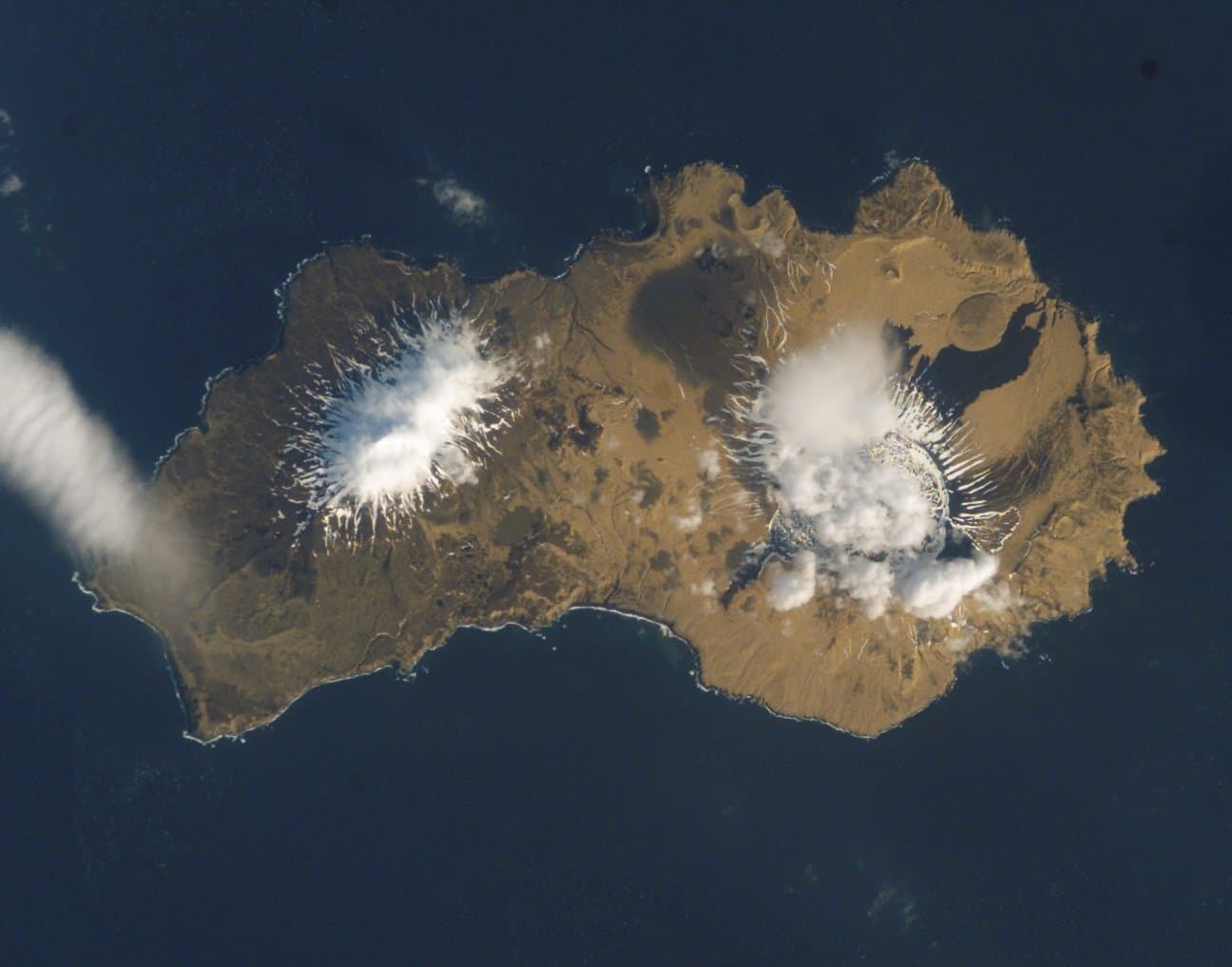
Why Visit Yunaska Island
Yunaska Island stands out among the Aleutian Islands for its dramatic volcanic terrain and dense concentrations of nesting seabirds. Rising from the North Pacific, the island features steep sea cliffs, grassy slopes, and a central volcanic crater that create varied habitats. Visitors encounter thick colonies of auklets, puffins, and murres along with harbor seals and Steller sea lions hauled out on rocky shores. Its location within the Alaska Maritime National Wildlife Refuge ensures minimal human disturbance, preserving a truly wild experience.
Getting There
Access requires careful planning because no commercial infrastructure exists on the island. Most travelers begin in Dutch Harbor on Unalaska or travel via Adak, then arrange transport by charter boat or small aircraft. Weather windows dictate all movement, and landings occur only on sheltered beaches during calm seas. Independent visitors must carry all supplies, including shelter and food, since the island remains uninhabited.
What to See and Do
Wildlife viewing forms the core activity. Birders hike along coastal terraces to observe crevice-nesting auklets and cliffside murre colonies. Marine mammal watching focuses on nearshore waters where sea lions frequently surface. The volcanic landscape invites careful exploration of lava fields and crater rims, though hikers must watch for unstable ground and sudden fog. Photography opportunities abound in the dramatic light that shifts quickly across the open ocean.
Best Time to Visit
June through early September offers the longest daylight, mildest temperatures, and peak seabird activity. Outside this window, storms increase and daylight shortens dramatically, limiting both access and on-island time. Even in summer, visitors should expect frequent rain and wind gusts that can exceed 30 knots.
Nearby Destinations
Chagulak Island lies just to the east and shares similar seabird colonies. Further afield, the Islands of Four Mountains provide additional volcanic scenery accessible by the same charter operators. Many itineraries combine Yunaska with stops at Adak for logistical support and cultural context from World War II history sites.