Skip to content
Plan & Tour
DestinationsItinerariesTravel BlogAboutContact
0Sign inPlan a trip
Plan & TourPlan & Tour

Travel guides, destination inspiration and curated itineraries for Canada, the USA and beyond, plus a free tool to plan your own day-by-day trip.

Get travel inspiration

Explore

  • All Destinations
  • Curated Itineraries
  • Travel Blog
  • Plan a Trip

Topics

  • Hiking & Nature
  • Food & Drink
  • City Breaks
  • Budget Travel

Company

  • About Us
  • Contact
  • Privacy Policy
  • Terms of Service

© 2026 Plan & Tour. Built for travellers.

Discover the world, one trip at a time.

Torre del Tostón: Fuerteventura’s 15th-Century Coastal Watchtower
  1. Home
  2. Destinations
  3. La Oliva
  4. Torre del Tostón: Fuerteventura’s 15th-Century Coastal Watchtower
Castle

Torre del Tostón: Fuerteventura’s 15th-Century Coastal Watchtower

Climb the restored stone tower above El Cotillo for sweeping Atlantic views and a glimpse into the island’s pirate-defense past.

La OlivaUpdated 12 November 2026

Discovering Torre del Tostón

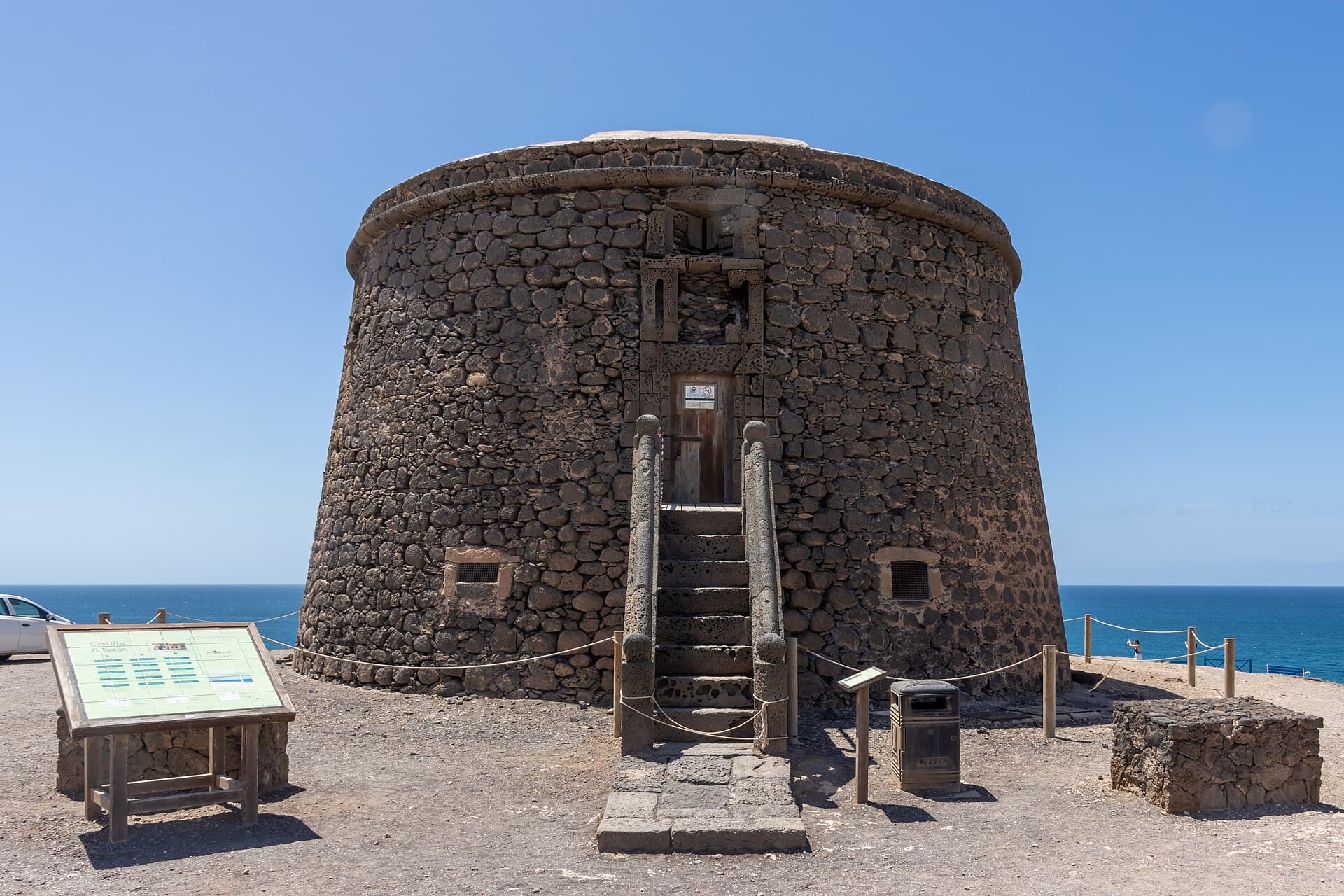
Perched on a low rocky headland north of the fishing village of El Cotillo, Torre del Tostón stands as one of Fuerteventura’s most accessible historic landmarks. Built in the late 1400s, the circular stone tower formed part of a chain of coastal defenses that warned islanders of approaching pirate ships. Its thick walls and simple cylindrical form remain largely unchanged, offering visitors an immediate sense of the island’s early colonial vulnerability.

Historical Significance

Spanish settlers constructed the tower after repeated raids by North African corsairs threatened the sparse population. Local militias used its upper platform to light signal fires that could be seen from neighboring watchtowers at Caleta de Fuste and Puerto del Rosario. The structure later served as a lookout for fishermen and was restored in the 20th century to preserve its original silhouette against the trade-wind sky.

What to Expect on Your Visit

A short flight of stone steps leads to the open roof terrace, where the 360-degree panorama takes in the white-sand beaches of Playa del Castillo to the south and the rugged lava coastline stretching northward. Inside, a small exhibition room displays period maps and cannonballs recovered from the surrounding seabed. The site is compact; most visitors spend 30 to 45 minutes exploring the interior and terrace before continuing along the coastal path.

Views and Surroundings

On clear days the distant outline of Lanzarote is visible across the strait. The immediate shoreline features tide pools rich with limpets and sea urchins, while the constant Atlantic swell creates dramatic spray against the black volcanic rock. Sunset is particularly striking here, as the low sun silhouettes the tower against the ocean.

Getting There

From the FV-109 highway, follow signs to El Cotillo and continue north along the paved coastal road. A small parking area lies 200 meters from the tower. Those staying in Corralejo can reach the site by bus line 7 or by bicycle along the dedicated coastal cycle path that runs the length of the northwest coast. Walking from central El Cotillo takes about 25 minutes along a flat, scenic promenade.

Best Time to Visit

The tower is most comfortable in the cooler months from October through April, when temperatures remain pleasant and the trade winds are steady but not overpowering. Early morning visits avoid both the midday heat and the larger tour groups that arrive after 11 a.m. Summer afternoons can be windy enough to make the roof terrace uncomfortable, so plan accordingly.

Nearby Attractions

Combine a visit with the natural pools at nearby El Cotillo or the lighthouse at Punta de Tostón, a five-minute walk farther along the coast. The protected dunes of Corralejo lie 20 minutes north by car, while the artisan cheese farms of the interior village of La Oliva offer a pleasant contrast to the coastal setting.

Visitor tips

  • Wear sturdy shoes; the stone steps and surrounding lava rock can be uneven and slippery when wet.
  • Bring water and sun protectionu2014the exposed roof offers little shade even on overcast days.
  • Combine the visit with a walk along the coastal path to the lighthouse for a longer, scenic outing without needing transport.

Frequently asked questions

How long does it take to visit Torre del Tostu00f3n?+

Most people spend 30 to 45 minutes inside the tower and on the roof terrace, though longer stays are common for photography or picnics nearby.

Is Torre del Tostu00f3n suitable for children?+

Yes, the site is compact and the interior is safe, but parents should supervise closely on the open roof and the uneven coastal rocks outside.

Can you see the tower from the beach?+

The tower sits on a low headland directly above the shoreline, so it is visible from both Playa del Castillo and the smaller coves to the north.

Are there facilities at the tower?+

There are no restrooms or cafu00e9s at the site itself; the nearest services are in central El Cotillo, a 25-minute walk or short drive away.

Is Torre del Tostu00f3n accessible for visitors with limited mobility?+

The ground level is reachable by a short paved path, but the upper terrace requires climbing a flight of stone steps, limiting full access.

Share
Google Maps Apple Maps Directions

Image: Photograph by Mike Peel (www.mikepeel.net). · CC BY-SA 4.0 · via Wikimedia Commons

Keep reading

Nearby & related

All stories
Corralejo Natural Park: Fuerteventura’s Shifting Dunes and Wild Atlantic Shores
La Oliva

Corralejo Natural Park: Fuerteventura’s Shifting Dunes and Wild Atlantic Shores

Wander through vast golden dunes, empty beaches, and volcanic landscapes in this protected corner of northern…

12 November 2026
Lobos Island: Hiking, Beaches and Wildlife in Fuerteventura’s Protected Reserve
La Oliva

Lobos Island: Hiking, Beaches and Wildlife in Fuerteventura’s Protected Reserve

A compact volcanic island offering quiet trails, clear-water snorkeling and seabird colonies just a short ferry ride…

8 November 2026