Skip to content
Plan & Tour
DestinationsItinerariesTravel BlogAboutContact
0Sign inPlan a trip
Plan & TourPlan & Tour

Travel guides, destination inspiration and curated itineraries for Canada, the USA and beyond, plus a free tool to plan your own day-by-day trip.

Get travel inspiration

Explore

  • All Destinations
  • Curated Itineraries
  • Travel Blog
  • Plan a Trip

Topics

  • Hiking & Nature
  • Food & Drink
  • City Breaks
  • Budget Travel

Company

  • About Us
  • Contact
  • Privacy Policy
  • Terms of Service

© 2026 Plan & Tour. Built for travellers.

Discover the world, one trip at a time.

The Royal Palace at Angkor Thom: Khmer Royal Ruins in Cambodia
  1. Home
  2. Destinations
  3. Siem Reap Municipality
  4. The Royal Palace at Angkor Thom: Khmer Royal Ruins in Cambodia
Archaeological site

The Royal Palace at Angkor Thom: Khmer Royal Ruins in Cambodia

Wander the ancient royal enclosure at the heart of Angkor Thom and uncover layered Khmer history amid elephant terraces and temple foundations.

Siem Reap MunicipalityUpdated 20 October 2026

The Royal Palace Within Angkor Thom

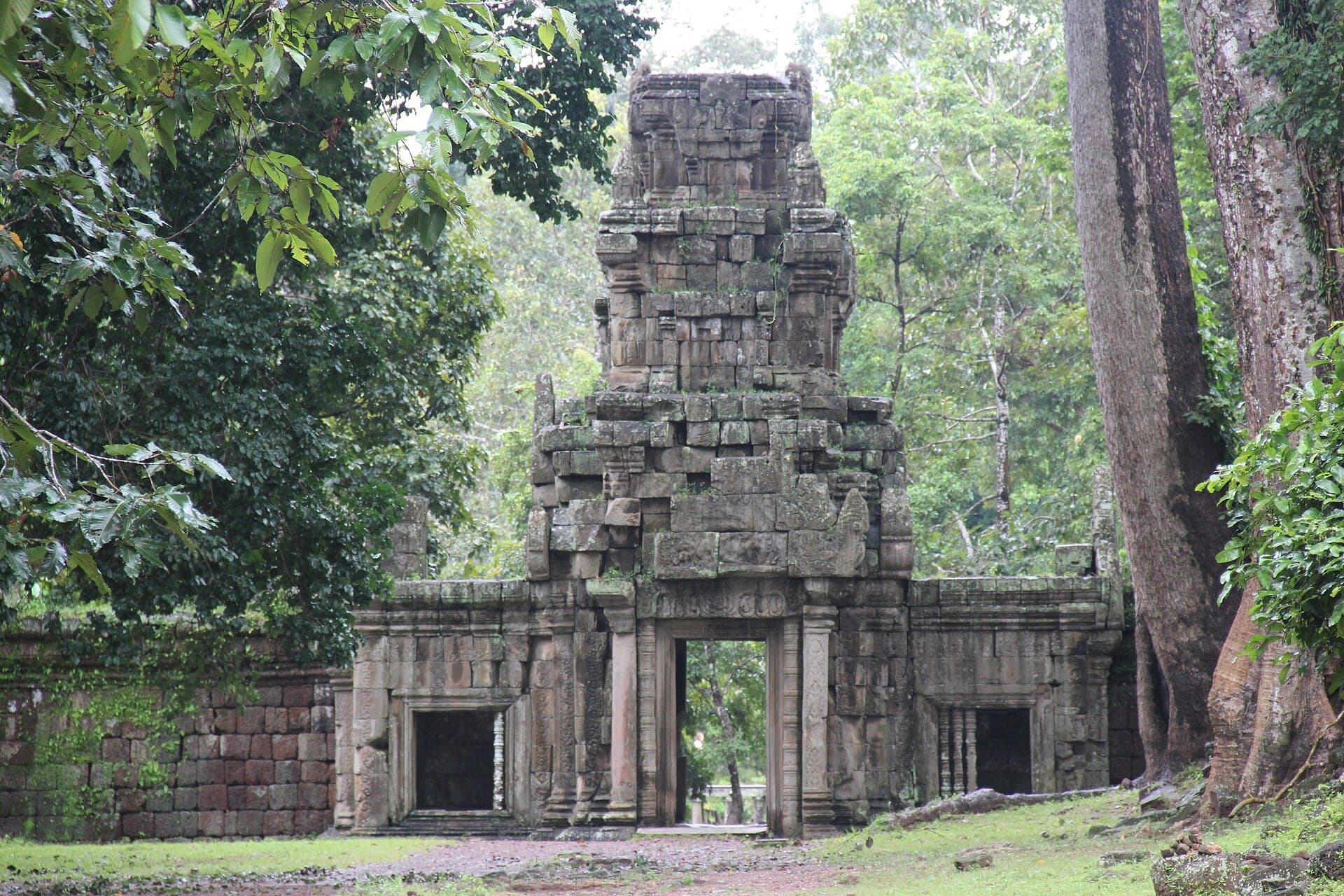
The Royal Palace forms the core of Angkor Thom, the walled capital built by King Jayavarman VII in the late 12th century. Unlike the towering spires of Angkor Wat, this area reveals the daily and ceremonial life of Khmer royalty through low-lying foundations, a central pyramid temple, and expansive terraces that once supported wooden palace halls long vanished to time and climate.

What to See and Do

Begin at the Royal Enclosure, where the rectangular layout still shows clear traces of moats and walls. The standout feature is Phimeanakas, a three-tiered laterite and sandstone pyramid that served as the king’s personal temple. Climb its steep steps for views across the surrounding forest canopy. Adjacent terraces provide the most vivid surviving details: the Terrace of the Elephants stretches nearly 350 meters with intricate carvings of elephants, garudas, and processions, while the nearby Terrace of the Leper King displays dense bas-reliefs of mythical beings and underworld scenes.

Walk the shaded paths between these monuments to appreciate the scale of the original wooden palace buildings, whose post holes remain visible in the stone platforms. Allow time to observe the changing light on the carvings, especially in late afternoon when shadows emphasize the depth of the reliefs.

Practical Exploration Tips on Site

  • Follow the logical circuit from the east entrance through Phimeanakas then south along the terraces to avoid backtracking.
  • Carry water and wear a hat; the open terraces offer little shade once the morning mist lifts.
  • Look closely at the elephant trunks on the Terrace of the Elephants; each trunk holds different objects, revealing symbolic details about royal processions.

Getting There and Best Time to Visit

The Royal Palace lies inside the Angkor Archaeological Park, roughly 1.5 kilometers north of Angkor Wat. Most visitors reach it by tuk-tuk or minibus from Siem Reap town, combining it with a full-day circuit of Angkor Thom sites. The dry season from November through February offers the most comfortable temperatures and clearest skies for photography, while the shoulder months of March and April bring hotter conditions but fewer crowds.

Nearby Attractions

After exploring the palace grounds, continue to the Bayon temple at the center of Angkor Thom for its famous smiling faces, or head west to Baphuon and the Terrace of the Leper King extensions. The entire Angkor Thom complex rewards a full day on foot or bicycle, with the Royal Palace serving as an ideal starting point before the midday heat intensifies.

Visitor tips

  • Hire a licensed local guide for the terraces to hear stories behind the carvings that are not obvious from the stonework alone.
  • Combine your visit with an early morning at the Bayon to manage crowds and heat across the Angkor Thom circuit.
  • Wear sturdy shoes with good grip; the steep steps of Phimeanakas and uneven laterite paths can be slippery after rain.

Frequently asked questions

How long should I spend at the Royal Palace?+

Most visitors allow 60 to 90 minutes to walk the enclosure, climb Phimeanakas, and examine both terraces at a comfortable pace.

Is the Royal Palace suitable for children?+

The open spaces and elephant carvings interest many children, but the steep pyramid steps require close supervision and sturdy footwear.

Can I visit the Royal Palace without a guide?+

Yes, clear signage and well-defined paths allow independent exploration, though a guide adds context to the reliefs and royal history.

What is the best way to combine the Royal Palace with other Angkor sites?+

Include it in a full Angkor Thom loop that also covers the Bayon, Baphuon, and Terrace of the Leper King, ideally starting early to finish before afternoon heat.

Are there restrooms or shade near the Royal Palace?+

Limited facilities exist inside the enclosure; plan to use services near the main Angkor Thom south gate or carry supplies from Siem Reap.

Share
Google Maps Apple Maps Directions

Image: Gary Todd from Xinzheng, China · CC0 · via Wikimedia Commons

Keep reading

Nearby & related

All stories
Prasat Chrung: The Corner Temples of Angkor Thom
Siem Reap Municipality

Prasat Chrung: The Corner Temples of Angkor Thom

Four quiet 12th-century sanctuaries mark the corners of the walled city of Angkor Thom and reward visitors with detailed…

20 October 2026
The Mysterious Khleangs of Angkor Thom
Siem Reap Municipality

The Mysterious Khleangs of Angkor Thom

Explore the enigmatic laterite buildings whose purpose still puzzles archaeologists at the heart of Cambodia’s ancient…

19 October 2026
Krol Ko: A Serene Bayon-Style Temple in the Angkor Archaeological Park
Siem Reap Municipality

Krol Ko: A Serene Bayon-Style Temple in the Angkor Archaeological Park

Krol Ko delivers quiet introspection among late-12th-century ruins on the edge of the East Baray, rewarding visitors who…

19 October 2026