Why Visit the Amphitheatre of Alba Fucens
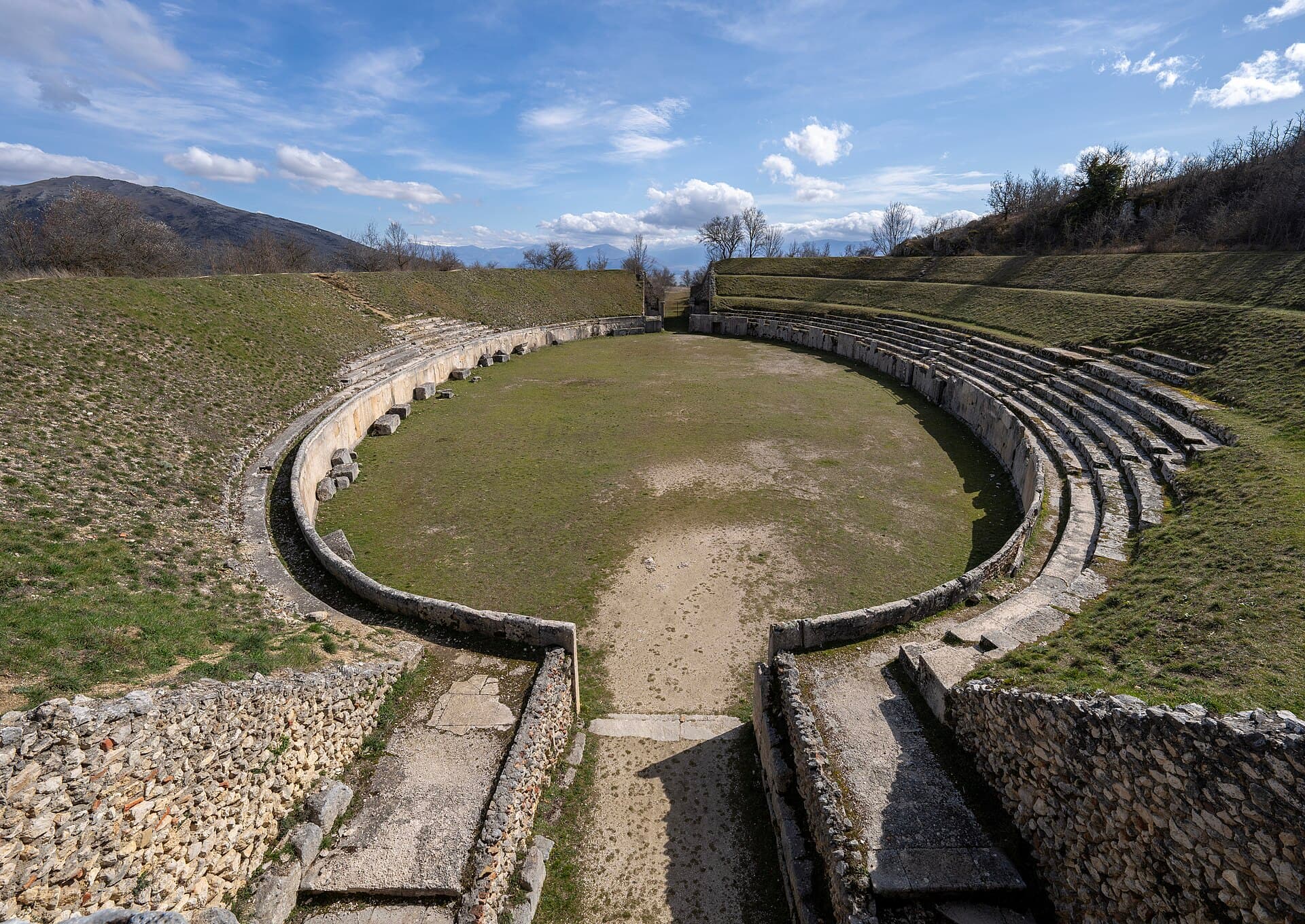
The Amphitheatre of Alba Fucens stands as one of the most complete Roman entertainment venues still visible in central Italy. Built into a natural hillside, its stone seating and arena floor remain largely intact, offering visitors an immediate sense of how spectators once watched gladiatorial contests and public spectacles. Unlike more crowded sites farther south, this amphitheatre sits in quiet countryside, allowing unhurried exploration and clear views of the surrounding Monti della Laga and Velino ranges.
History and Setting
Alba Fucens was founded as a Latin colony in 303 BC to secure the Via Valeria corridor between Rome and the Adriatic. The amphitheatre dates to the early Imperial period and could accommodate several thousand spectators. Its location on a gentle slope meant builders needed only to carve seating into the rock and add masonry where the hill fell away. Today the structure blends into olive groves and pasture, with the medieval village of Massa d’Albe visible on the ridge above.
What to See and Do
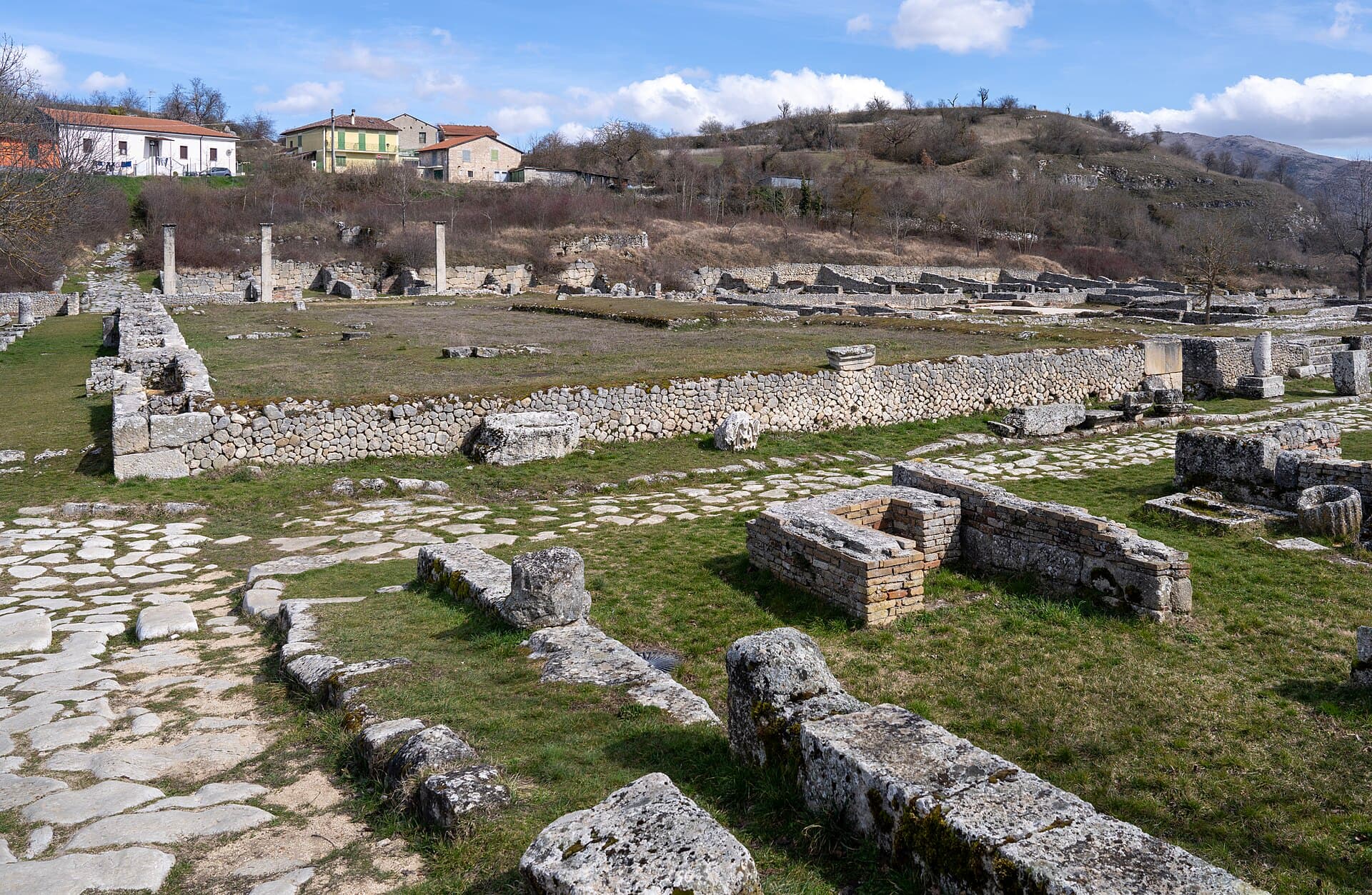
Begin at the arena floor and walk the full circuit of the remaining vomitoria and stairways. Notice the carefully fitted limestone blocks and the drainage channels that once kept the space usable after rain. From the highest preserved rows you can trace the line of the ancient town walls and the distant Fucino basin. Combine the visit with a walk to the nearby forum and theatre ruins, which lie within a short stroll across open fields. Photographers find the best light in late afternoon when the western seating glows against the mountains.
How to Get There
The site lies just outside Massa d’Albe in the province of L’Aquila. Most visitors arrive by car via the A25 motorway, exiting at Avezzano and following signs for Alba Fucens. The drive from Rome takes roughly ninety minutes. Regional trains reach Avezzano station; from there a local bus or short taxi ride covers the final ten kilometres. Once at the archaeological area, parking is available in a small unpaved lot beside the entrance path.
Best Time to Visit
Spring and early autumn provide the most comfortable temperatures for walking uneven terrain. Summer days can be hot and dusty, while winter visits reward those prepared for crisp air and occasional snow on the higher peaks. The surrounding countryside is especially attractive during the spring wildflower bloom and the autumn olive harvest.
Nearby Attractions
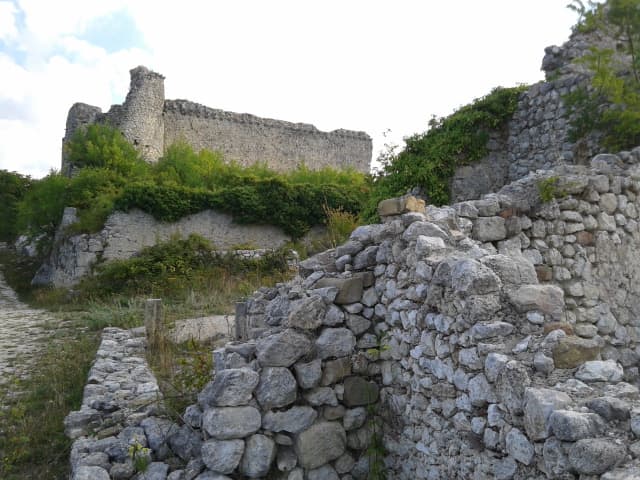
After exploring the amphitheatre, continue to the acropolis of Albe for panoramic views and the ruins of a medieval castle. The nearby Lago di Fucino offers flat cycling routes, while the Sirente-Velino Regional Park provides hiking trails that start within twenty minutes’ drive. Avezzano’s archaeological museum displays finds from Alba Fucens and helps visitors understand daily life in the ancient colony.