The Enduring Appeal of Alba Fucens
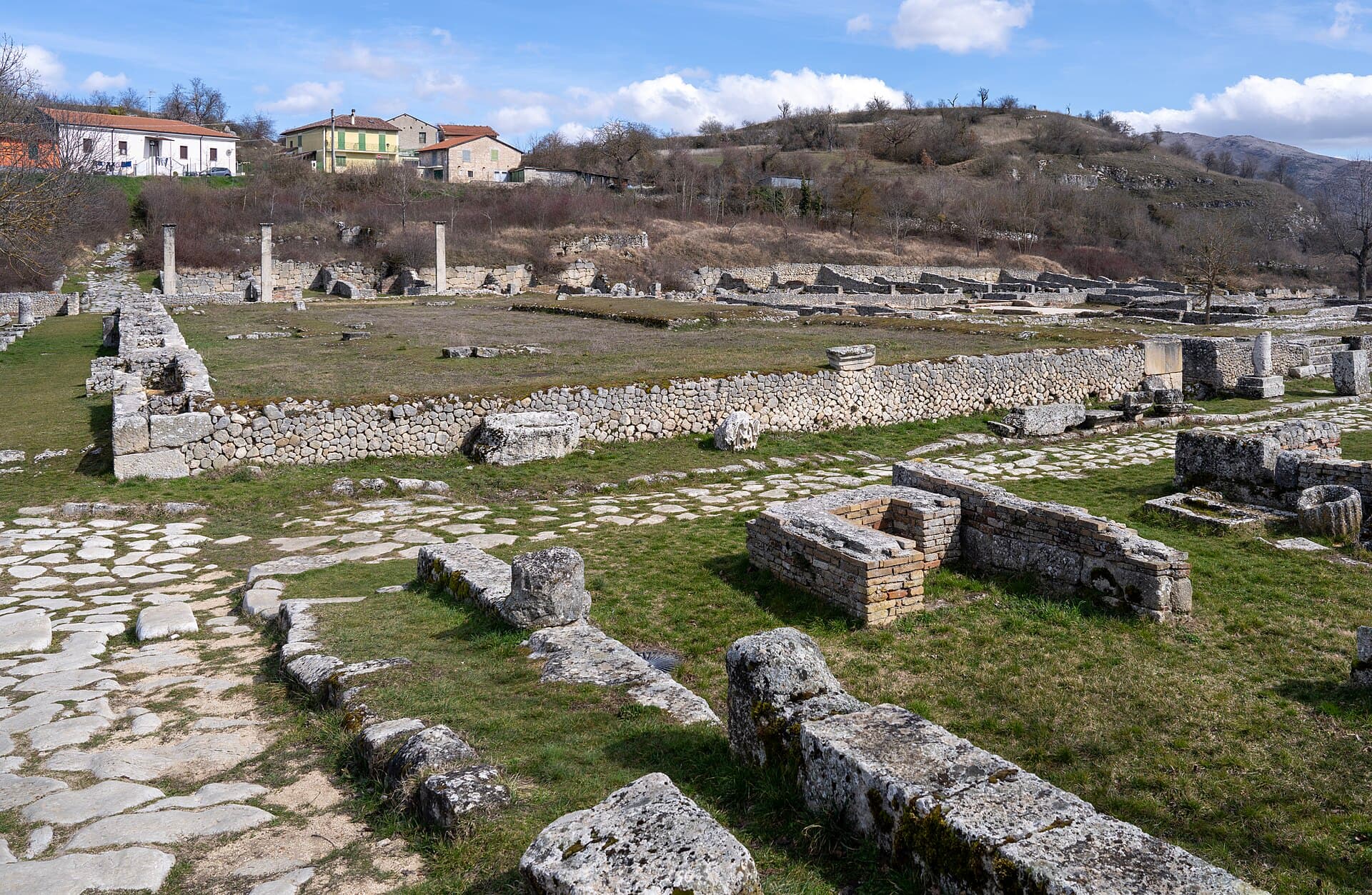
Founded as a Roman colony in 303 BC to secure the central Apennines, Alba Fucens retains one of the most coherent layouts of any Republican-era city in Italy. Its grid of streets, monumental public buildings, and defensive walls still trace the original plan, offering visitors a direct sense of how Rome projected power into the mountains. The site sits on a gentle rise above the drained Fucino basin, with views across the plain to the snow-streaked peaks of the Velino massif.
Key Monuments and What to See
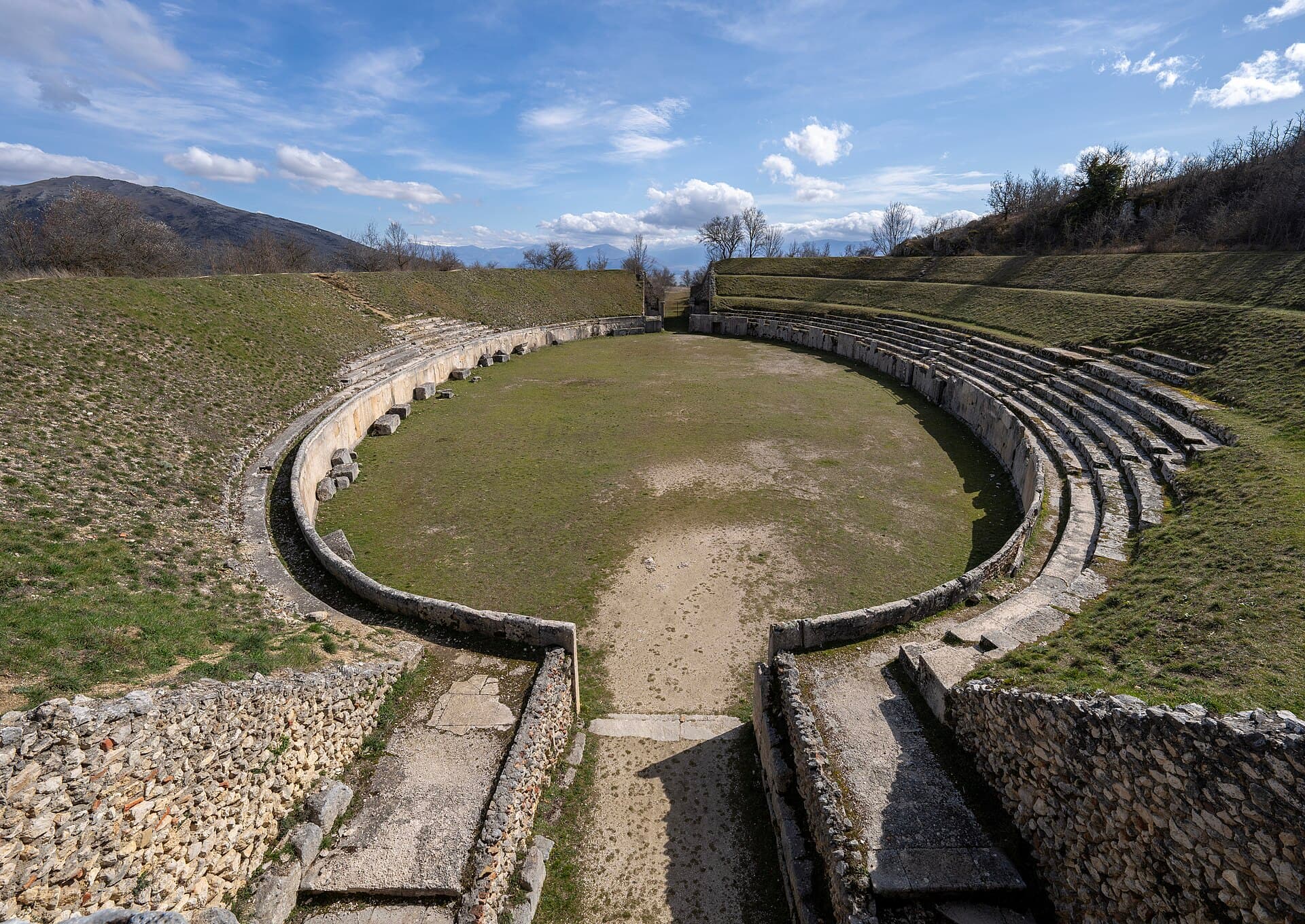
Begin at the lower city where the forum, flanked by a basilica and shops, opens onto a well-preserved stretch of the via Valeria. Continue uphill to the theater, its cavea cut into the hillside and still used for occasional summer performances. Higher still stands the sanctuary of Hercules, whose massive ashlar blocks demonstrate the engineering skills of the early colony. The amphitheater, located just outside the walls, remains largely intact, its elliptical shape clearly legible amid olive groves. Scattered throughout the fields are stretches of polygonal walls, thermal baths, and the remains of private houses whose mosaic floors are occasionally visible after rain.
How to Reach the Site
Alba Fucens lies a short drive from Avezzano in the Marsica district. Most visitors arrive by car along the SS5 or the A25 motorway, exiting at Avezzano and following signs toward Massa d’Albe. Regional trains stop at Avezzano station; from there a local bus or taxi covers the final ten kilometers. The approach road climbs through vineyards and passes the medieval village of Alba Fucens itself, whose stone houses cluster around a 13th-century church built partly with Roman spolia.
Best Time to Visit
Spring (April–June) and early autumn (September–October) bring mild temperatures and fewer visitors, allowing comfortable exploration of the uneven terrain. Summer days can be hot and dusty, while winter snow may cover the higher paths. The surrounding countryside is especially attractive in May when wildflowers carpet the slopes and in October when the vineyards turn gold.
Nearby Places Worth Combining
After a morning at the ruins, continue to the shores of the former Lake Fucino for flat walking paths and panoramic views. The town of Avezzano offers a compact historic center and the Torlonia Palace museum. A short drive north leads to the medieval hill town of Tagliacozzo and the dramatic gorge of the Salto River. For longer excursions, the national park of Abruzzo, Lazio and Molise lies within an hour, providing opportunities to see wildlife in the beech forests of the central Apennines.