Why Tagish Lake Stands Out
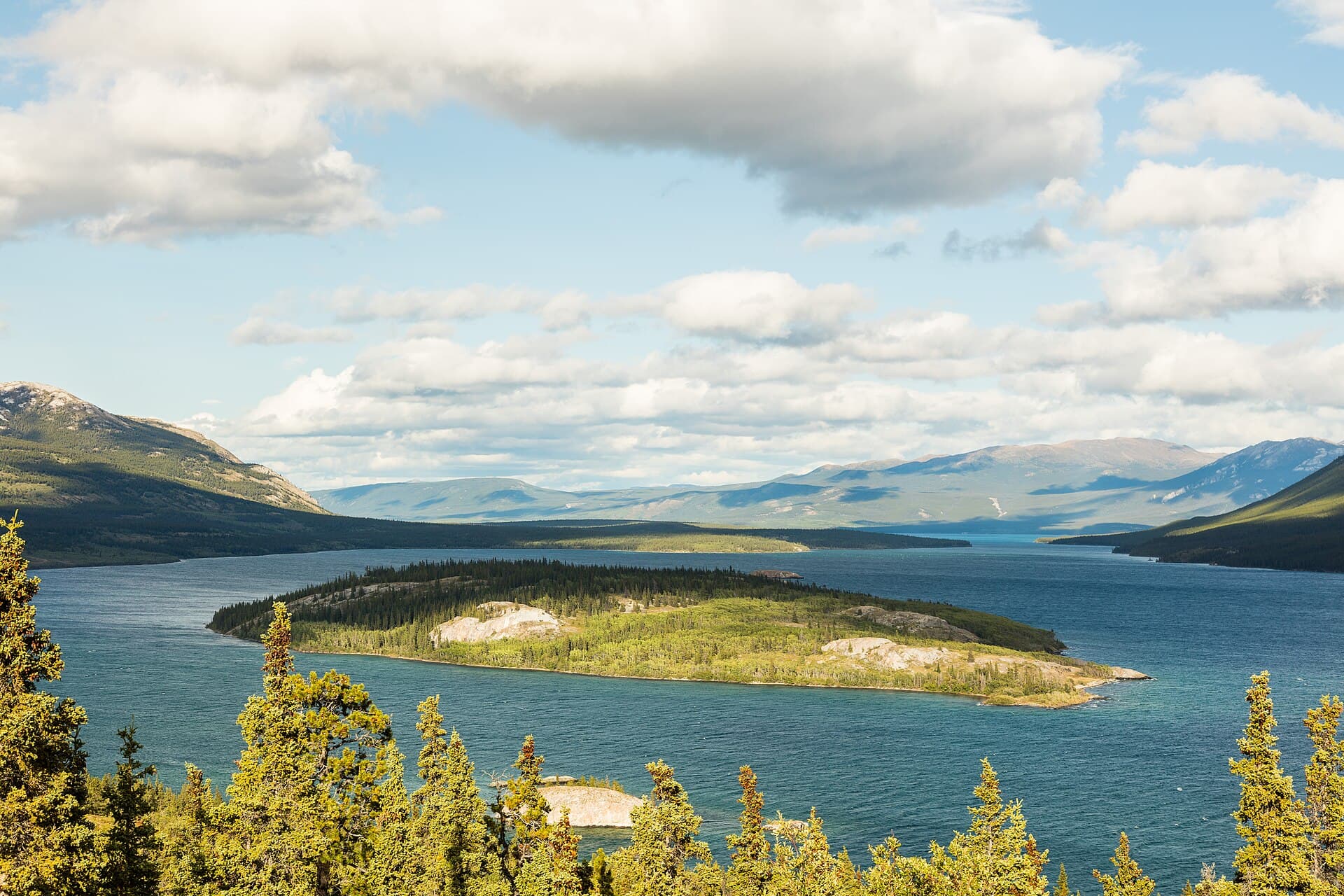
Tagish Lake offers visitors a rare combination of scale and solitude. Fed by glacial streams and ringed by the rugged peaks of the Coast Mountains, its deep, clear waters stretch more than 100 kilometres. The lake sits in a lightly populated region where spruce forests meet shoreline gravel beaches, creating habitat for loons, eagles, and moose. Its position along historic travel routes adds quiet cultural resonance without crowds.
Things to Do on and Around the Lake
Fishing
Anglers target lake trout, northern pike, and Arctic grayling from boats or the shore. Productive areas lie near river inflows and submerged reefs; success improves with downriggers or trolling spoons in deeper channels. A British Columbia fishing licence is required on the southern portion.
Paddling and Boating
The lake’s long reaches and protected bays suit multi-day canoe or kayak trips. Launch at Tagish or Carcross and travel north toward Marsh Lake or south toward Atlin. Winds can rise quickly, so paddlers should hug shorelines and monitor forecasts. Motorboats are common for fishing but rarely dominate the water.
Wildlife Viewing and Hiking
Early morning or evening drives along the Tagish Road often reveal bears foraging or caribou on ridges. Short hikes lead to viewpoints above the lake; longer trails connect to the historic Chilkoot Trail corridor nearby.
Getting There
From Whitehorse, drive 70 kilometres south on the Alaska Highway, then turn east on the Tagish Road. The route is paved until the lakeside settlements. Floatplane access is available from Whitehorse or Atlin for remote drop-offs. No scheduled public transit serves the lake directly, so independent travel or guided tours are the norm.
Best Time to Visit
June through early September brings the longest days, warmest water for paddling, and open fishing season. Late summer offers fewer insects and stable weather. Winter travel is possible by snowmobile or ski but requires serious preparation and local knowledge of ice conditions.
Nearby Places Worth Exploring
Carcross, 20 minutes west, features the historic White Pass & Yukon Route railway and sandy beaches at Bennett Lake. Atlin, an hour south, provides another large lake with hot-spring options. The Alaska border and Skagway port lie within a half-day’s drive for those combining the visit with coastal travel.