Why Visit Ta Som
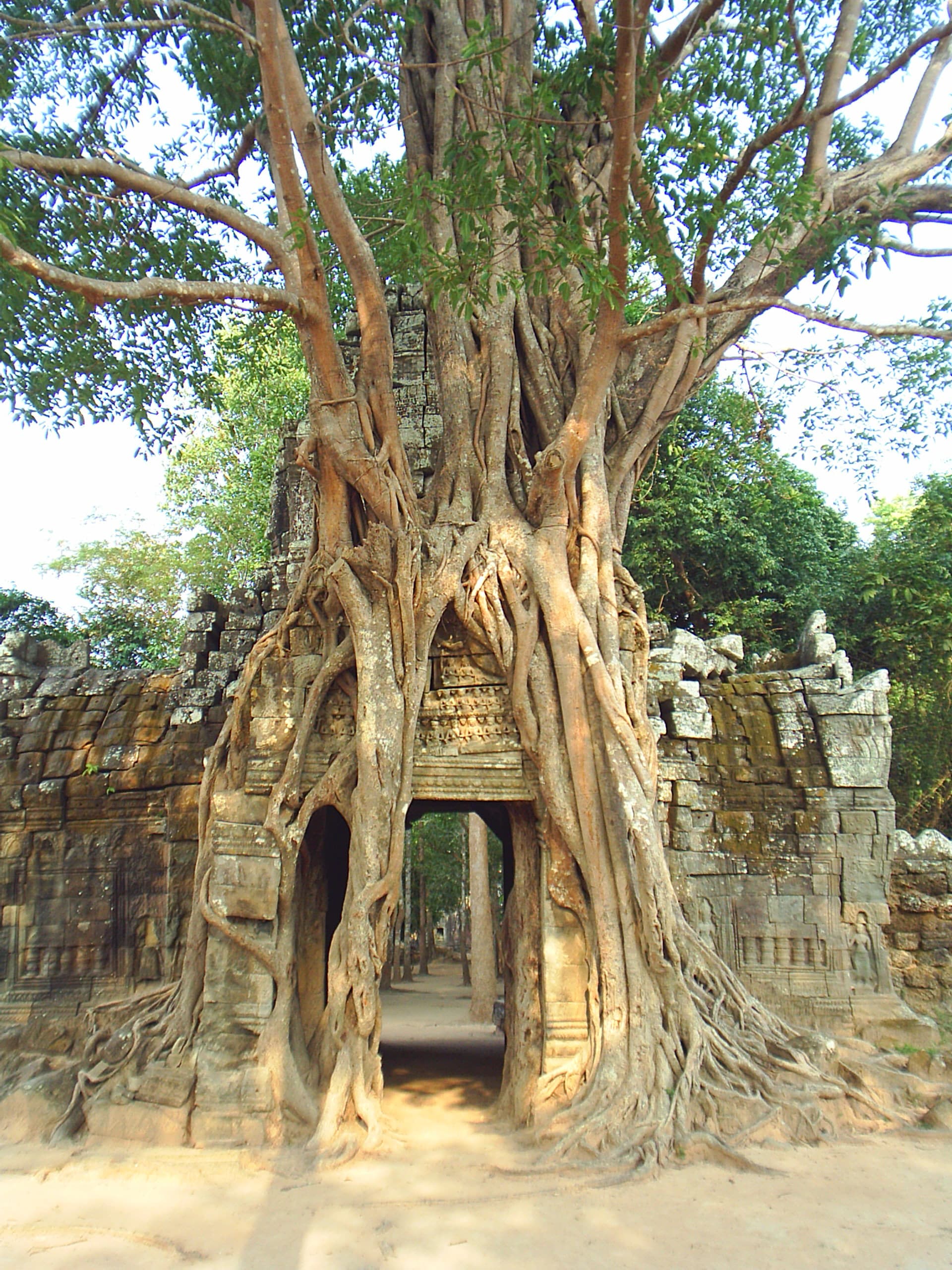
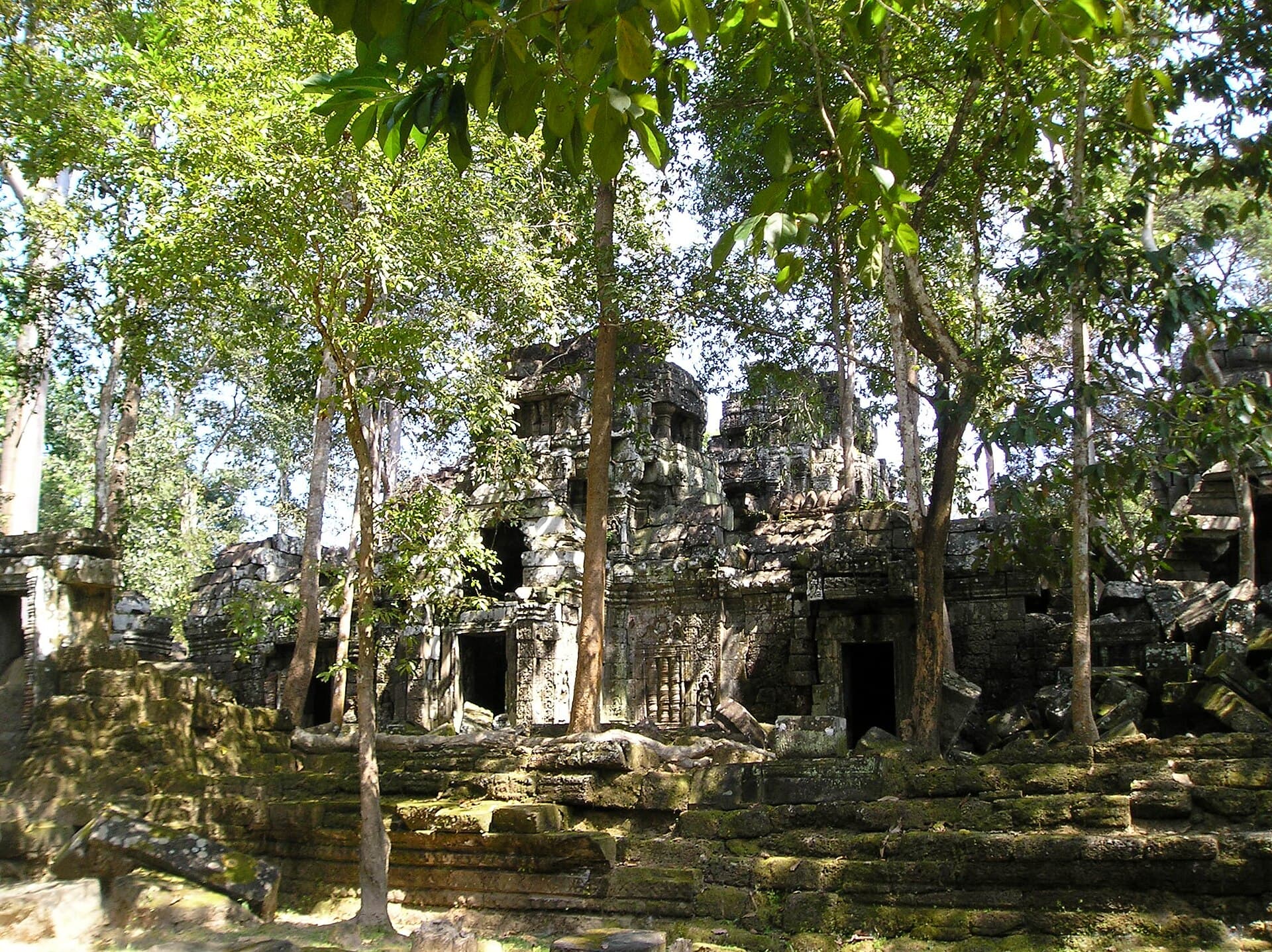
Ta Som stands out in the Angkor complex for its intimate scale and the dramatic way strangler fig roots cascade over its eastern gopura. Unlike more crowded sites, the temple offers visitors a chance to linger in relative solitude among lichen-covered sandstone and twisting vegetation. Built in the late 12th century by King Jayavarman VII as a Mahayana Buddhist monastery dedicated to his father, it retains the classic Bayon-style faces on its towers while remaining compact enough to explore fully in under an hour.
Exploring the Ruins
Enter through the western gate and walk the short central corridor lined with carved apsaras. The highlight lies at the eastern entrance, where massive tree roots grip the stone doorway like natural sculpture. Four small libraries flank the main sanctuary, their doorways framed by intricate floral motifs and guardian figures. Photographers often position themselves inside the root-covered arch for striking compositions that capture both the temple’s decay and its living integration with the forest.
Practical Layout
- The site measures roughly 200 meters by 200 meters, making it easy to navigate without a guide.
- Stone causeways lead to the central sanctuary, now open to the sky after its tower collapsed.
- Look for faint traces of original stucco on interior walls, evidence of the temple’s once brightly painted surfaces.
Getting There
Ta Som sits on the small circuit road inside Angkor Archaeological Park, roughly 6 kilometers northeast of Angkor Wat. Most visitors reach it by tuk-tuk or rented bicycle from Siem Reap, combining it with nearby Preah Khan or Neak Pean in a single morning. The road is well maintained and shaded, though the final approach involves a short dirt track that can become muddy after heavy rain.
Best Time to Visit
The cool, dry months from November through February provide the most comfortable temperatures and clearest skies for photography. Arrive at opening or in the late afternoon when tour groups thin out, allowing quiet appreciation of birdsong and shifting light across the roots. The wet season brings lush greenery but also slippery surfaces and occasional closures of side paths.
Nearby Attractions
Combine Ta Som with Preah Khan, just 2 kilometers west, for a full day focused on Jayavarman VII’s building program. Eastward lies the tranquil reservoir of Neak Pean, while the massive walls of Angkor Thom lie a short ride south. These connections let travelers experience the royal city’s outer temples without retracing routes through the main Angkor Wat complex.