History and Significance
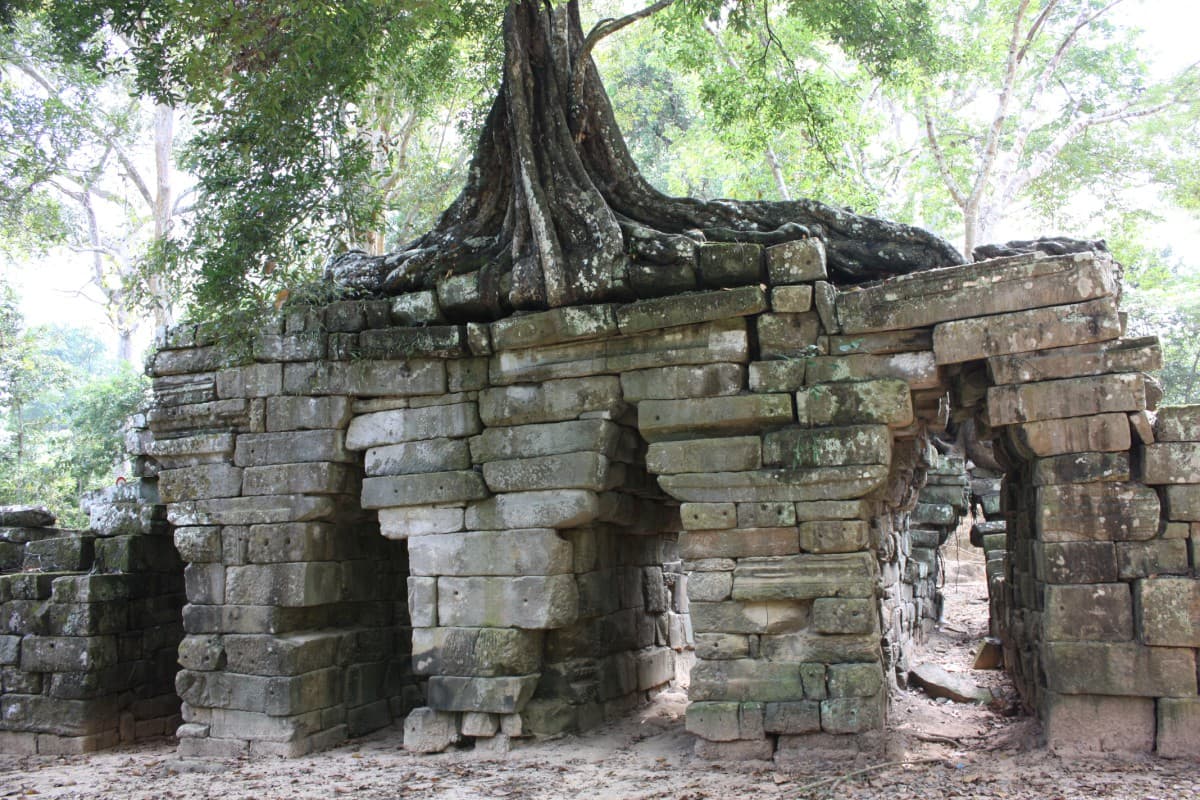
Spean Thmor, also known as the Stone Bridge, stands as one of the best-preserved examples of Khmer engineering from the late 12th century. Built during the reign of King Jayavarman VII, it carried travelers along the ancient royal road connecting the capital at Angkor with distant provinces. The bridge’s sandstone construction and iconic naga serpent balustrades reflect the same architectural style seen throughout the Angkor temple complex.
What to See and Do
Visitors walk the length of the bridge to examine the detailed carvings on both sides. The most striking features are the multi-headed naga figures that serve as railings, their bodies stretching the full span. Look closely at the stonework to spot lotus motifs and guardian figures. The surrounding landscape offers quiet views of rice fields and palm trees, making it an easy spot for photographs without the crowds found at major temples.
Practical Activities
- Stroll across the bridge at sunrise or late afternoon for softer light and fewer visitors.
- Combine the stop with a visit to nearby Banteay Srei temple, located just a short drive farther north.
- Observe the riverbed below during the dry season when water levels drop and the bridge’s full height becomes visible.
How to Get There
Spean Thmor lies roughly 25 kilometers north of Siem Reap along the main road toward Banteay Srei. Most travelers hire a tuk-tuk or rent a bicycle or motorbike for the day. The bridge sits beside the road, so it requires no separate ticket and can be visited in 20–30 minutes as part of a larger temple circuit.
Best Time to Visit
The dry season from November through April offers the most comfortable conditions for exploring the site on foot. Early morning or late afternoon visits avoid the midday heat and provide better opportunities to see local villagers using the bridge. The rainy season brings lush greenery but can make surrounding paths muddy.
Nearby Attractions
After crossing Spean Thmor, continue north to Banteay Srei with its intricate pink sandstone carvings. Southward routes lead back toward the main Angkor archaeological park, allowing visitors to link the bridge visit with half-day temple itineraries. Several small roadside stalls sell cold drinks and simple snacks near the bridge.