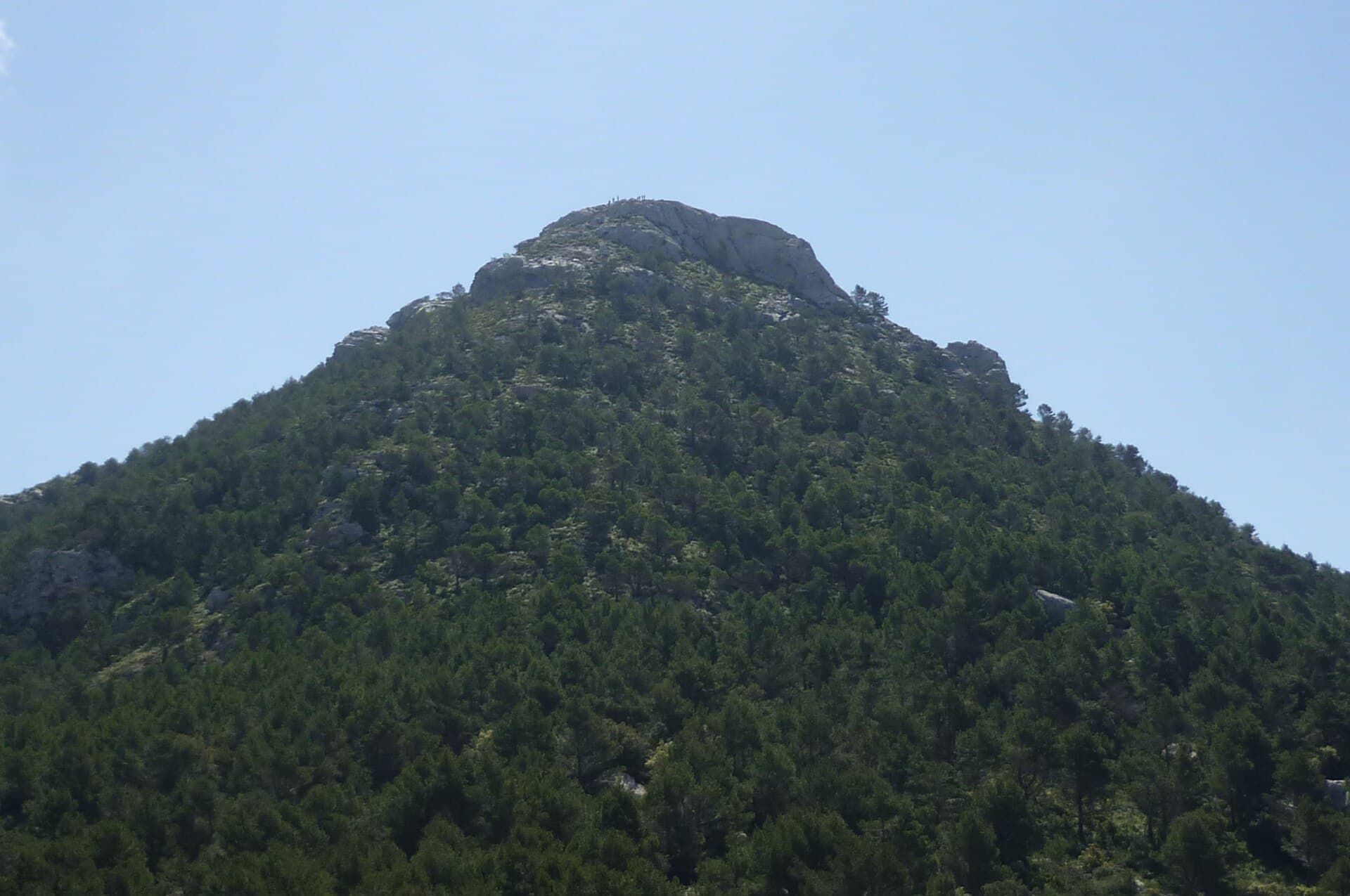
Why Puig de l’Ofre Rewards Visitors
Puig de l’Ofre rises to 1,068 metres in the heart of Mallorca’s Serra de Tramuntana, a UNESCO World Heritage landscape. Its rounded summit delivers uninterrupted panoramas of Puig Major, the Sóller valley, and the Mediterranean coastline, making it a favourite for hikers seeking quieter alternatives to busier island peaks.
Trails and What to Expect
The mountain is reached by clear footpaths that wind through pine forests and limestone ridges. Most routes start near the Cúber reservoir, where a well-marked trail climbs steadily through terraced olive groves before opening onto rocky slopes with constant views. The final approach to the summit involves a short scramble over boulders, rewarding effort with 360-degree vistas.
Popular Routes
- From Embassament de Cúber: a 4 km round trip with 400 m elevation gain, typically completed in two to three hours.
- Via Biniaraix and the old pilgrim path: a longer 12 km loop that passes through the historic village before ascending the northern flank.
- Combined circuit with Puig de Massanella: experienced hikers can link both peaks for an all-day outing across high meadows.
Getting There
The mountain lies roughly 30 km north of Palma. Renting a car provides the most flexibility; follow the Ma-10 road toward Sóller and park at the signed trailhead beside the reservoir. Public buses run from Palma to Sóller, after which a short taxi or seasonal shuttle reaches Cúber. Cyclists often combine the visit with the dramatic descent into the Sóller valley.
Best Time to Visit
Spring (March to May) and autumn (September to November) offer mild temperatures and clear skies ideal for photography. Summer brings intense heat and occasional thunderstorms, so early starts are essential. Winter days can be crisp with occasional snow on the higher ridges, adding dramatic contrast to the views.
Nearby Attractions
After descending, continue along the Ma-10 to the village of Fornalutx for stone houses and almond terraces, or visit the historic centre of Sóller with its orange groves and vintage tram. The coastal road west leads to the dramatic cliffs of Cap de Formentor, while the Cúber reservoir itself is popular for birdwatching and gentle walks along its shoreline.