Why Preah Ko Matters
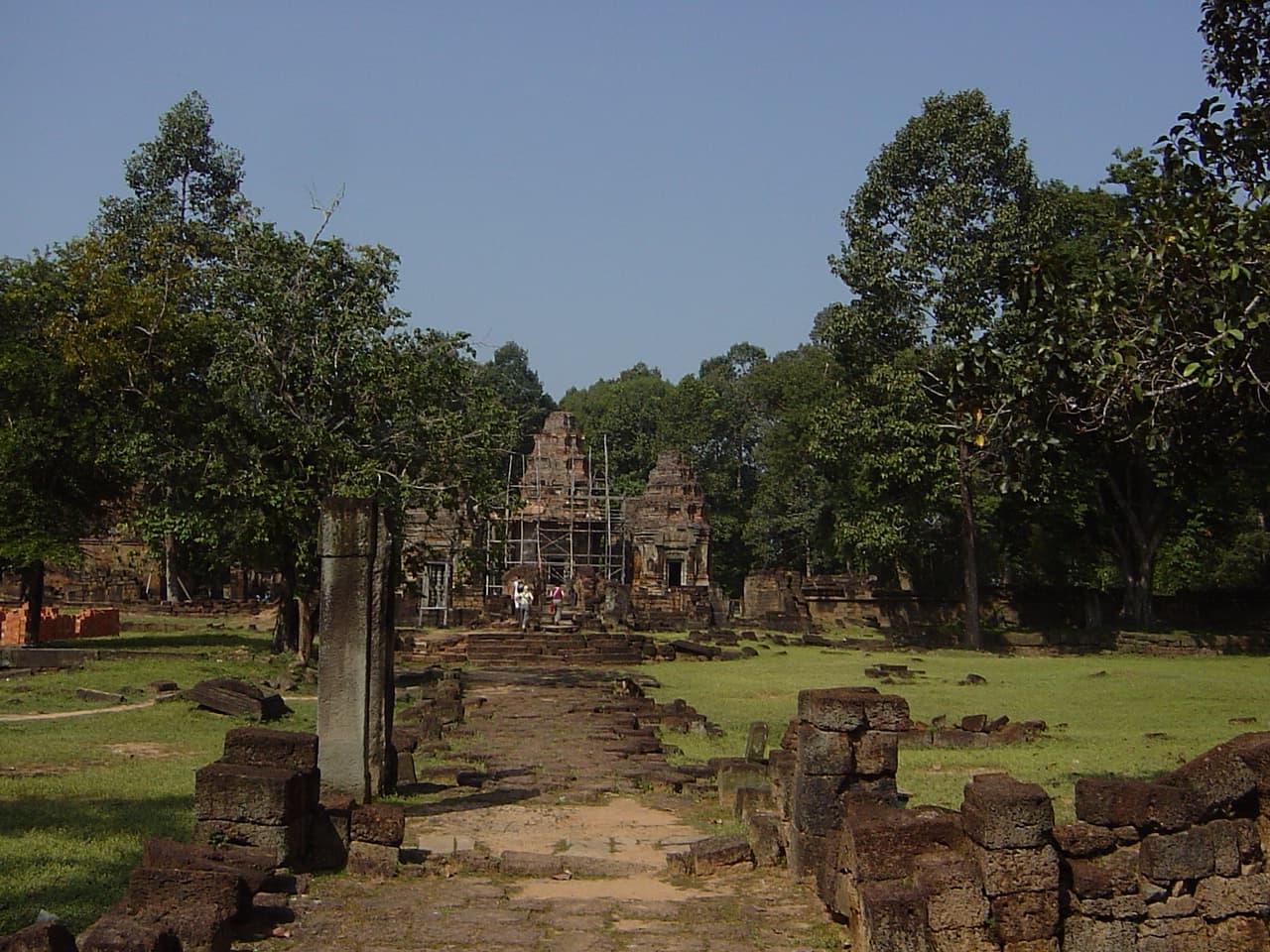
Preah Ko stands as the earliest major temple of the Angkor period, built in 879 by King Indravarman I to honor his ancestors and the Hindu god Shiva. Its six brick towers rise from a single laterite platform, each originally coated in stucco and adorned with carved guardians, deities, and mythical creatures. The temple marks the shift from earlier Khmer styles toward the monumental stone complexes that followed at Angkor.
Architecture and Details Worth Noting
Unlike later sandstone monuments, Preah Ko relies on brick construction with intricate stucco reliefs. Look for the carved figures of male and female guardians flanking the doorways and the small niches holding images of the king’s parents and grandparents. The central towers represent the divine lineage, while the eastern orientation aligns with sunrise rituals still visible in the play of light across the platform.
Layout and Flow
Visitors enter through a laterite enclosure wall and walk across the open courtyard toward the raised platform. The three front towers are slightly larger than the three behind them, creating a balanced yet asymmetrical silhouette. Scattered around the base are remnants of original stucco work, best examined in soft morning light before direct sun washes out the details.
How to Reach Preah Ko
Preah Ko lies about 13 kilometers east of Siem Reap in the Roluos group. Most travelers combine it with the nearby temples of Bakong and Lolei on a half-day circuit. Tuk-tuks and taxis wait outside major Siem Reap hotels; drivers know the route well and can also include a stop at the local market for fresh coconut water.
Best Time to Visit
The dry months from November through February bring cooler temperatures and clearer skies, ideal for walking the open courtyard. Early morning visits reduce both heat and the number of tour groups. The rainy season from June to October turns surrounding fields green but can make paths muddy; carry a light rain jacket and allow extra time between sites.
Nearby Sites Worth Combining
After Preah Ko, continue to Bakong, the first true pyramid temple of the Angkor era, then Lolei with its four brick towers set in a reservoir. These three sites together illustrate the rapid architectural evolution of the early Angkor kings. From Roluos it is a short drive back toward the main Angkor Archaeological Park if you want to extend the day to Banteay Srei or the East Baray.