Why Banteay Srei Stands Apart
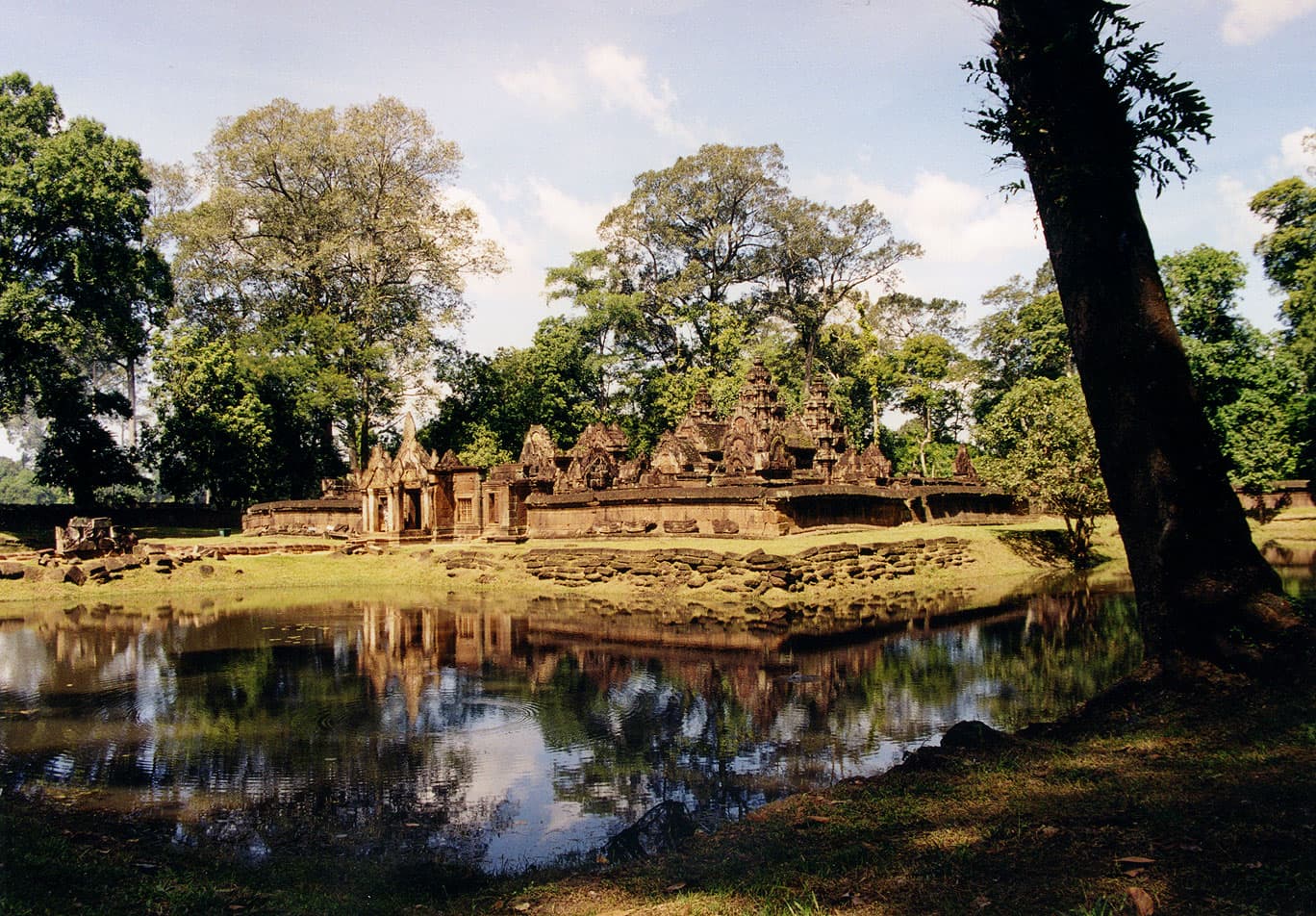
Built in 967 AD, Banteay Srei is the only major Angkor-era temple constructed entirely of pink sandstone. Its compact layout and jewel-like detail distinguish it from the larger monuments closer to Siem Reap. The temple’s name, often translated as “Citadel of Women,” reflects the exceptionally fine craftsmanship once attributed to female artisans.
Architecture and Carvings
Every surface of the central shrines is covered with narrative reliefs drawn from Hindu epics. Look for scenes from the Ramayana on the pediments and the graceful apsaras that line the doorways. Because the sandstone is soft, the carvings retain remarkable depth and clarity after a thousand years. The three main towers sit within a moat and laterite enclosure, creating an enclosed, almost domestic feel.
Key Details to Notice
- Red-pink stone that glows in early morning or late afternoon light
- miniature-scale towers that make the temple feel personal rather than monumental
- Intricate false doors and lintels that reward slow, close viewing
Getting There from Siem Reap
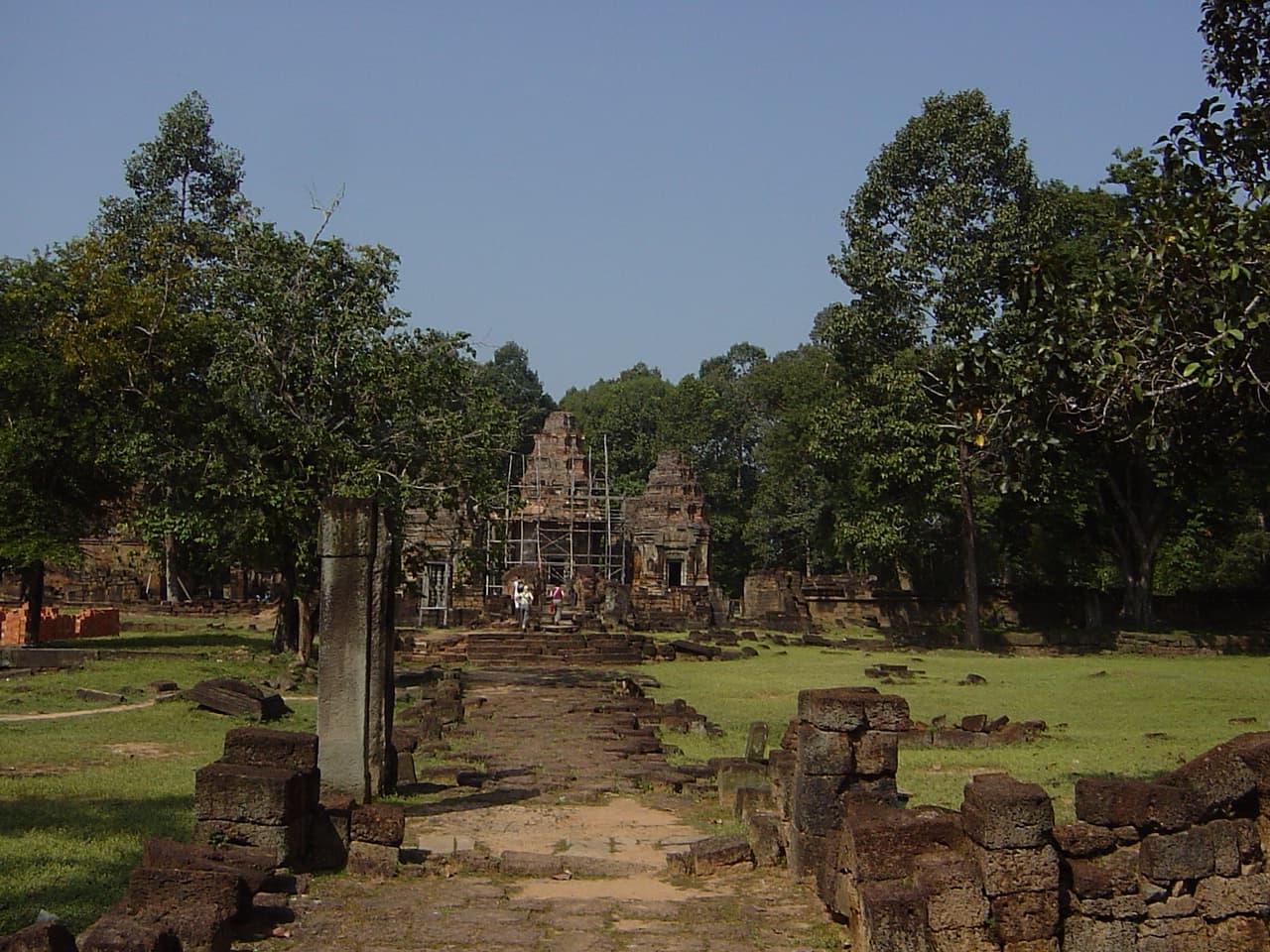
The site lies roughly 25 km northeast of Siem Reap town, a 45-minute drive along well-paved roads. Most visitors combine it with Banteay Samré or the East Baray on the same day. Tuk-tuks, private cars with drivers, and small-group tours are the most common transport options; the journey passes through rural villages and rice fields.
Best Time to Visit
Cooler months from November to February offer the most comfortable temperatures and clearer skies. Arrive at opening to enjoy soft light on the carvings and fewer visitors. The surrounding forest provides some shade, but the open courtyards can become hot by mid-morning. Rainy-season visits (June–October) are possible, though paths may be muddy.
Nearby Sites Worth Combining
After Banteay Srei, travelers often continue to the massive Banteay Samré or the quiet ruins of Kbal Spean, known for its riverbed carvings. The Preah Khan temple and Neak Pean lie on the return route toward Angkor Thom, allowing a full-day circuit without backtracking.
Practical Considerations
Entry requires the standard Angkor pass. Modest dress is expected: shoulders and knees covered. Bring water and wear a hat; facilities at the site are limited. Local guides can point out details in the carvings that are easy to miss when visiting independently.