Why Pomerape Stands Out
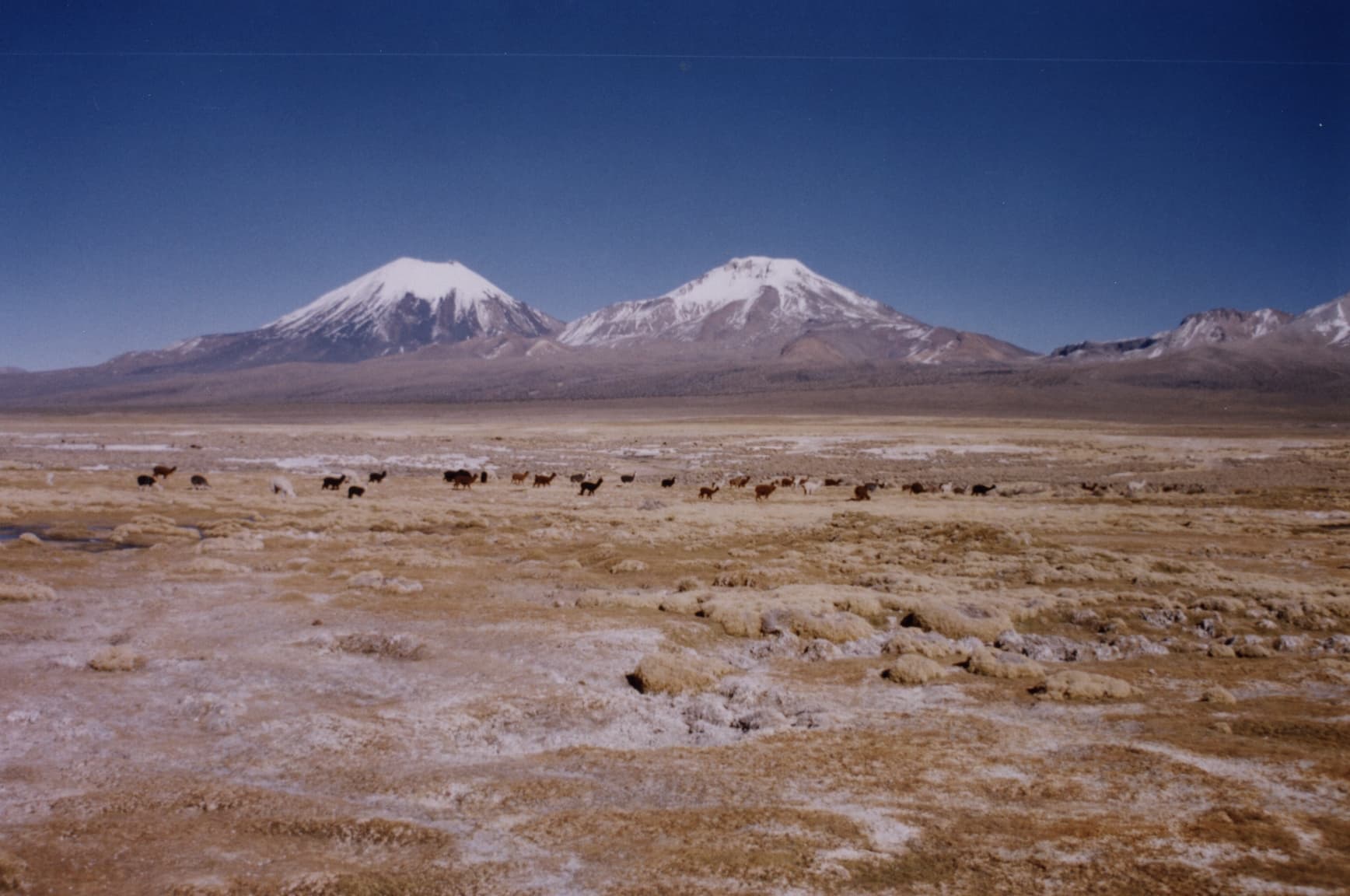
Pomerape rises as a symmetrical stratovolcano on the Bolivia-Chile border within Sajama National Park, offering one of the most accessible high peaks in the Bolivian Andes. Its snow-capped summit and striking profile against the Altiplano make it a focal point for photographers and mountaineers seeking solitude beyond more crowded Andean routes.
Activities and Experiences
Most visitors come for day hikes or multi-day ascents. The standard route approaches from the southeast via the village of Sajama, crossing high puna grasslands where herds of vicuñas graze. Experienced climbers tackle the north ridge for a full summit push, while non-technical visitors enjoy panoramic viewpoints at the base. Hot springs near Sajama village provide recovery after long days on the mountain. Wildlife spotting includes Andean foxes, rheas, and flamingos in nearby wetlands.
Photography and Scenery
The volcano’s perfect cone shape contrasts with the flat expanse of the Altiplano, creating memorable sunrise and sunset compositions. Clear nights reveal exceptional stargazing with minimal light pollution.
How to Reach Pomerape
Access begins in La Paz, with a six- to eight-hour drive via Patacamaya and the town of Sajama. Four-wheel-drive vehicles are essential on the unpaved roads that lead to trailheads. Many travelers combine the trip with visits to the neighboring Parinacota volcano or Sajama volcano itself.
Best Time to Visit
The dry season from May through October brings stable weather, lower precipitation, and clearer views for climbing and trekking. November to April can deliver afternoon thunderstorms and snow, complicating high routes. Early morning starts are always recommended to avoid afternoon winds.
Nearby Attractions
- Sajama National Park headquarters and interpretive trails
- Thermal baths at Sajama village
- Parinacota volcano and its crater lake
- Traditional Aymara communities offering cultural tours
- High-altitude bofedales wetlands supporting diverse birdlife