Why Pico Viejo Stands Out
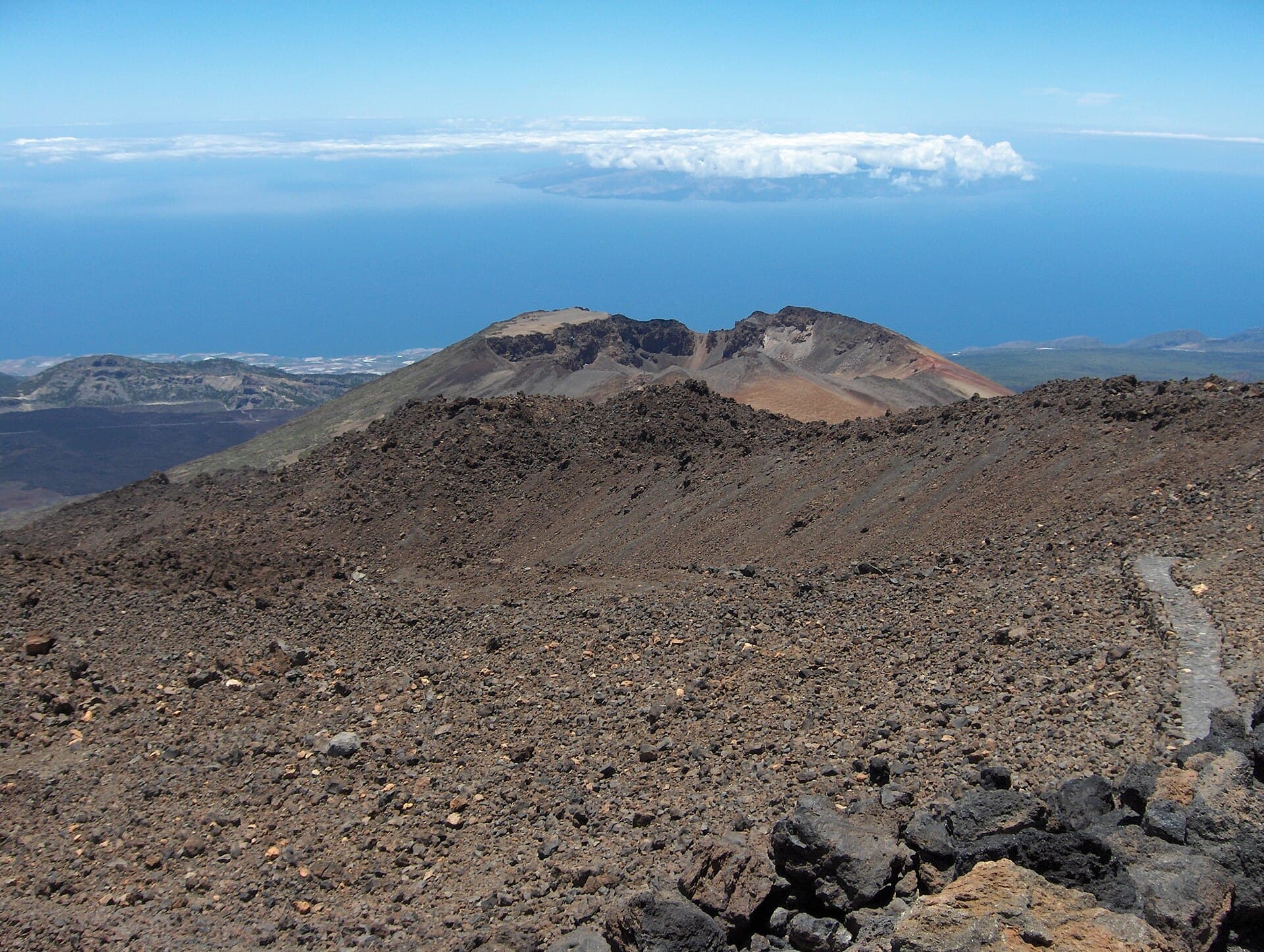
Pico Viejo rises directly beside Mount Teide on the rim of the Las Cañadas caldera, offering hikers a quieter alternative to the main summit while delivering equally sweeping views across Tenerife and neighboring islands. Its broad crater, formed during the 1798 eruption, creates a striking foreground for photographs of Teide’s cone and the surrounding lava fields. Because the mountain sits inside a UNESCO World Heritage site, the landscape remains largely unchanged, with dark volcanic rock, sparse alpine plants, and clear high-altitude light that changes color throughout the day.
Getting There and Trail Options
Most visitors reach the area via the Teide cable car from the base station near Parador Nacional, then walk the short connecting trail that leads to Pico Viejo’s crater rim. Those who prefer to hike the full distance can start from the lower trailheads at Montaña Blanca or the Roques de García parking area; both routes follow well-marked paths through the national park. A 4×4 taxi service also runs from the visitor center at El Portillo to the cable-car base, useful for early-morning starts. No private vehicles are allowed inside the restricted park roads without permits.
Best Time to Visit
Late spring and early autumn bring the most stable weather, with clear skies and moderate temperatures at altitude. Winter visits can include snow on the upper slopes, creating dramatic contrast with the black rock, but trails may close after heavy snowfall or strong winds. Summer mornings are workable if you begin before sunrise; afternoon clouds often build and reduce visibility. Always check the park’s weather and wind alerts the day before.
What to See and Do
The main goal is the crater rim circuit, which takes about two hours round-trip from the cable-car upper station. From the edge you look straight into the 800-meter-wide depression and across to Teide’s peak. On clear days the view extends to La Gomera, El Hierro, and Gran Canaria. Photographers favor the golden hour just after sunrise when shadows emphasize the volcanic textures. Birdwatchers may spot blue chaffinches and ravens near the crater. For a longer day, combine the Pico Viejo trail with the short walk to the Teide summit via the Telesforo Bravo path, though this requires advance reservations.
Nearby Attractions
After descending, spend time at the Roques de García rock formations and the nearby visitor center for exhibits on Canary Islands volcanism. The Parador hotel offers a convenient lunch stop with panoramic caldera views. Lower down the road, the cactus garden at Jardín de Cactus and the historic town of La Orotava provide contrasting lowland experiences on the same day.