Why Visit Mount Columbia
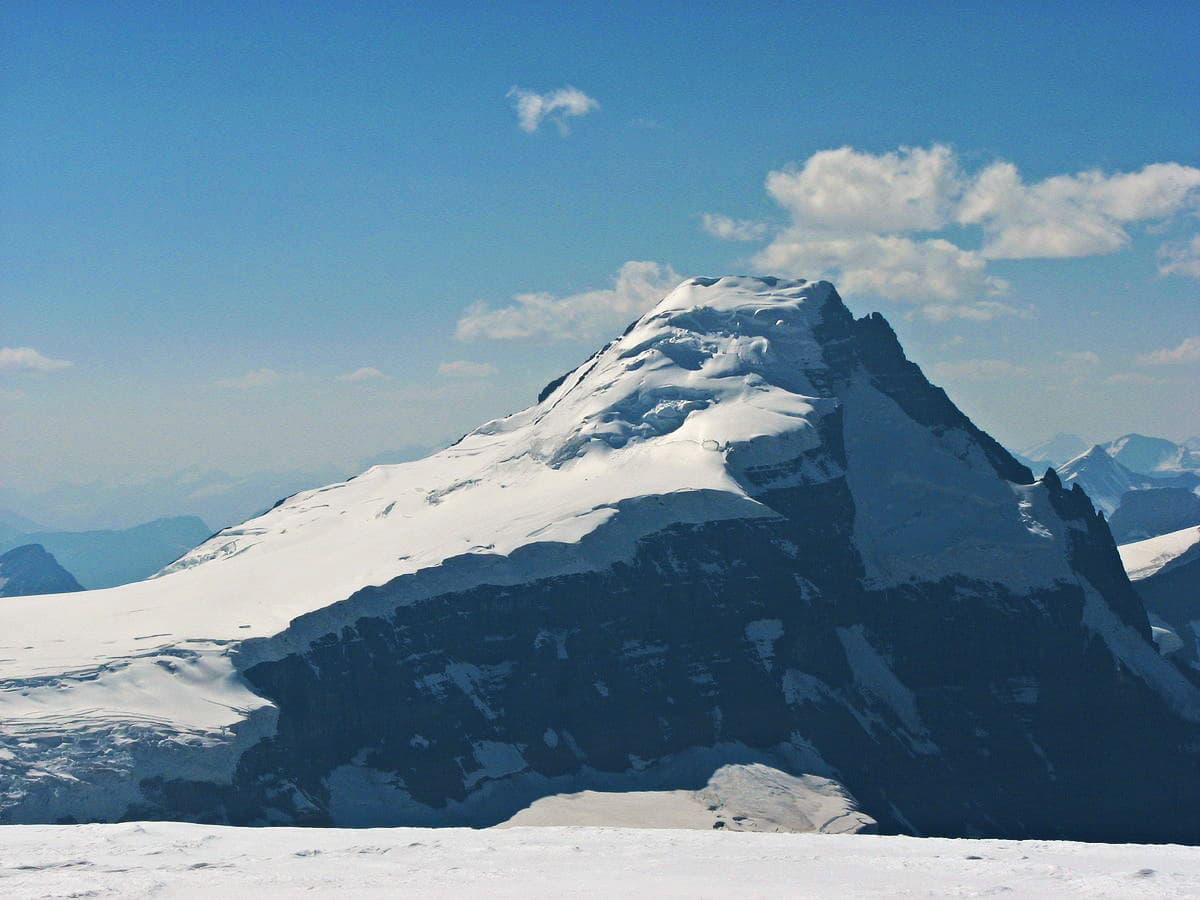
Mount Columbia rises 3,747 metres as the highest summit of the Columbia Icefield and the second-tallest peak in the Canadian Rockies. Its broad ice cap and steep north face deliver a true expedition feel while remaining accessible from the Icefields Parkway corridor. Visitors who reach the summit enjoy uninterrupted vistas across hundreds of square kilometres of ice and rock, an experience unmatched elsewhere in the range.
Getting There
The mountain sits on the continental divide roughly 100 kilometres south of Jasper. Most climbers approach from the Alberta side via the Icefields Parkway (Highway 93). Park at the Columbia Icefield Discovery Centre or the roadside pull-off near Sunwapta Pass, then follow the signed trail toward the Athabasca Glacier toe. From there, travel onto the icefield itself requires crampons, rope, and glacier-travel skills. British Columbia approaches exist via remote logging roads west of the divide but add significant time and logistical complexity.
Climbing Routes and Activities
The standard route ascends the south slopes from the icefield plateau after crossing the Athabasca Glacier. The climb involves moderate snow and ice slopes with occasional crevasse navigation; no technical rock is required on the easiest line. Experienced parties sometimes attempt the steeper north face or east ridge for greater challenge. Non-climbers can join guided snowmobile or Ice Explorer tours on the lower glacier for close views without committing to a full summit day. Backcountry skiing on the icefield plateau is possible in spring when snow conditions stabilize.
Best Time to Visit
July and August offer the longest daylight and most stable weather windows, though afternoon thunderstorms remain common. Late June and early September can work for fit parties but bring higher avalanche risk and colder nights. Winter ascents are rare and demand full expedition preparation.
Nearby Attractions
Combine a Columbia trip with visits to the Athabasca Glacier, the Columbia Icefield Skywalk, and Wilcox Pass. Further north along the parkway lie Sunwapta Falls and the Athabasca Falls; southbound travellers reach Peyto Lake and Bow Lake within two hours. The town of Jasper provides lodging, supplies, and park services 90 minutes away.