Why Monte Portella Stands Out
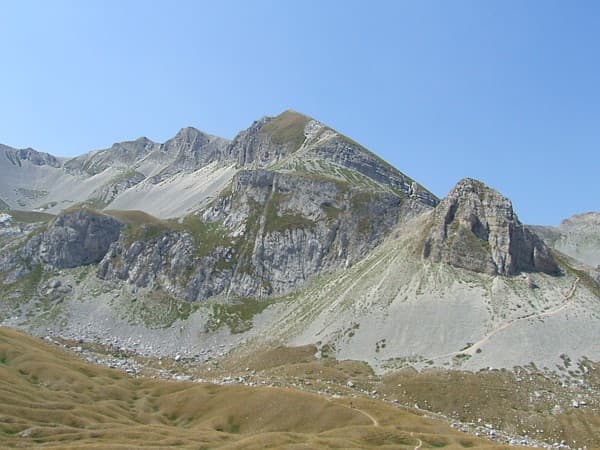
Monte Portella rises to 2,385 meters within the Gran Sasso e Monti della Laga National Park, offering hikers a quieter alternative to the more crowded Corno Grande. Its broad, rounded profile and position on the edge of the Campo Imperatore plateau deliver uninterrupted panoramas across the central Apennines, with clear days revealing the Adriatic coast to the east and the Maiella massif to the southeast.
Getting There
The most practical approach starts in L’Aquila. Drive southeast on the SS17bis toward Fonte Cerreto, then continue uphill on the winding road to Campo Imperatore. Several trailheads lie along this route, including the parking area near the old observatory. From there, marked paths such as the Sentiero del Portella lead directly to the summit in roughly two hours of steady walking. Public transport is limited; a rental car or organized transfer from L’Aquila is the most reliable option.
Trails and Summit Experience
The standard route follows gentle ridges with minimal exposure, making it suitable for fit walkers rather than technical climbers. Along the way, limestone karst formations and seasonal wildflowers in spring and early summer add interest. At the top, a simple cairn marks the high point, and the 360-degree view includes the steep north face of Corno Grande and the rolling hills of the Abruzzo countryside. Shorter loops can combine Monte Portella with nearby Colle dell’Infinito for varied terrain without extending the day excessively.
Best Time to Visit
Late June through September offers the most stable conditions, with snow usually cleared from trails and daytime temperatures comfortable for exertion. Spring brings colorful meadows but lingering snow patches; autumn provides crisp air and fewer visitors. Winter ascents require mountaineering experience, crampons, and avalanche awareness.
Nearby Attractions
Combine the hike with a visit to the nearby cable-car station at Fonte Cerreto for additional high-country exploration or a stop at the medieval village of Santo Stefano di Sessanio, known for its preserved stone architecture. The Rocca Calascio fortress, perched on a rocky outcrop, lies a short drive south and pairs well with an afternoon of mountain scenery.