Why King Island Stands Apart
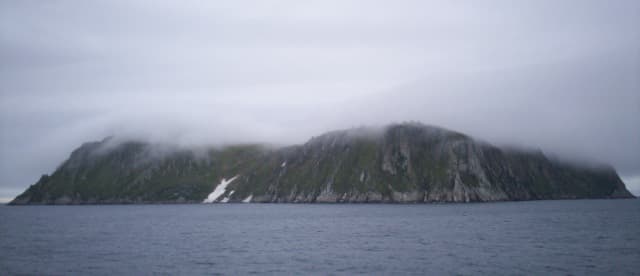
King Island rises steeply from the Bering Sea roughly 40 miles west of Nome, its sheer granite cliffs and narrow beaches creating a dramatic silhouette visible on clear days from the mainland. The island’s isolation has preserved both its natural environment and the deep Inupiat heritage of its former residents, who built an entire community on wooden stilts clinging to the rock face. Today the village stands empty year-round, yet the island remains a living link to centuries of subsistence hunting, ivory carving, and seasonal return by descendants now based in Nome.
Getting There
Reaching King Island requires advance planning and local knowledge. Most visitors charter fixed-wing aircraft from Nome’s airport for a scenic flight over the Bering Sea; the journey takes about 30 minutes in good weather. Summer boat charters are also possible when ice has cleared, though crossings can be rough. No scheduled service exists, and landings depend entirely on sea and wind conditions. Travelers must coordinate with the King Island Native Corporation or community members in Nome for permission and guidance.
What to See and Do
The Abandoned Village
Walk among the weathered wooden houses elevated on massive driftwood stilts. Many structures still contain household items left behind during the 1950s relocation, offering a poignant glimpse into mid-century Inupiat life. Respectful photography is welcomed; touching or removing artifacts is not.
Seabird Cliffs and Marine Life
The island’s north and west faces host dense colonies of murres, kittiwakes, and puffins during the brief Arctic summer. Binoculars reveal thousands of nesting birds on narrow ledges. Gray whales and walruses often feed in the surrounding waters, while harbor seals haul out on rocky beaches. Bring a spotting scope and practice quiet observation to avoid disturbing wildlife.
Cultural Connections
Many King Island families now live in Nome, where the renowned King Island Dancers perform traditional songs and the distinctive King Island style of ivory carving continues. Arrange a meeting in Nome before or after your island visit to learn stories of the place directly from descendants and perhaps purchase carvings made from legally sourced walrus ivory.
Best Time to Visit
July and early August offer the longest daylight, ice-free waters, and active bird colonies. Earlier or later trips risk being weathered in or encountering lingering sea ice. Winter visits are virtually impossible for non-residents due to extreme cold and lack of infrastructure.
Nearby Destinations
From Nome, travelers often combine a King Island charter with visits to the Diomede Islands or the Bering Land Bridge National Preserve on the mainland. These sites share the same cultural and ecological themes of the wider Bering Sea region.