History and Significance
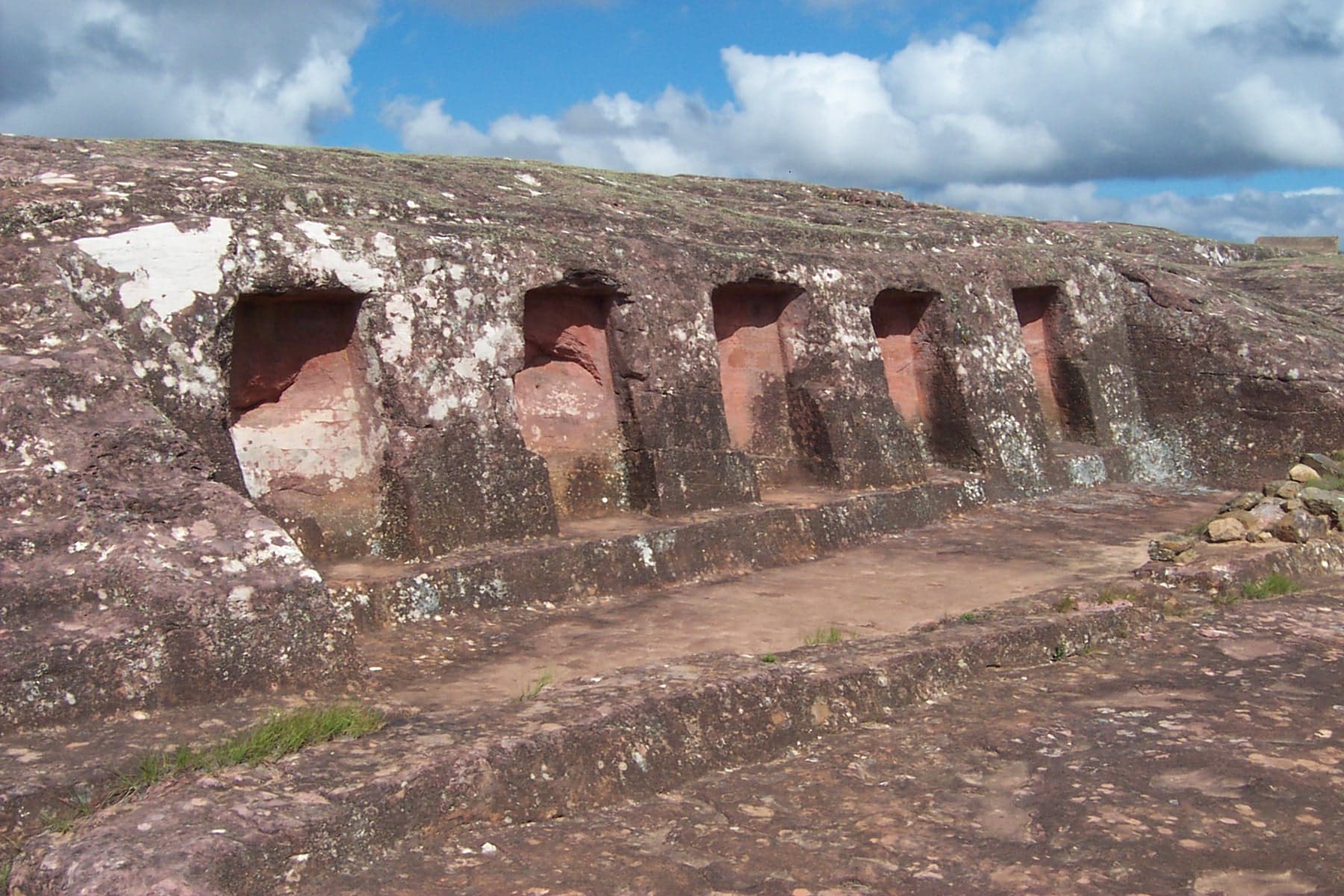
El Fuerte de Samaipata stands as one of South America’s most unusual archaeological treasures: an enormous sandstone outcrop sculpted over centuries into ceremonial plazas, channels, niches, and zoomorphic figures. First shaped by the Chané people around 300 AD, the site later hosted Inca religious and administrative structures before Spanish forces briefly occupied it in the 16th century. Its UNESCO World Heritage status recognizes the rare combination of pre-Inca, Inca, and colonial layers visible on a single rock surface.
What to See and Do
Walk the marked paths across the rock to examine the central temple area with its carved seats and offering channels, the so-called “serpent” and “jaguar” figures, and the Inca-era residential sector below. A short uphill trail leads to the colonial fort remains offering panoramic views over the surrounding valleys. Allow two to three hours for a unhurried visit; interpretive signs explain the main features, though hiring a local guide reveals additional details about astronomical alignments and ritual use.
Practical Access
The site lies 10 km from the small town of Samaipata. Most visitors arrive by private vehicle or organized tour from Santa Cruz de la Sierra, a journey of roughly 120 km that takes three hours on paved roads that become winding mountain routes. Public buses run daily to Samaipata, from where taxis or mototaxis continue to the entrance. The terrain includes uneven stone steps and some steep sections, so comfortable shoes are essential.
Best Time to Visit
The dry season from May through October brings clearer skies and easier access, with mild daytime temperatures and minimal rainfall. November to April sees more frequent afternoon showers that can make paths slippery, though the surrounding landscape turns lush. Early morning visits avoid both heat and occasional tour groups.
Nearby Attractions
Combine a trip with Amboró National Park for cloud-forest hikes and waterfalls, or explore the colonial streets and artisan markets of Samaipata village. Further afield, the Jesuit mission churches of the Chiquitos region lie within a day’s drive east.