
Keep reading
Nearby & related
Annette Island: Alaska’s Remote Island Reserve in the Inside Passage
Discover Tsimshian heritage, world-class fishing, and untouched rainforest on Southeast Alaska’s largest island reserve.
13 August 2026
A rugged, roadless island offering sea kayaking, wildlife viewing, and old-growth forest exploration in Southeast Alaska.
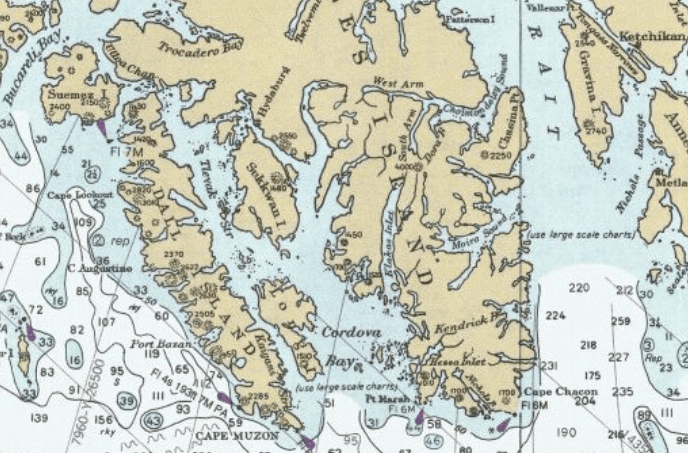
Dall Island sits at the southern edge of the Alexander Archipelago, its 26-mile length dominated by steep, forested mountains rising directly from the sea. The island lies within the Tongass National Forest and remains almost entirely uninhabited, preserving a landscape of Sitka spruce, western hemlock, and cedar that has never been logged on a commercial scale. Visitors come for the sense of true isolation combined with reliable access to productive marine waters.
Most travelers reach Dall Island by floatplane or charter boat from Ketchikan or the community of Craig on neighboring Prince of Wales Island. Scheduled ferries do not serve the island directly, so arrangements must be made with local air taxis or water-taxi operators familiar with the area’s tides and anchorages. Small gravel beaches and protected coves on the east side provide the safest landing spots; the exposed western shoreline faces the open Pacific and is rarely used by visitors.
The convoluted shoreline features dozens of small bays and narrow passages ideal for multi-day kayak trips. Paddlers frequently encounter sea otters rafting near kelp beds and harbor seals hauled out on rocks. Tide rips at the northern and southern tips create challenging conditions that experienced paddlers use for wildlife concentration areas.
Brown bears forage along streams during salmon runs, while humpback whales and orcas patrol the outer waters. Halibut and king salmon fishing remains productive from anchored boats or from shore at certain coves. Birders watch for marbled murrelets nesting in the old-growth canopy and bald eagles perched along the shoreline.
Unofficial trails follow old mining routes and game paths into the interior, leading to alpine meadows and small lakes. The dense understory requires navigation skills and bear-aware travel; most hikers carry tide tables to return along the beach rather than bushwhack.
From late May through early September, daylight exceeds 15 hours and temperatures allow comfortable camping. July and August bring the highest likelihood of clear weather windows, though rain remains common. Shoulder months of May and September offer fewer visitors but require extra preparation for cooler nights and stronger winds.
Prince of Wales Island, 10 miles east, provides the nearest services including fuel, groceries, and road access to additional trailheads and hot springs. Further north, the Misty Fjords National Monument offers dramatic granite cliffs and glacier-fed waterfalls reachable by the same charter operators that serve Dall Island.
The island has no permanent residents or communities; occasional seasonal use occurs at private cabins and remote lodges.
No developed trails or official campgrounds exist; visitors camp on beaches or forest clearings using leave-no-trace practices.
Most of the island falls within Tongass National Forest; no special permits are needed for general recreation, though commercial operators require USFS authorization.
Experienced sea kayakers and boaters can travel independently, but first-time visitors are strongly advised to travel with local charters for safety and local knowledge.
Frequent rain, fog, and sudden wind shifts can delay flights and boat crossings for several days; flexible itineraries are essential.
Keep reading
Discover Tsimshian heritage, world-class fishing, and untouched rainforest on Southeast Alaska’s largest island reserve.