
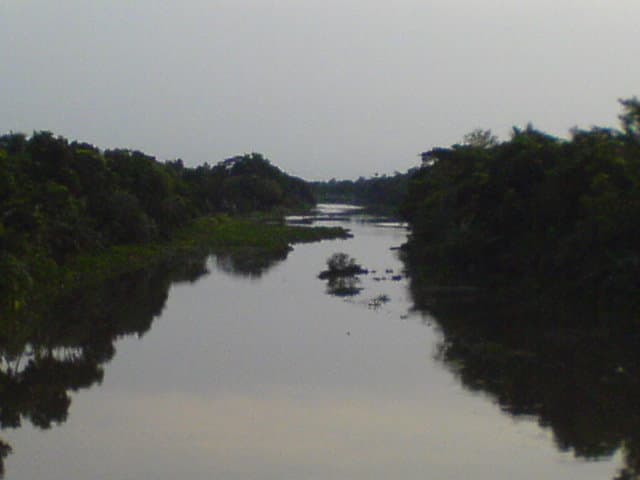
Bhairab River: A Serene Waterway Through Khulna’s Delta Landscapes
Experience quiet boat journeys, riverside villages, and the lush ecology of this key distributary in southern Bangladesh.
Why the Bhairab River Draws Visitors
The Bhairab River cuts through Khulna Division as a vital distributary of the Ganges system, offering travelers a peaceful alternative to crowded tourist circuits. Its calm waters reflect the daily rhythms of fishing communities and support rich birdlife along reed-fringed banks.
Things to See and Do
Charter a small wooden boat at dawn to glide past paddy fields and clusters of date palms. Watch for kingfishers, egrets, and occasional river dolphins near the wider bends. Stop at riverside villages to observe traditional net-mending and sample fresh river fish prepared with mustard and green chilies. Photographers find endless subjects in the changing light on the water and the simple wooden ghats.
Getting There
Reach the river from Khulna city by local bus or hired car to points such as the Bhairab Bridge area or nearby launch ghats. From there, negotiate with boat owners for half-day or full-day excursions. The journey from Dhaka takes roughly six to eight hours by road or train to Khulna followed by a short transfer.
Best Time to Visit
Plan your trip between November and February when skies are clear, humidity is lower, and water levels remain comfortable for boating. Monsoon months bring heavy rains and stronger currents that limit access to some stretches.
Nearby Attractions
Combine a river trip with a visit to the Sundarbans mangrove forest, accessible via launches from Khulna. The city itself offers the historic Khulna Circuit House grounds and bustling Rupsha River markets for an urban contrast to the rural waterway.
Visitor tips
- Hire a local boatman who knows the shifting sandbars and quieter side channels for a safer, more informative ride.
- Carry drinking water, a hat, and light rain protection even in the dry season, as shade is limited on the water.
- Respect village etiquette by asking permission before photographing people or entering homes and by avoiding single-use plastics along the banks.