Why Visit West Baray
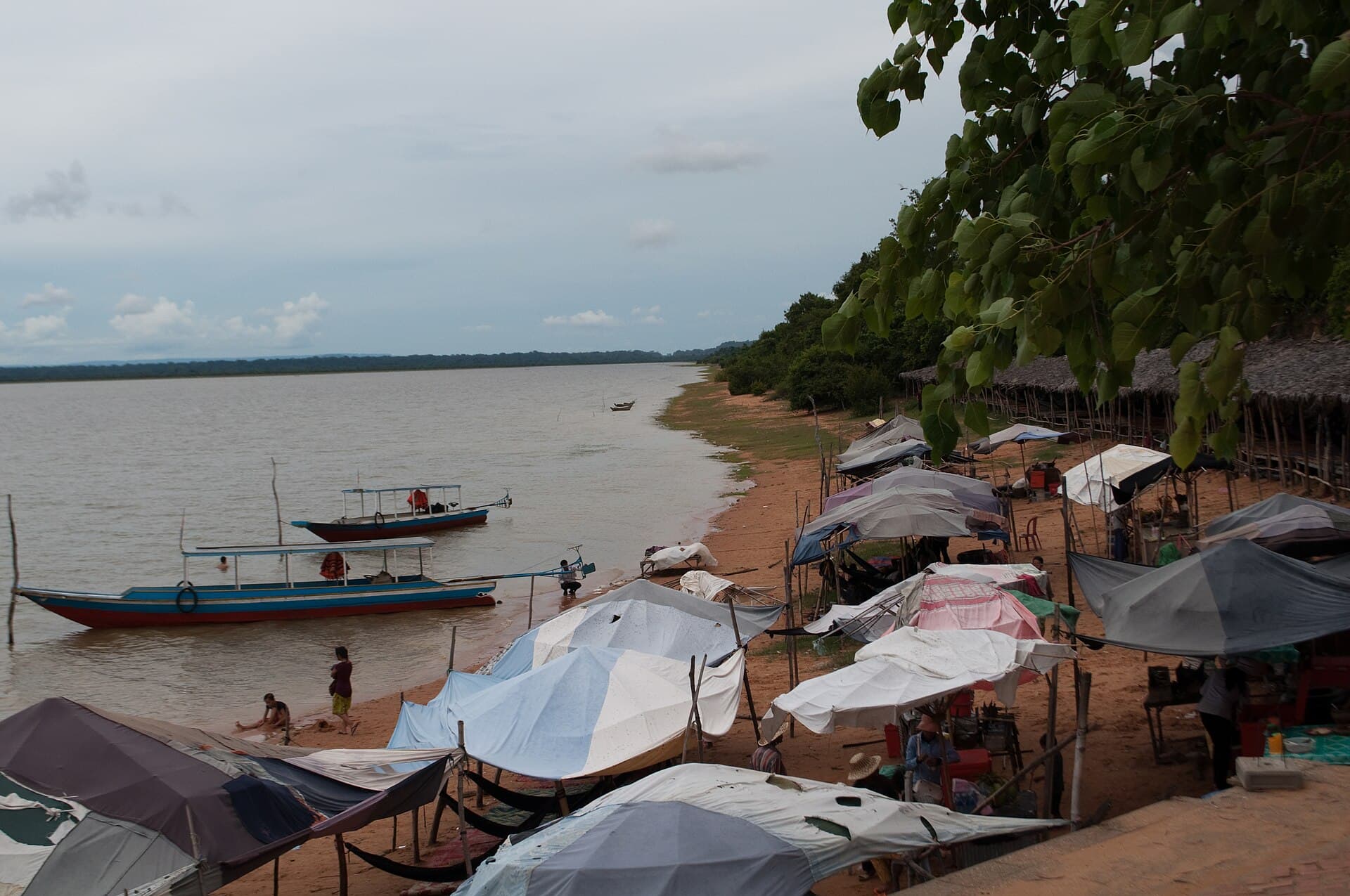
West Baray stands as one of the Khmer Empire’s most ambitious water-management projects, a rectangular reservoir measuring roughly 8 km by 2.2 km that once supplied irrigation and symbolized royal power. Today the calm expanse of water surrounded by forest and rice fields provides a peaceful contrast to the crowded temples of Angkor.
History and Engineering
Constructed in the 11th century during the reign of Suryavarman I, the baray was created by building massive earthen dikes. A small island temple, the West Mebon, sits at its center and once housed a large bronze Vishnu statue. The reservoir demonstrates the sophisticated hydraulic knowledge of the Angkorian civilization, which integrated water storage with religious and agricultural needs.
What to See and Do
- Walk or cycle along the western embankment for wide views across the water toward the distant spires of Angkor Wat.
- Visit the West Mebon ruins by boat when water levels permit; the site features laterite platforms and carved sandstone blocks.
- Observe local life: fishermen casting nets at dawn and families picnicking on weekends.
- Photograph the changing reflections of clouds and surrounding sugar palms, especially at sunrise and sunset.
How to Get There
West Baray lies about 14 km northwest of Siem Reap town and just west of the main Angkor Archaeological Park entrance. Most visitors arrive by tuk-tuk, rented bicycle, or private car as part of a temple circuit. The western embankment road is flat and suitable for cycling.
Best Time to Visit
The dry season from November through April offers the most comfortable conditions and reliable boat access to the central temple. Early morning visits avoid heat and give the best chance of seeing mist over the water. The rainy season brings lush greenery but can make paths muddy and reduce visibility.
Nearby Attractions
Combine a visit with Angkor Wat to the east, the quiet ruins of Ak Yum to the south, or the village life along the southern dike. The site serves as a natural rest stop between the western group of temples and the main Angkor complex.