History of the Valentin Submarine Pens
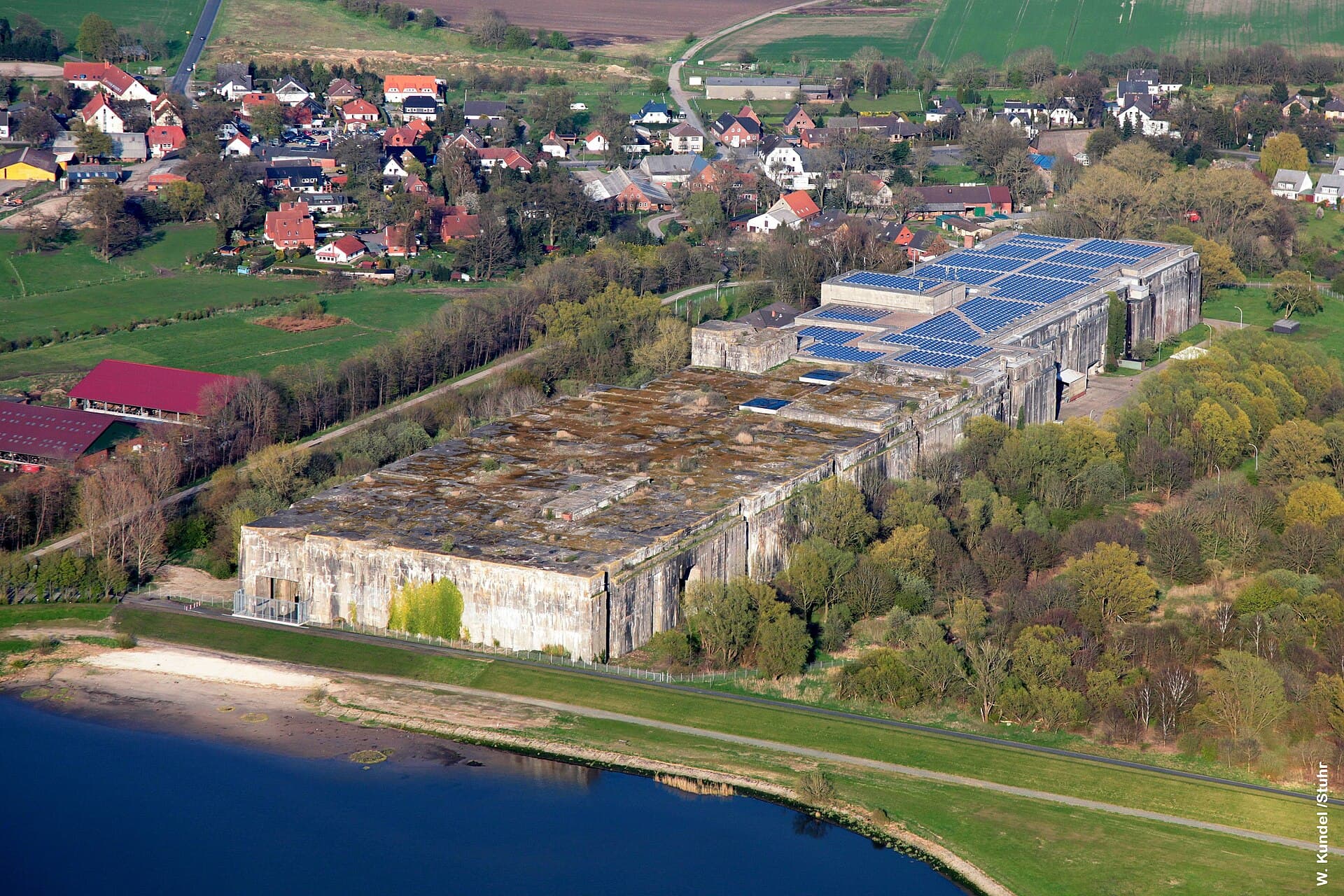
Construction of the Valentin submarine pens began in 1943 under the Nazi regime as part of a secret program to mass-produce Type XXI U-boats. The vast bunker complex, stretching over 400 meters long and up to 25 meters high, was intended to shield submarine assembly from Allied air raids. Built almost entirely by concentration camp prisoners and forced laborers, the site claimed thousands of lives before the project was abandoned in 1945 after heavy bombing.
Visiting the Memorial Today
The Valentin site now serves as Denkort Valentin, an open-air memorial and documentation center preserving the bunker’s raw concrete remains. Visitors can walk around the exterior, enter select interior spaces, and view permanent exhibitions on forced labor, wartime production, and the human cost of the project. Information panels and audio guides in multiple languages explain the structure’s scale and significance without dramatization.
Key Areas to Explore
- The enormous main hall with its unfinished slipways and towering walls
- Surviving sections of the roof showing bomb damage
- Outdoor memorial installations and preserved worker pathways
- Exhibition building with photographs, documents, and survivor testimonies
How to Get There
Located in Bremen-Blumenthal on the Weser River, the site is reachable by regional train to Bremen-Blumenthal station followed by a 20-minute walk or short bus ride. Cyclists can follow the Weser cycle path. Parking is limited, so public transport or bike is recommended for most visitors. The flat terrain makes the site accessible, though some uneven ground exists around the bunker perimeter.
Best Time to Visit
Spring through autumn offers the most comfortable conditions for outdoor exploration. The memorial is especially moving on overcast days when the bunker’s gray mass feels particularly imposing. Allow two to three hours to absorb the exhibitions and walk the grounds at a reflective pace.
Nearby Attractions
Combine a visit with the nearby Bremen city center, home to the UNESCO-listed Town Hall and Roland statue, or the historic harbor area in Vegesack. The Weser River offers pleasant walks and ferry connections to other parts of the city-state.