A Cathedral Born from Salt
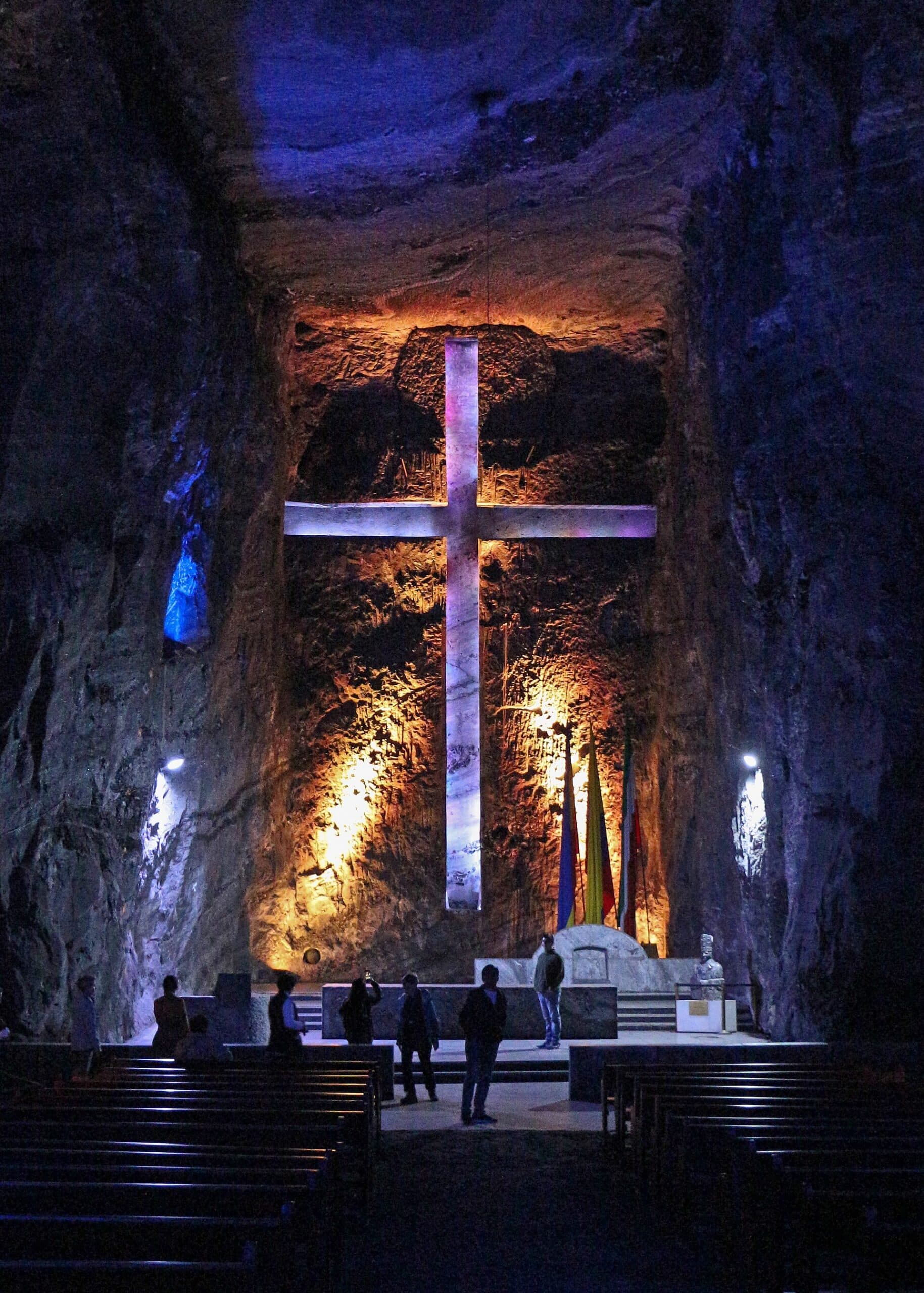
The Salt Cathedral of Zipaquirá sits 180 meters underground in a former halite mine north of Bogotá. Instead of conventional stone, every wall, column, and sculpture is formed from the same salt deposits that have been extracted here since pre-Columbian times. The result is a sequence of vast chambers whose surfaces glisten with mineral veins and reflect light in subtle shades of gray and white.
Stations of the Cross and Main Sanctuary
Fourteen chapels mark the Stations of the Cross, each featuring a cross or figure carved directly from the salt rock. The route descends gradually through tunnels before opening into the enormous main nave, where a 16-meter cross and a translucent altar dominate the space. Side chambers hold smaller altars and a crypt, all illuminated to emphasize the natural texture of the salt.
Planning Your Visit
Most travelers reach Zipaquirá from Bogotá by the frequent direct buses that leave from the Portal del Norte terminal; the ride takes roughly one hour. Once in town, a short uphill walk or local taxi leads to the mine entrance. Comfortable walking shoes are essential because the paths are uneven and the temperature stays around 14 °C year-round, so a light jacket is useful even on hot Bogotá days.
Best Time to Go
The dry months from December to March and July to August offer the clearest roads and fewer tour groups. Weekday mornings are quieter, allowing visitors to linger in the side chapels without crowds. Rainy-season visits are still possible but can make the approach roads slippery and increase waiting times at the entrance.
Nearby Attractions
After the cathedral, many visitors continue to the historic center of Zipaquirá to see its colonial church and salt-themed market. A short drive farther north reaches the town of Nemocón, home to another smaller salt mine museum. Bogotá’s colonial quarter and the Museo del Oro remain easy day-trip extensions for those based in the capital.
Practical Considerations
- Allow two to three hours for the full underground route plus time at the surface exhibits.
- Guided tours in Spanish or English are available; audio guides in several languages can be rented at the entrance.
- Photography is permitted without flash, but tripods are restricted in narrow passages.