Skip to content
Plan & Tour
DestinationsItinerariesTravel BlogAboutContact
0Sign inPlan a trip
Plan & TourPlan & Tour

Travel guides, destination inspiration and curated itineraries for Canada, the USA and beyond, plus a free tool to plan your own day-by-day trip.

Get travel inspiration

Explore

  • All Destinations
  • Curated Itineraries
  • Travel Blog
  • Plan a Trip

Topics

  • Hiking & Nature
  • Food & Drink
  • City Breaks
  • Budget Travel

Company

  • About Us
  • Contact
  • Privacy Policy
  • Terms of Service

© 2026 Plan & Tour. Built for travellers.

Discover the world, one trip at a time.

Science Center Universum Bremen: Hands-On Exhibits in Germany’s Interactive Museum
  1. Home
  2. Destinations
  3. Bremen
  4. Science Center Universum Bremen: Hands-On Exhibits in Germany’s Interactive Museum
Museum

Science Center Universum Bremen: Hands-On Exhibits in Germany’s Interactive Museum

Explore Bremen's Science Center Universum for immersive science experiences that engage visitors of all ages.

BremenUpdated 14 October 2026

Why Visit the Science Center Universum

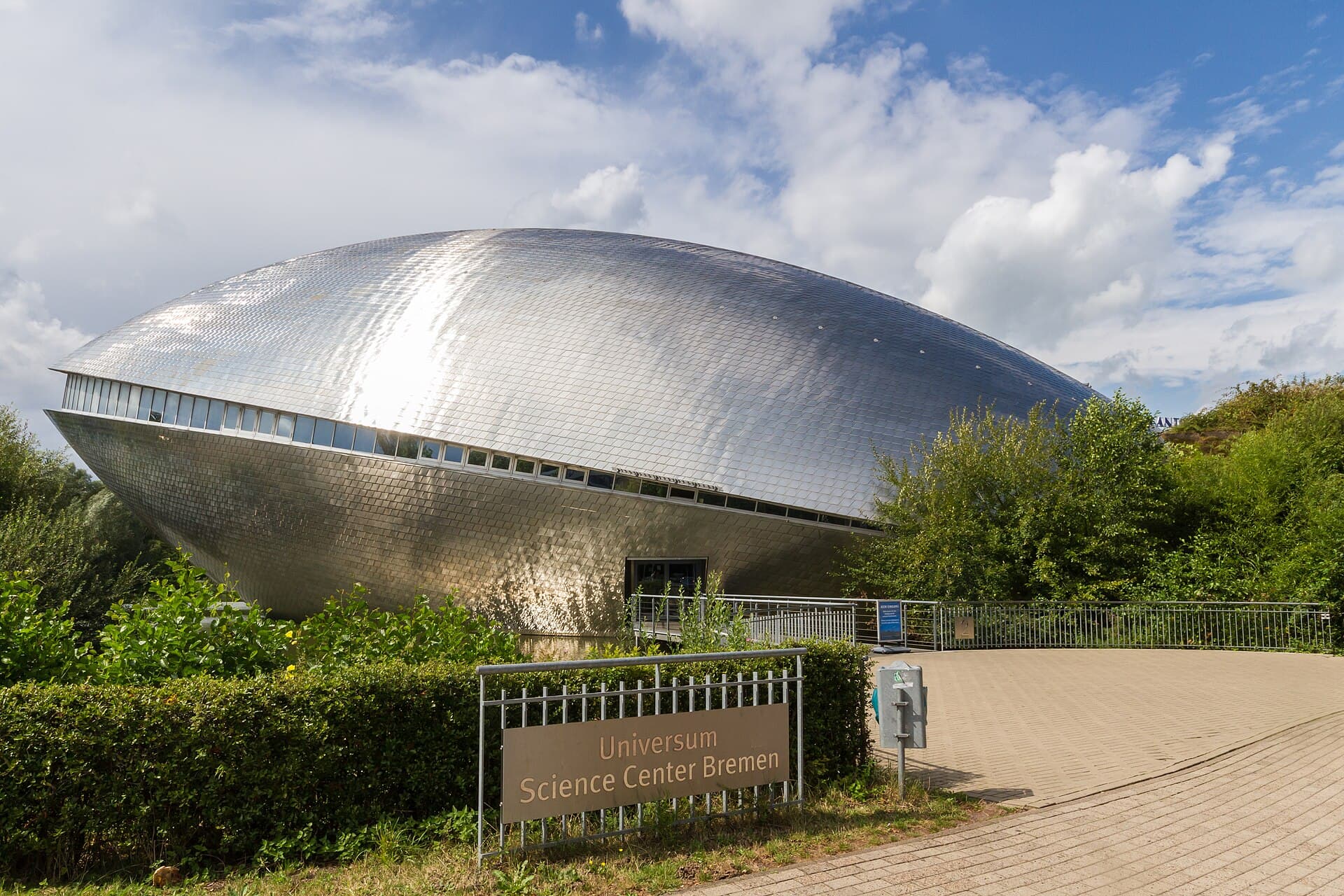
The Science Center Universum stands out among European science museums for its extensive collection of more than 300 interactive exhibits that invite direct participation rather than passive observation. Located on the campus of the University of Bremen, it emphasizes physics, biology, and technology through experiments that demonstrate real-world principles, making it an ideal destination for families and curious travelers seeking more than static displays.

Exhibits and Activities

Inside the main building, themed zones cover topics such as human senses, energy, and the universe. Visitors can test optical illusions, operate simple machines, and explore sound waves through custom-built stations. A highlight is the large outdoor science park, where seasonal weather allows engagement with water tables, wind tunnels, and climbing structures that illustrate gravity and mechanics. The on-site planetarium offers regular shows on astronomy and space exploration, complementing the tactile exhibits with visual storytelling. These elements combine to create a full-day experience focused on discovery.

Getting There

Bremen’s compact layout makes the Science Center easily accessible. From the main railway station, take tram line 6 directly to the “Universum” stop, a journey of about fifteen minutes. Cyclists benefit from dedicated paths along the university grounds, and the site offers ample bicycle parking. Those arriving by car can use the nearby parking facilities connected to the university area. The location integrates well into a broader Bremen itinerary that includes the historic city center.

Best Time to Visit

Spring through early autumn provides the most comfortable conditions for exploring the outdoor experiments, with milder temperatures and longer daylight. Weekday mornings tend to be quieter, allowing more time at popular stations without crowds. Winter visits still deliver value through the indoor exhibits and planetarium, though the outdoor area may be limited by weather. The museum’s indoor focus ensures year-round appeal regardless of season.

Nearby Attractions

After your visit, stroll through the adjacent university park or continue into Bremen’s Altstadt to see the famous Town Hall and Roland statue, both UNESCO sites. The nearby Rhododendron Park offers botanical gardens for a relaxing contrast to the science-focused day. Public transport links make combining these sites straightforward, turning a single museum stop into a varied regional exploration.

Visitor tips

  • Allocate at least four hours to fully engage with both indoor and outdoor areas without rushing between exhibits.
  • Wear comfortable walking shoes, as the facility spans multiple floors and an extensive outdoor park with uneven surfaces.
  • Pair your visit with a tram ride from Bremen Hauptbahnhof to avoid parking challenges and enjoy scenic views along the route.

Frequently asked questions

Is the Science Center suitable for young children?+

Yes, many exhibits are designed for ages five and up, with simplified stations that encourage play-based learning alongside more advanced experiments for older visitors.

How long does a typical visit last?+

Most guests spend three to five hours exploring the interactive displays, planetarium show, and outdoor park, depending on interest level and group pace.

Can I visit without speaking German?+

All major exhibit labels and instructions appear in both German and English, and many interactive elements require no language skills at all.

Is there food available on site?+

A cafu00e9 inside the center serves light meals and drinks; visitors may also bring their own snacks to enjoy in designated seating areas.

What makes this science center different from others?+

Its strong emphasis on outdoor experiments and direct university ties create a more applied, research-oriented atmosphere compared to purely indoor museums.

Share
Google Maps Apple Maps Directions

Visitor info

+49 (0) 421 33 46 0

Official website

Contact info via Wikidata

Image: User:Matthias Süßen · CC BY-SA 3.0 · via Wikimedia Commons

Keep reading

Nearby & related

All stories
Krietes Wald (Im Holze): A Protected Forest Sanctuary Near Bremen
Osterholz

Krietes Wald (Im Holze): A Protected Forest Sanctuary Near Bremen

This quiet woodland reserve in Osterholz offers peaceful trails through ancient trees and habitats for native wildlife…

15 October 2026
Hochwasserschutzpolder zwischen Senator-Apelt-Straße und Neustädter Hafen: A Quiet Nature Retreat in Bremen’s Port District
Häfen

Hochwasserschutzpolder zwischen Senator-Apelt-Straße und Neustädter Hafen: A Quiet Nature Retreat in Bremen’s Port District

This protected flood-control polder offers peaceful walking paths, harbor views, and wildlife habitat right in the heart…

15 October 2026
Vogelschutzgehölz Sodenmatt: A Quiet Bird Sanctuary in Bremen’s Huchting District
Huchting

Vogelschutzgehölz Sodenmatt: A Quiet Bird Sanctuary in Bremen’s Huchting District

This protected woodland in western Bremen offers excellent birdwatching and gentle walks amid native trees and wetlands.

15 October 2026