
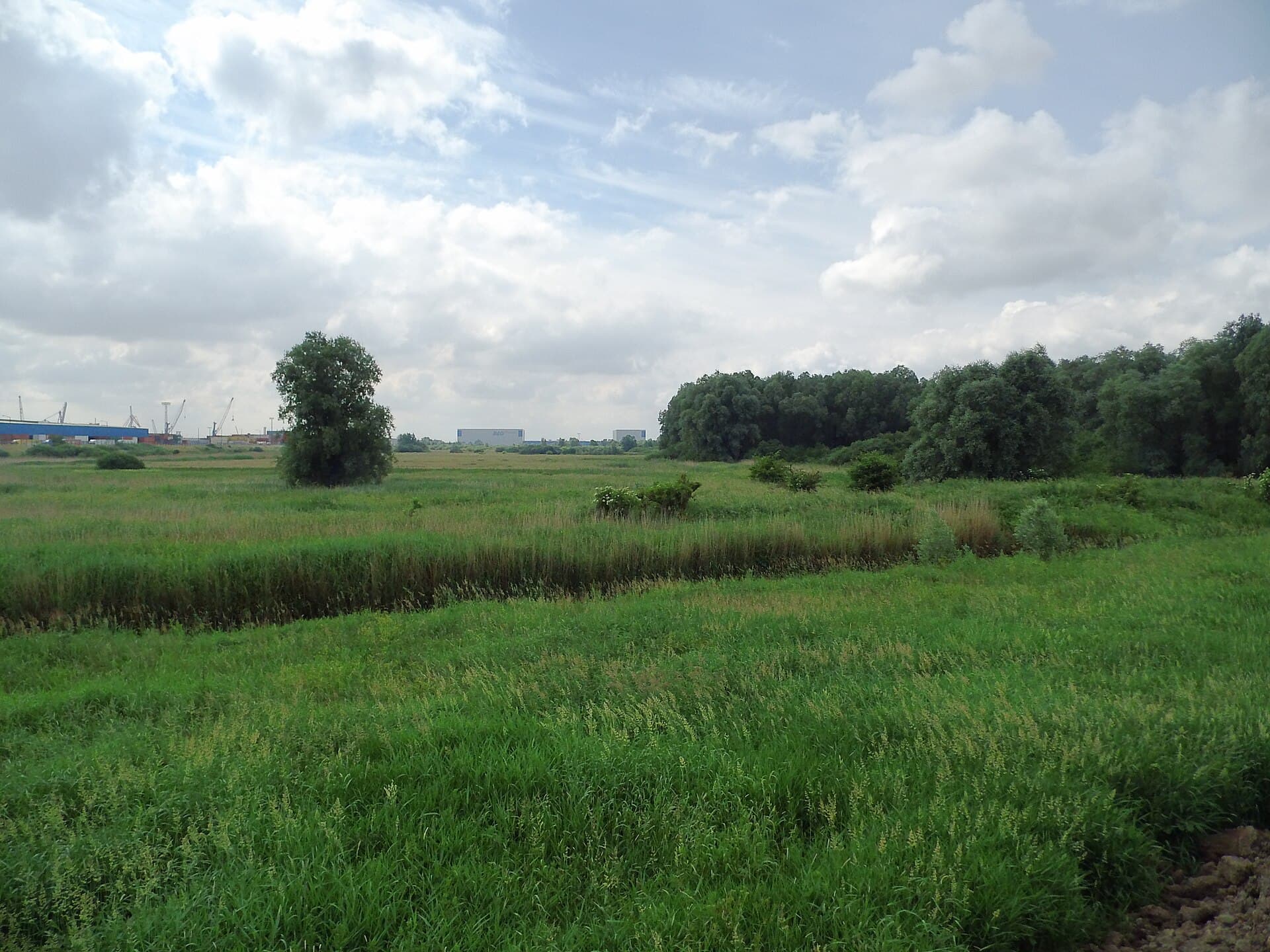
Hochwasserschutzpolder zwischen Senator-Apelt-Straße und Neustädter Hafen: A Quiet Nature Retreat in Bremen’s Port District
This protected flood-control polder offers peaceful walking paths, harbor views, and wildlife habitat right in the heart of Bremen's industrial waterfront.
What Makes This Place Special
The Hochwasserschutzpolder zwischen Senator-Apelt-Straße und Neustädter Hafen serves as an engineered wetland that protects surrounding neighborhoods from storm surges while creating valuable habitat along the Weser River. Located in the Häfen district, it combines flood defense infrastructure with accessible green space, giving visitors a rare chance to experience nature amid active port operations.
Getting There
Reach the polder by public transport on Bremen’s tram or bus lines serving the harbor area, then walk the short distance from stops near Neustädter Hafen. Cyclists appreciate the flat terrain and connections to the city’s extensive bike network. Limited street parking exists along Senator-Apelt-Straße, but public transit or cycling is recommended to avoid congestion around port facilities.
What to See and Do
Follow the network of maintained paths that wind through reed beds and along water channels. Birdwatchers often spot herons, ducks, and migratory species using the polder as a resting area. Interpretive signs explain the flood-management system and the ecological role of the site. The elevated banks provide unobstructed views of cargo ships and cranes at Neustädter Hafen, illustrating the contrast between protected nature and working industry.
Best Time to Visit
Spring and early summer bring the richest bird activity and blooming vegetation. Autumn offers quieter conditions and colorful foliage. Winter visits are possible but can be windy; the open landscape makes the site less sheltered during storms. Mornings are generally calmer for photography and wildlife observation.
Nearby Attractions
- Neustädter Hafen for port tours and maritime atmosphere
- Bremen’s Überseestadt redevelopment area with cafés and modern architecture
- The Weser River promenade linking to the city center’s historic core
Combine a visit with a longer walk or bike ride along the riverfront to experience both the polder’s calm and the energy of Bremen’s harbor district.
Visitor tips
- Wear sturdy shoes as paths can become muddy after rain.
- Stay on designated trails to protect the flood-control structures and wildlife.
- Bring binoculars for birdwatching and a camera for harbor views.
Frequently asked questions
Is the polder open to the public year-round?
Yes, the paths remain accessible at all times, though conditions may vary with weather and water levels.
Are dogs allowed in the protected area?
Dogs are permitted but must remain on a leash to safeguard nesting birds and sensitive vegetation.
Can I picnic or swim here?
Picnicking is allowed in designated spots; swimming is not recommended due to strong currents and industrial water use.
Is the site suitable for families with children?
The flat paths make it family-friendly, but supervision is advised near water edges and port traffic.
How long does a typical visit take?
Most visitors spend one to two hours walking the main trails and enjoying the views.